
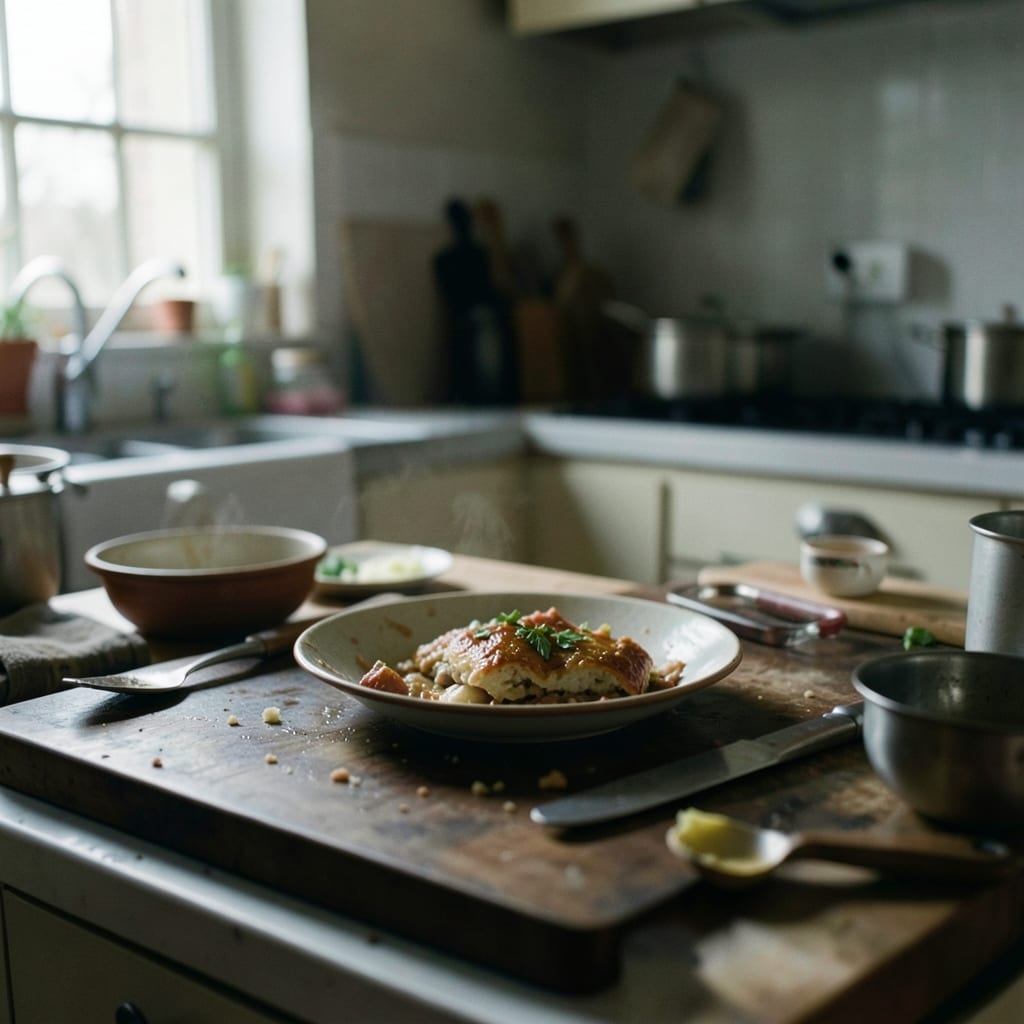
What this work is made with
This page is not a story. It’s a list of things—the actual objects that make the work here possible. A story would tell you why this site exists, or what it believes. A list tells you what it leans on, what it wears down, and what it keeps anyway.
Salad Recipes Lab is a place for recipes that turn meals into stories. We publish tested dishes, from classic salads to modern twists, all built on the same tools you’d find in any kitchen. But these aren’t just tools.
They’re the things that shape every recipe, the ones that leave marks on the food—and on the person holding them.
The things that do the work
Four objects make up the core of what we do here. They’re not glamorous, not new, and two of them are past their prime—but they’re the ones that turn ingredients into recipes.
Each has been here longer than the site itself, and each has changed how we cook, and how we think about cooking.
The cast-iron skillet
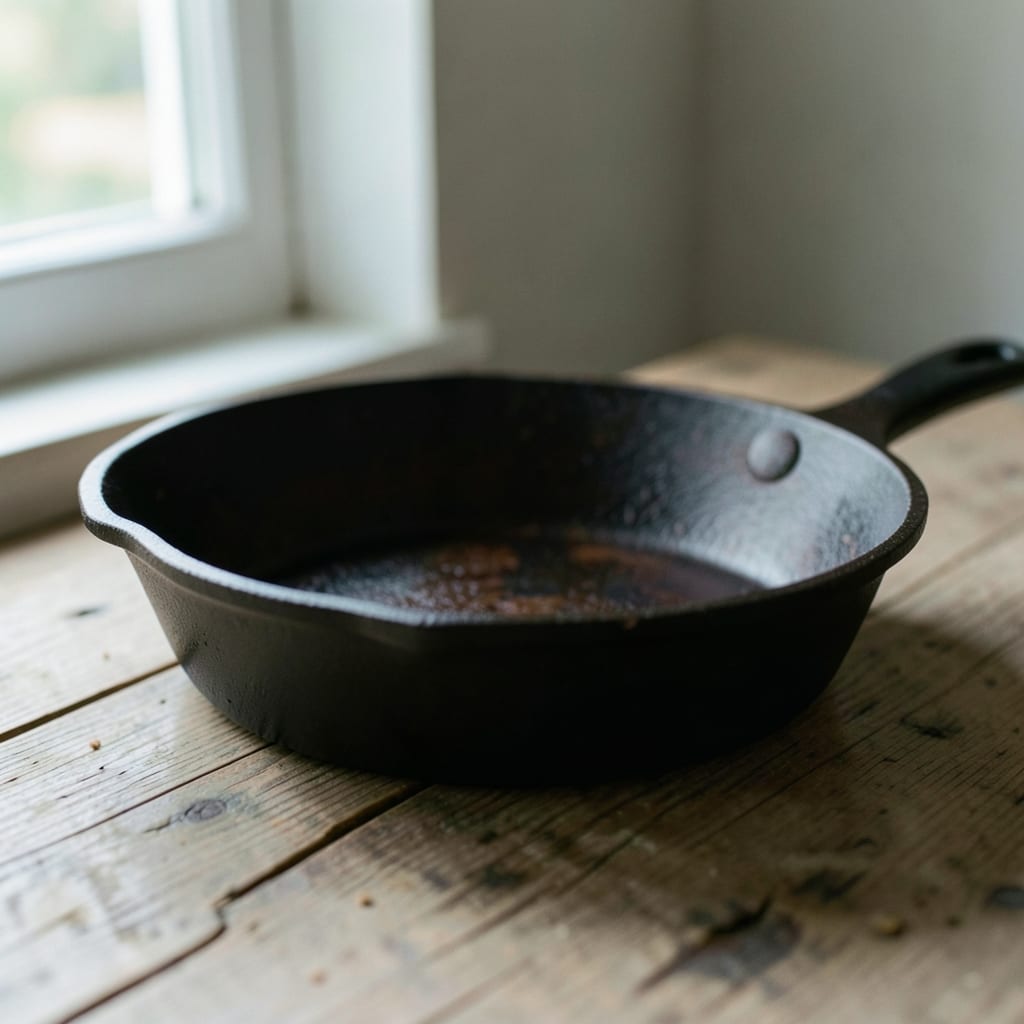
It’s heavy, warped from years of uneven heat, and the handle is wrapped in frayed cloth held on with rusted wire. We’ve had it since before the site launched, passed down from my grandmother’s kitchen.
She used it to fry plantains until they caramelized, and now it’s the only pan I’ll use for searing greens or crisping bacon.
The first time we used it for a recipe here, the uneven heat burned one side of a batch of roasted cherry tomatoes. Now, we let them sit longer on the good side and flip them early. It’s taught us patience—and that some imperfections make the dish better.
The wooden cutting board
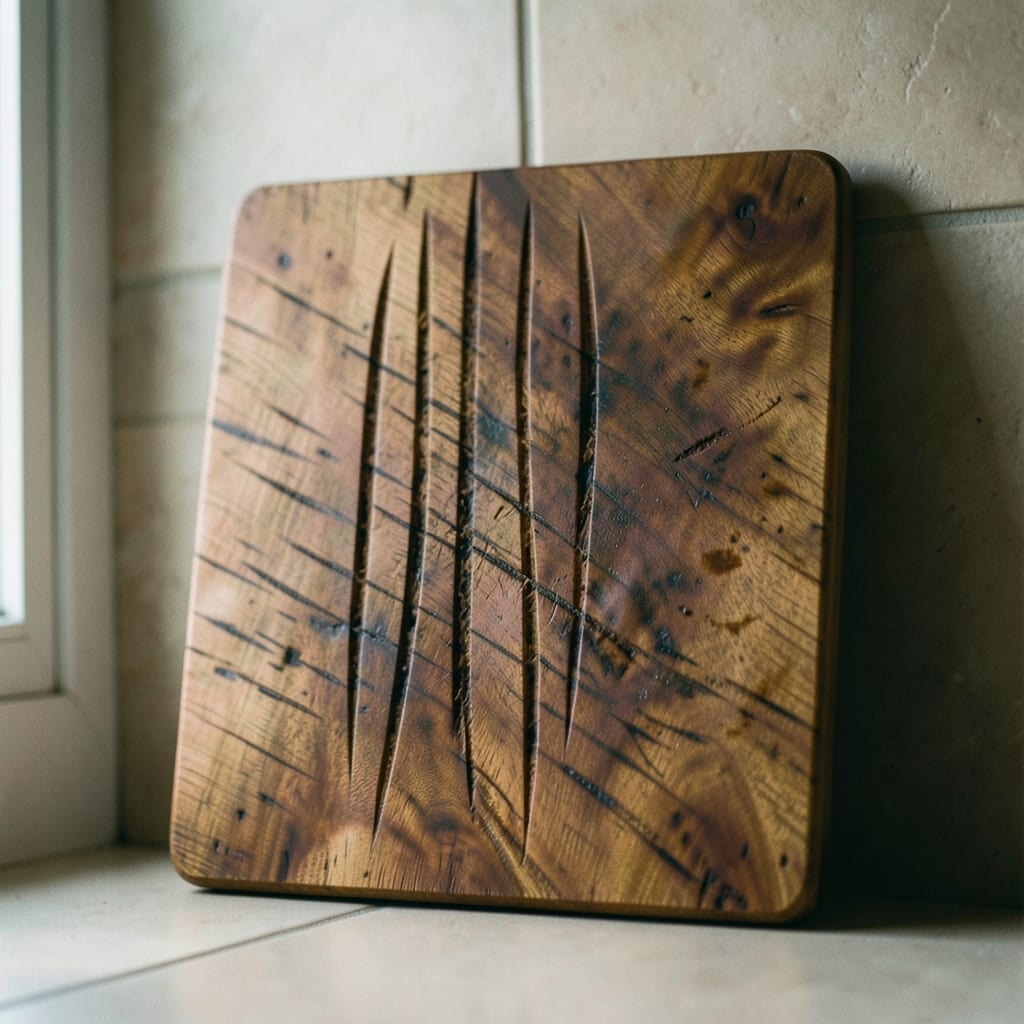
It’s split down the middle, held together with metal clamps that squeak when you move it. We’ve had it for over a decade, and the grooves from years of knives are deep enough to hold dressing. It’s cheap, unglamorous, and the only one we’ll use—no plastic, no glass.
It’s been through every recipe, from dicing onions to chopping herbs for vinaigrettes.
The split doesn’t matter. What matters is that it never dulls a knife, and the grooves mean we don’t waste a drop of olive oil. It’s also the only surface where we’ll leave a knife standing upright—because it’s the only one that won’t tip over.
The pair of tongs
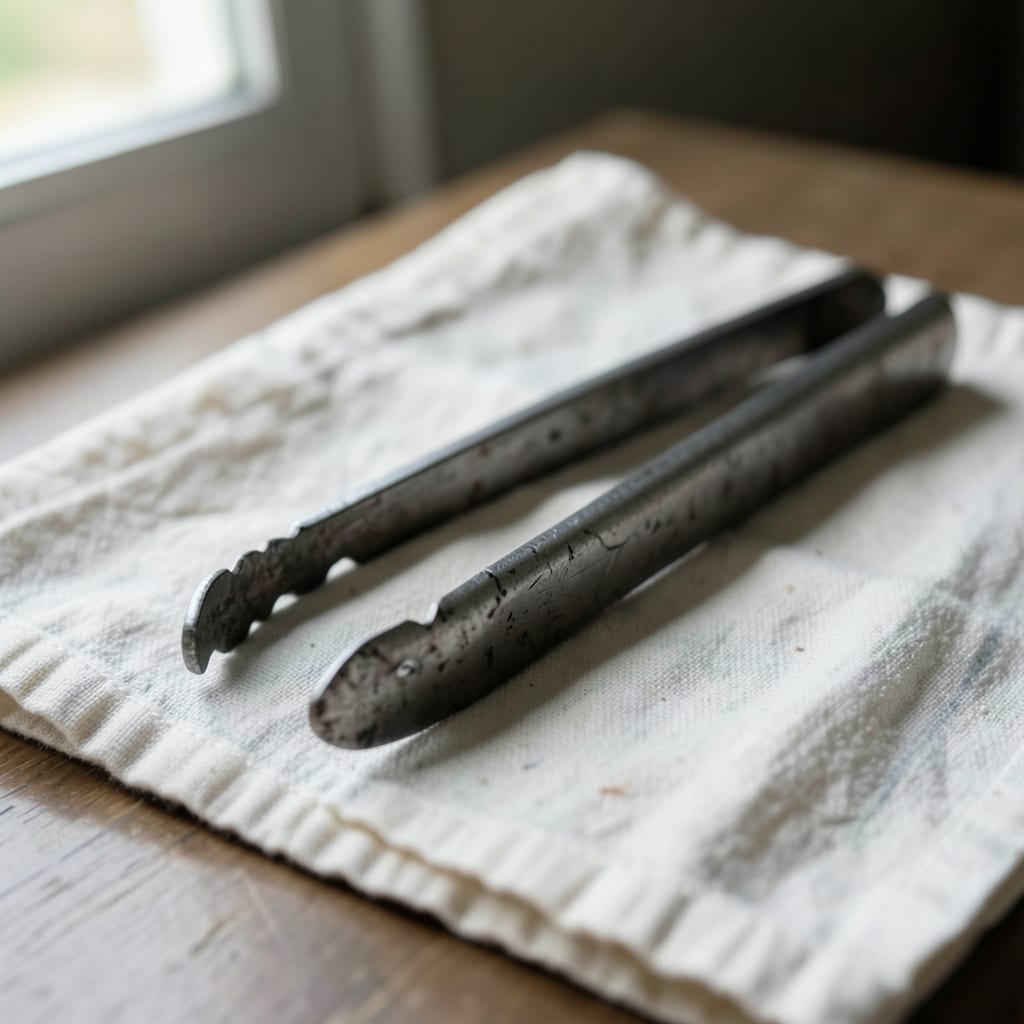
They’re bent at the hinge, the rubber grips are cracked, and one prong is shorter than the other. We bought them secondhand years ago, and they’ve been through every salad toss, every batch of grilled vegetables, and every time we’ve tried to flip something without burning ourselves.
They’re the only tool we use for handling hot food—no spoons, no forks, no risk of dropping anything.
The bent hinge means we have to grip tighter, and the uneven prongs mean we have to adjust how we hold things. But they’ve never failed us. And they’ve taught us that the ‘perfect’ tool is just the one that gets the job done—even if it’s not pretty.
The linen tea towel
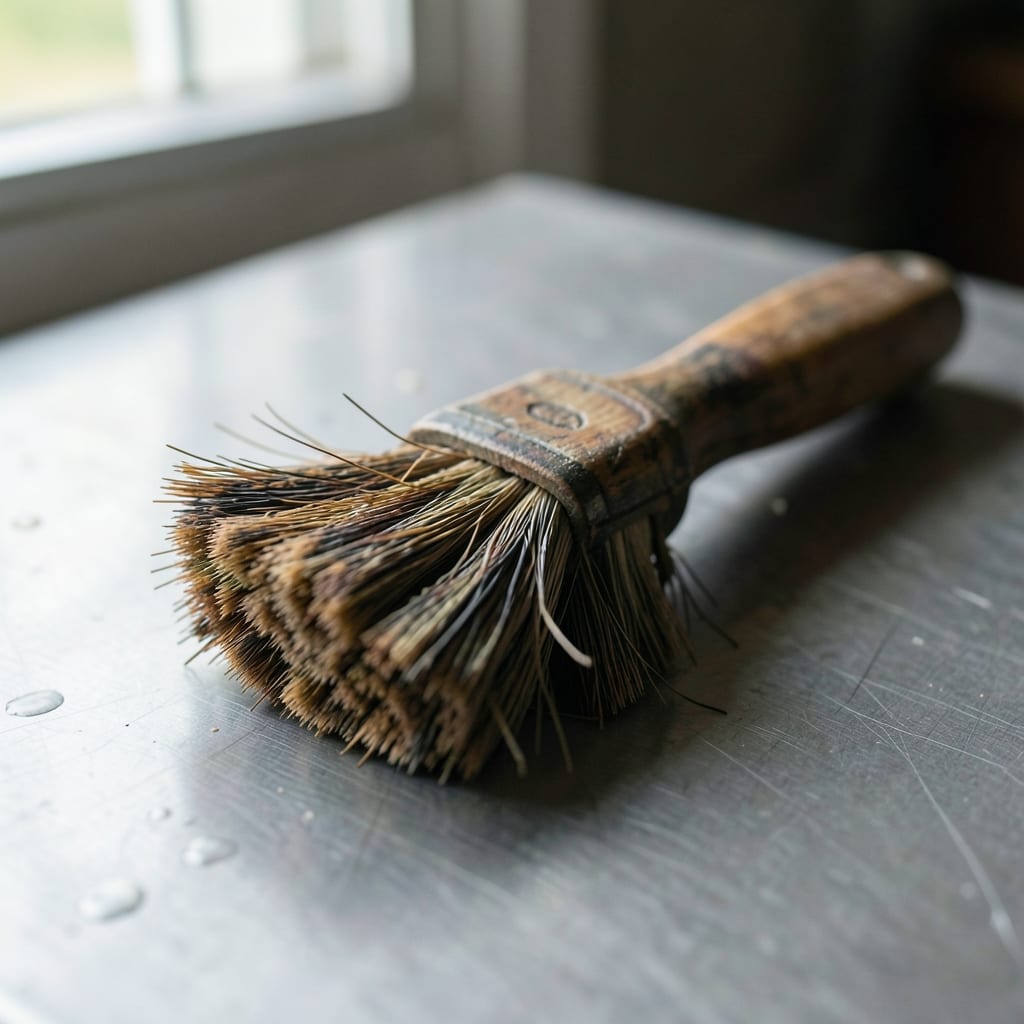
It’s faded, the edges are singed from too many turns on the stove, and one corner is permanently stained with what we think is pesto. We’ve had it since the site’s first year, and it’s the only thing we use to drain pasta, pat greens dry, or cover bowls.
It’s also the only thing we’ll ever wrap around a hot pan handle—no oven mitts, no silicone gloves.
The singed edges are a warning: we’ve learned to pull it away quickly, not let it touch the burner. The stain? It’s a reminder that even the simplest tools can leave their mark—and that some marks are worth keeping.
What is not in the drawer
This work doesn’t depend on gadgets, subscriptions, or anything that makes cooking feel like a science. We leave out what’s unnecessary—and what distracts from the real work: turning ingredients into something delicious.
Deliberately absent
- Electric mixers or blenders—we stir by hand, chop by hand, and taste as we go.
- Recipe boxes or meal-planning apps—every dish here is built from scratch, not a template.
- Fancy scales or thermometers—we measure by eye, by feel, and by memory.
- Brand-new tools—what we have is worn in, and that’s how we know it works.
Behind the scenes

I’m Kirsten Rivas, the founder and editor of Salad Recipes Lab. I’m the one who stands in the kitchen, who burns the garlic sometimes, who tastes everything raw, and who writes the recipes as I go—no second takes, no do-overs.
I came to this from my mom’s kitchen, where meals were never just food. They were stories, passed down with every hand-chopped ingredient and every improvised twist. She’s the one who taught me that cooking isn’t about following rules—it’s about making your own.
This work has given me a permanent ache in my left wrist from dicing too fast, a habit of tasting everything before seasoning it, and an inability to walk past a grocery store without checking the produce section.
I also now notice every cutting board’s grooves and every pan’s hot spots—and I can’t stop.
I’m here to make sure every recipe on this site is something you’ll actually use. Not just something you’ll read, but something you’ll reach for when you’re hungry, when you’re tired, or when you just want to remember that cooking can be simple, satisfying, and a little bit imperfect.
Why any of this matters to you
These things—the skillet, the board, the tongs, the towel—are why every recipe here tastes like it was made by someone who actually cooks. They’re why the dishes work the first time, and why they taste even better the second.
They’re also why you’ll never see a recipe here that relies on a gadget you don’t own or a technique you haven’t tried.
When you read a page here, you’re not just getting instructions. You’re getting the marks of real cooking: the uneven heat, the hand-chopped herbs, the towel-drained greens. It’s the difference between a recipe and a meal.
Every dish here is built with the same tools we use every day—no shortcuts, no excuses. That means recipes that actually work, flavors that develop over time, and a kitchen that feels like yours, not a lab’s.
The recipes are grouped by category: Appetizers, Beverages, Breakfast & Brunch, Desserts, Main Courses and Reviews.