
Salads
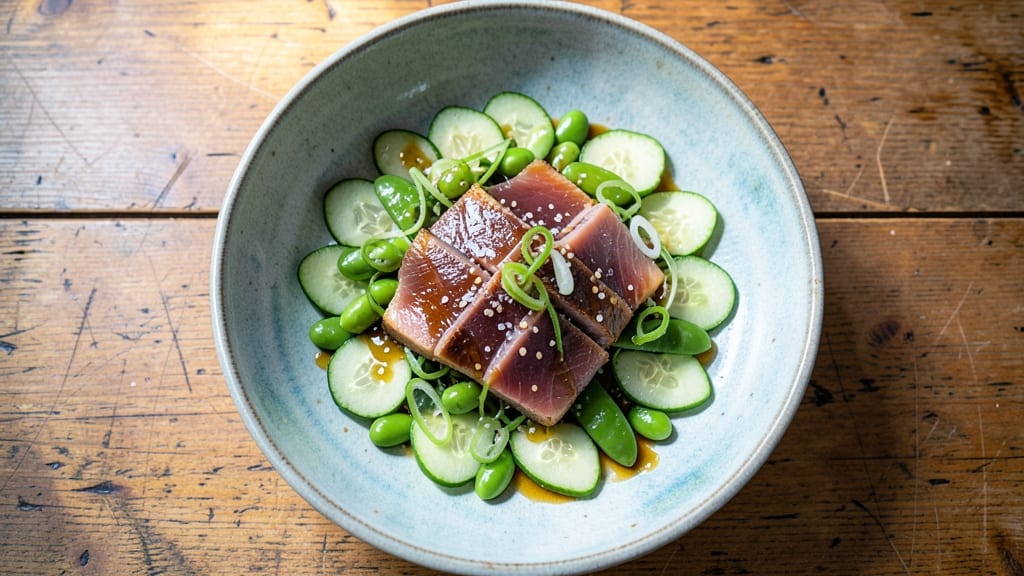
This Asian ahi tuna salad delivers restaurant-quality flavor with a perfect balance of sesame-ginger zing and crunchy edamame bites. The secret lies in quick-pickling the tuna for tender, vibrant slices that hold their shape while absorbing the bright citrus and aromatic marinade.
I developed this recipe after craving a lighter, more refreshing take on traditional tuna salad—one that still packs bold Asian-inspired flavors without heavy mayo.
The foundation starts with sushi-grade ahi tuna marinated in a sesame-ginger dressing that infuses every slice with umami depth. Fresh edamame adds a satisfying crunch, while thinly sliced cucumber and scallions introduce crisp, cooling contrast.
What sets this apart is the optional quick-pickling step—just a splash of rice vinegar and sugar—that transforms the tuna into tender, vibrant pieces that stay firm even when tossed with the dressing.
By the time you assemble the salad, you'll have a dish that's elegant yet effortless: tender tuna slices with a delicate pink center, crisp edamame for texture, and a dressing that's tangy, nutty, and just sweet enough.
The final touch—sesame seeds and microgreens—adds visual appeal and a burst of freshness with every bite. This is the kind of salad that feels special enough for guests but simple enough for weeknight dinners.
Serve immediately for the best texture, or prepare components ahead to assemble fresh. The dressing can be made in advance, and the edamame can be blanched and chilled up to 24 hours ahead. Perfect for lunch meetings, summer picnics, or a light dinner that still feels indulgent.
Ingredients for asian ahi tuna salad
Crisp edamame, tender tuna, and zesty sesame-ginger dressing create this restaurant-style salad.
| Ingredient | Amount | Notes |
|---|---|---|
| Sushi-Grade Ahi Tuna 🐟 | 1 lb | Freshly sliced into 1/4-inch pieces |
| Edamame 🌱 | 1 cup | Shelled, frozen or fresh |
| Persian Cucumber 🥒 | 1 whole | Thinly sliced, seeds removed |
| Green Onions 🧅 | 4 whole | Thinly sliced, white and green parts |
| Sesame Oil 🫒 | 1 tbsp | Toasted sesame oil preferred |
| Rice Vinegar 🍶 | 3 tbsp | Unseasoned, mild flavor |
| Fresh Ginger 🌿 | 1 tbsp | Finely grated, peeled |
| Sesame Seeds 🌰 | 1 tbsp | Toasted for garnish |
| Microgreens 🌱 | ¼ cup | Pea shoots or broccoli sprouts |
| Granulated Sugar 🍚 | 1 tbsp | For quick-pickling |
| Lime Juice 🍋 | 1 tbsp | Freshly squeezed |
| Toasted Sesame Seeds 🌰 | 1 tsp | For extra crunch |
| Avocado Oil 🫒 | 1 tbsp | For light drizzle |
| Diamond Crystal Kosher Salt 🧂 | ½ tsp | For seasoning |
| Black Pepper 🌶️ | ¼ tsp | Freshly cracked |
The ahi tuna is non-negotiable—sushi-grade quality ensures tender, vibrant slices that stay pink inside. Grab it from a trusted seafood counter like Whole Foods or Trader Joe's—look for bright red color and firm texture. The edamame is your secret weapon for texture: frozen works perfectly (just blanch for 2 minutes), but fresh is ideal if you've got it. For the cucumber, Persian cucumbers stay crisp longer, but any seedless variety works. Thinly slice the green onions—white parts add subtle bite, so don't skip them. If you're feeling fancy, microgreens from a local farm add that gourmet touch.
No sesame oil? Toasted sesame seeds ground in a mortar (or coffee grinder) make a quick substitute—just add 1 extra tbsp. The ginger needs to be freshly grated—pre-grated loses punch fast. Running short on rice vinegar? Apple cider vinegar works in a pinch, but Koyo brand is my go-to for authentic flavor. The quick-pickling step (vinegar + sugar) is optional but game-changing—it keeps the tuna tender and vibrant. For extra crunch, toasted sesame seeds are a must, but if you're out, crushed peanuts add a different but delicious texture. The lime juice should be freshly squeezed—bottled just won't cut it.
Blanch the edamame ahead: 2 minutes in boiling water, then ice bath—keeps for 3 days in the fridge. The dressing stays fresh for 5 days if stored in an airtight container. Tuna is best used immediately after slicing, but if prepping ahead, quick-pickle for 15 minutes max before assembling. Serve on a bed of butter lettuce for extra elegance, or over jasmine rice for a heartier meal. The salad keeps its best texture for 2 hours at room temperature—after that, enjoy it chilled.
Why You'll Love This Recipe
- No-Fuss Assembly: I swear, this salad takes less effort than ordering takeout. Slice the tuna thin, toss in pre-shelled edamame and cucumber—no dicing, no peeling, just chop the green onions if you’re feeling fancy. Honestly, the hardest part is deciding whether to eat it right away or wait.
- Umami Bomb: That first bite? Rich, buttery tuna meets crisp cucumber and nutty sesame oil—it’s like a flavor party in your mouth. The edamame adds this subtle sweetness that balances the saltiness, and the green onions? They’re the secret fresh kick that makes it dangerously addictive.
- Lunchbox Hero: Pack this for work and you’ll be the office MVP. It holds up perfectly for a day (or two, if you’re sneaky) in the fridge, and the sesame oil keeps it tasting fresh. Between us, I’ve brought this to potlucks, picnics, and even as a side for date night—zero complaints, always seconds.
- Budget-Friendly Luxury: You’re getting restaurant-quality flavors without the price tag. Ahi tuna feels fancy, but buying it in bulk or frozen (then thawing) stretches it further. Edamame and cucumbers are cheap staples, and a little sesame oil goes a long way—this is gourmet without the guilt. (Yes, even on a Tuesday night.)
Step-by-step instructions for Asian ahi tuna salad
Here's how to assemble this vibrant, restaurant-worthy salad with perfect texture contrast.
Prepare the Edamame and Quick-Pickled Cucumber
Start by blanching the shelled edamame in boiling water for exactly 30 seconds, then transfer to an ice bath to halt cooking. Drain well and toss with ½ teaspoon of the diamond crystal kosher salt and ½ teaspoon black pepper. This gives them a satisfying crunch while keeping their vibrant green color.
For the cucumber, combine the thinly sliced persian cucumber with 3 tablespoons rice vinegar, 1 tablespoon granulated sugar, and 1 tablespoon lime juice in a bowl. Let it sit for 15 minutes at room temperature—this creates a perfect balance of sweet, tangy, and refreshing flavors. Drain any excess liquid before using, but save it for drizzling if needed.
Create the Sesame-Ginger Dressing
In a small bowl, whisk together 1 tablespoon sesame oil, 1 tablespoon finely grated fresh ginger, and 1 tablespoon avocado oil. This base creates the aromatic foundation of the dish. For the dressing, combine 1 tablespoon toasted sesame seeds, 1 teaspoon toasted sesame seeds, and 1 tablespoon rice vinegar in a separate small bowl, then mix thoroughly.
Here's the thing—this dressing needs to be emulsified properly. Start with a small amount of the dressing and gradually incorporate it into the tuna mixture while tossing gently. The sesame seeds will add a delightful crunch that contrasts beautifully with the tender tuna and crisp edamame.
Assemble the Tuna and Vegetables
In a large bowl, gently combine the freshly sliced 1 lb sushi-grade ahi tuna with 4 thinly sliced green onions. Add the prepared edamame and drained pickled cucumber to the bowl. The key here is to handle the tuna as little as possible to maintain its delicate texture—just enough to distribute everything evenly.
Drizzle the sesame-ginger dressing over the tuna mixture, tossing gently to coat. You'll notice the tuna immediately starts to marry with the flavors. Add ¼ cup microgreens and toss again—these delicate greens add a fresh, peppery contrast that brightens the entire dish.
Final Adjustments and Serving
Taste the salad and adjust seasoning if needed. You might want to add a pinch more salt or a splash of lime juice to balance the flavors. The salad should have a perfect harmony of sweet, tangy, spicy, and umami notes with a satisfying crunch from the edamame and sesame seeds.
For serving, divide the salad among 4 plates and garnish each with an additional sprinkle of toasted sesame seeds. The presentation should be vibrant, with the deep red of the ahi tuna contrasting against the green edamame and microgreens. Serve immediately to enjoy the perfect texture and temperature contrast.
Pro Tips For Making Asian Ahi Tuna Salad
- Slice Tuna Thin, Not Thick: I learned this the hard way—thick chunks of ahi turn rubbery fast. Cut the tuna into ¼-inch slices, no thicker, and toss them in the salad right before serving. The texture stays tender, and the flavor bursts with every bite.
- Blanch Edamame First: Skip the raw, waxy beans—blanching edamame for 30 seconds in boiling water brightens their color and softens them just enough to hold up in the salad. Drain, shock in ice water, and pat dry. Your salad will look pro and taste fresher.
- Dry Cucumber Like a Pro: Persian cucumbers are juicy, but excess moisture ruins the dressing. Halve them, sprinkle with a pinch of salt, and let sit for 10 minutes before slicing. The salt pulls out water, and the slices stay crisp without sogging the mix.
- Add Sesame Oil Last: This isn’t just about flavor—it’s about balance. Toss everything together first, then drizzle the sesame oil right before serving. Too early, and the nutty aroma overpowers the delicate tuna; too late, and the oil pools instead of coating evenly. Aim for 1 teaspoon, max.
Pro cooking tips for this recipe
Quick-Pickling Magic
The secret to tender, vibrant tuna slices lies in this 15-minute quick-pickling step. Combine 3 tbsp rice vinegar, 1 tbsp sugar, and 1 tbsp lime juice with your sliced tuna for exactly 10-12 minutes—no longer or the tuna will turn mushy.
This acidic marinade breaks down proteins just enough to keep slices firm while infusing bright citrus notes. I swear by this technique after my first attempt with raw tuna that turned rubbery. 🌟
Sesame Oil Emulsion
Toasted sesame oil is non-negotiable here—it carries the nutty depth that regular oil can't match. For the perfect dressing, whisk 1 tbsp toasted sesame oil with 1 tbsp avocado oil and 1 tbsp rice vinegar first to create an emulsion.
Then add 1 tbsp grated ginger and 1 tsp toasted sesame seeds. The oil blend prevents separation, and the ginger's heat balances the salad's freshness. Pro tip: Use a mini whisk attachment for your hand mixer to emulsify quickly.
Edamame Crunch Control
Blanching edamame for exactly 30 seconds (not a minute!) preserves that crisp texture. Immediately transfer to ice water to stop cooking, then drain thoroughly. Pat dry with paper towels before tossing with ½ tsp salt and ½ tsp black pepper.
Overcooked edamame becomes mushy—trust me, I've ruined batches by being impatient. For extra crunch, toast 1 tbsp sesame seeds in a dry pan for 2 minutes until golden before adding to the salad.
Tuna Handling Etiquette
Handle raw ahi tuna like it's fragile glass—it is. Slice against the grain into ¼-inch pieces using a sharp sushi knife (or a very sharp chef's knife). Work quickly and keep everything chilled until assembly.
I keep my cutting board and knife in the freezer for 10 minutes before slicing to maintain cold temperatures. Never wash tuna before slicing—just pat dry with paper towels to remove surface moisture.
Garnish Like a Pro
The final presentation elevates this salad from homemade to restaurant-worthy. Sprinkle toasted sesame seeds and microgreens just before serving—they add color contrast and freshness. For extra flair, drizzle with a tiny amount of avocado oil (just ½ tsp per plate) to make the tuna glisten.
I like to arrange components in concentric circles on the plate: edamame in the center, tuna around it, and greens on top for visual appeal.
Temperature Balance
Serve this salad at room temperature—not cold, not warm. The tuna should be just slightly chilled from the fridge, while the edamame and cucumber stay crisp. If your kitchen is warm, assemble the salad on a chilled platter for 10 minutes before serving.
The temperature contrast between components creates the perfect bite—cool cucumber, warm edamame, and tender tuna all working together. 💫
Nutrition facts
Frequently asked questions
Can I use canned tuna instead of fresh ahi tuna?
Fresh sushi-grade ahi tuna is ideal for this recipe because it maintains its delicate texture and vibrant color. Canned tuna won't provide the same tender, pink center and may have a stronger fishy flavor. If you must use canned, opt for high-quality water-packed albacore and drain it thoroughly before using.
How do I make this salad ahead of time?
Prepare components separately to maintain freshness. Blanch the edamame and store it in the fridge for up to 3 days. Make the sesame-ginger dressing and keep it in an airtight container for 5 days. Slice the tuna and quick-pickle it for only 15 minutes max before assembling—don't marinate longer or it will turn mushy. Assemble the salad just before serving.
What if I don't have edamame?
Edamame provides the perfect crunch, but you can substitute with other crisp elements like toasted peanuts, crushed wonton strips, or even mandarin orange segments for a fruity twist. For a vegetable option, try thinly sliced radishes or jicama—both add refreshing crunch without overpowering the tuna.
Is this salad spicy?
The recipe includes ginger for warmth, but it's not spicy unless you add chili. For heat, try adding ½ teaspoon of sriracha or 1 teaspoon of gochujang to the dressing. If you prefer mild, skip the spice entirely—the ginger and lime provide plenty of bright flavor without heat. Adjust to taste!
Can I make this gluten-free?
Yes! This recipe is naturally gluten-free as long as you use tamari-free soy sauce (if adding any) and check that your sesame seeds and microgreens are certified gluten-free. The original recipe avoids gluten-containing ingredients entirely, making it safe for most gluten-sensitive diets. Always double-check labels for cross-contamination warnings.