
Salads
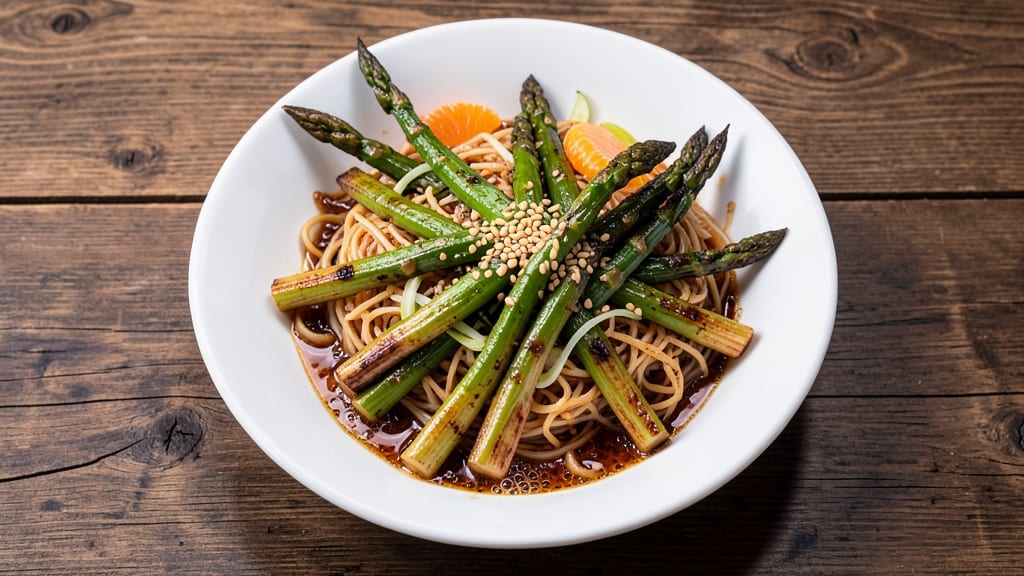
This Asian asparagus salad recipe transforms simple spring asparagus into a vibrant, crunchy dish packed with sesame-ginger roasted flavors and bright, fresh textures.
The secret lies in roasting the asparagus until tender-crisp, then tossing it with a tangy sesame-ginger dressing and crunchy toppings like toasted sesame seeds and crispy rice noodles.
I developed this recipe during peak asparagus season when I wanted a dish that felt fresh yet deeply flavorful—no heavy creams or complicated techniques required.
The roasting process is key—it caramelizes the asparagus just enough to deepen its natural sweetness while keeping it crisp enough to hold up against the salad's other components.
A quick blanching step before roasting ensures even cooking, and the dressing, made with toasted sesame oil, fresh ginger, and a touch of rice vinegar, ties everything together with a perfect balance of nutty, spicy, and tangy notes.
This isn't just a side dish; it's a complete, satisfying meal that's ready in under 30 minutes.
What makes this salad special is how the textures and flavors play off each other: the crunch of toasted sesame seeds and rice noodles contrasts beautifully with the tender asparagus, while the dressing binds it all with a cohesive, umami-rich profile.
The addition of mandarin orange segments adds a bright, citrusy pop that cuts through the richness, making every bite feel balanced and refreshing. It's the kind of dish that's elegant enough for a dinner party but simple enough for a weeknight lunch.
Serve this salad as a light main course with steamed rice or as a vibrant side to complement grilled proteins.
The recipe scales easily, so you can adjust the ingredients to suit your preferences—whether you prefer extra crunch from more noodles or a touch of heat from a dash of chili flakes. Let's get started on creating this restaurant-worthy Asian asparagus salad at home.
Ingredients for asian asparagus salad
Fresh spring asparagus meets bold Asian flavors in this vibrant, crunchy salad.
| Ingredient | Amount | Notes |
|---|---|---|
| Fresh Asparagus 🥦 | 1 lb | Medium spears, trimmed ends |
| Sesame Oil 🫒 | 2 tbsp | Toasted for nutty flavor |
| Fresh Ginger 🌿 | 1 tbsp | Grated, finely minced |
| Rice Vinegar 💧 | 3 tbsp | Seasoned preferred |
| Toasted Sesame Seeds 🥜 | 2 tbsp | For crunchy texture |
| Crispy Rice Noodles 🍜 | 1 ½ cups | Store-bought or homemade |
| Mandarin Orange Segments 🍊 | ½ cup | Fresh or canned in juice |
| Red Bell Pepper 🧅 | ½ cup | Thinly sliced, any color |
| Cilantro 🌿 | ¼ cup | Chopped, stems removed |
| Sesame-Ginger Dressing 🥄 | ½ cup | Homemade or store-bought |
| Olive Oil 🫒 | 1 tbsp | For roasting asparagus |
| Salt 🧂 | ½ tsp | Kosher or sea salt |
| Black Pepper 🌶️ | ¼ tsp | Freshly ground |
| Chili Flakes 🔥 | ½ tsp | Optional for heat |
The asparagus is the star—look for bright green, firm spears with tight tips. Trader Joe's or Whole Foods usually have the best selection during spring. Trim the woody ends with a knife (about an inch off) and snap the rest—it'll break naturally where it's tender. Roasting brings out their natural sweetness, so don't skip this step. For extra crunch, blanch for 1 minute first—it ensures even cooking. If you're short on time, store-bought rice noodles work perfectly; just crisp them up in a dry pan for 2-3 minutes.
No sesame oil? Toasted peanut oil gives a similar nutty depth, though it's not quite the same. Fresh ginger is ideal, but powdered works at half the amount if you're in a pinch. The dressing can be store-bought (look for Asian-inspired ones with sesame and ginger), but homemade lets you control the tang—rice vinegar with a touch of honey balances the flavors beautifully. Mandarin oranges? Canned in juice are fine, but fresh segments add that bright pop. Skip the chili flakes if you prefer mild flavors, but trust me, they add just the right kick.
Roasted asparagus keeps best in the fridge for 3 days—store it in an airtight container with a paper towel to absorb moisture. The dressing should be made fresh, but the rice noodles and sesame seeds stay crisp for up to 1 week if sealed properly. This salad tastes even better the next day as flavors meld. I always double the dressing—it's perfect for drizzling over grilled chicken or fish too. For extra crunch, toast your sesame seeds in a dry pan for 1-2 minutes until golden.
Why You'll Love This Recipe
- No-Cook Crunch: I swear by this when I’m too tired to boil anything. Just snap those asparagus spears, toss them with the dressing, and let the ginger’s sharp bite cut through the natural sweetness—no stove, no fuss.
- Umami Wake-Up: That first drizzle of sesame oil? Pure magic. It turns a simple salad into something deeply savory, like a tiny Asian bistro on your plate, especially when the toasted seeds add a nutty crunch.
- Lunchbox Hero: Between us, this keeps perfectly for days in the fridge—way better than sad, wilted greens. Pack it for work or school; the vinegar keeps it bright, and the asparagus stays crisp longer than most salads.
- Budget Brightener: Fresh asparagus in season? A steal. A little sesame oil and ginger stretch this into a side for two meals, or bulk it up with leftover rice. Honestly, it’s my go-to when I need flavor without breaking the bank.
Step-by-step instructions for crunchy sesame-ginger roasted asparagus
Here's how to make this vibrant, crunchy salad with perfectly roasted asparagus and bold Asian flavors.
Roast the Asparagus for Maximum Crunch
Preheat your oven to 425°F and line a baking sheet with parchment paper. Trim the tough ends from the 1 lb fresh asparagus and lay them on the prepared sheet. Drizzle with 1 tablespoon olive oil and toss gently to coat. Sprinkle evenly with 0.5 teaspoon salt and 0.25 teaspoon black pepper.
Roast for 12-15 minutes until the asparagus is tender-crisp with slightly charred edges. You'll know it's done when you can pierce the thickest spear easily with a fork but it still holds its shape. The high heat caramelizes the natural sugars, giving that perfect smoky-sweet flavor we want. Let the asparagus cool slightly before handling.
Prepare the Crunchy Noodle Base
While the asparagus roasts, prepare the 1.5 cups crispy rice noodles according to package instructions. I like to rinse them under cold water after cooking to stop them from sticking together. Drain well and toss with 2 tablespoons toasted sesame seeds and 0.5 teaspoon chili flakes (if using). This gives them that essential crunch and subtle heat that balances the fresh flavors.
For the vegetables, thinly slice 0.5 cup red bell pepper and chop 0.25 cup cilantro, removing any tough stems. You'll want these cut small enough to eat easily with the noodles but not so fine they disappear into the salad. Add them to a large mixing bowl along with the prepared noodles.
Assemble the Fresh Components
Add the 0.5 cup mandarin orange segments and the cooled roasted asparagus to the mixing bowl. The bright citrus will cut through the richness of the roasted asparagus beautifully. Gently toss everything together with tongs or clean hands, being careful not to break the asparagus spears.
This is where the flavors really start to come together. The sweetness of the mandarin oranges contrasts perfectly with the earthy roasted asparagus, while the crunchy noodles and sesame seeds add texture at every bite. The fresh cilantro adds a bright, herbal note that ties everything together.
Finish with the Signature Dressing
In a small bowl, combine 0.5 cup sesame-ginger dressing with 2 tablespoons sesame oil and 1 tablespoon finely minced fresh ginger. Whisk everything together until well combined. This dressing is what brings all the flavors together in one cohesive bite.
Pour the dressing over the salad and toss gently to coat everything evenly. If you're serving this immediately, give it one final toss right before plating. The dressing will help distribute all those beautiful flavors throughout the salad. For best results, serve while the asparagus is still warm from the oven.
Garnish and Serve Immediately
Divide the salad among four plates, garnishing each serving with an extra sprinkle of toasted sesame seeds and a drizzle of rice vinegar if you like that extra tang. The seeds add another layer of crunch and visual appeal, while the vinegar brightens everything up.
This salad is best enjoyed fresh while all the components still have their perfect texture. The warm asparagus contrasts beautifully with the cool noodles and fresh vegetables, creating a temperature play that makes each bite exciting. Serve with chopsticks for an authentic Asian dining experience, or enjoy with a spoon if you're feeling casual.
Pro Tips For Making Asian Asparagus Salad
- Blanch asparagus right: Drop spears into boiling water for exactly 1 minute—no more, or they’ll turn mushy. Immediately plunge into ice water to stop cooking; this keeps them crisp and bright green. (Yes, even if you’re impatient like me, resist the urge to rush this.)
- Peel ginger with a spoon: Skip the knife and use the back of a spoon to scrape off the skin—it’s faster and cleaner. For this salad, you only need about 1 teaspoon of finely grated ginger, so don’t overdo it. (I learned this the hard way after peeling my thumb twice.)
- Dress salad last: Toss the asparagus with sesame seeds and oil first, then add rice vinegar right before serving. The acid cuts through the oil’s richness, but if you mix it all ahead, the asparagus will get soggy. (Your future self will thank you.)
- Toast seeds in a dry pan: Heat sesame seeds in a dry skillet over medium-low for 2 minutes, shaking the pan constantly, until they’re golden and fragrant. Overheating burns them—just like that time I turned them bitter. (Sounds weird, but it works: the flavor pops way more than store-bought seeds.)
Creative variations of this asian asparagus salad
Spicy Thai-Inspired Twist
Swap the sesame-ginger dressing for a Thai-inspired chili-lime version by mixing 2 tbsp lime juice, 1 tbsp fish sauce (or soy sauce for vegetarian), 1 tsp honey, 1 tsp minced garlic, and ½ tsp red chili flakes.
Add ¼ cup chopped cilantro and 2 tbsp crushed peanuts for extra crunch. This version gets its heat from the chili and fish sauce, balancing beautifully with the sweet mandarin oranges. 🌶️
Japanese-Inspired Sesame-Miso
For a Japanese-inspired take, replace the dressing with a white miso-ginger version: whisk together 2 tbsp white miso paste, 2 tbsp rice vinegar, 1 tbsp toasted sesame oil, 1 tbsp honey, and 1 tsp grated ginger.
Toss the salad with this dressing and top with ¼ cup thinly sliced scallions and 1 tbsp toasted white sesame seeds. The umami-rich miso adds depth, while the scallions bring a fresh, oniony crunch. 🥢
Korean-Inspired Gochujang
Add a Korean kick by incorporating 1 tbsp gochujang (Korean chili paste) into the sesame-ginger dressing. Add 1 tsp soy sauce and ½ tsp sesame oil to deepen the flavor. Top the salad with ¼ cup shredded carrots and 2 tbsp toasted sesame seeds.
The gochujang brings a sweet, spicy, and slightly tangy profile that pairs perfectly with the roasted asparagus. For extra texture, add ¼ cup crispy fried shallots. 🔥
Vegan Protein Boost
Make this salad heartier by adding ½ cup edamame (shelled and steamed) or ½ cup baked tofu cubes. For edamame, simply blanch ½ cup frozen edamame in boiling water for 2 minutes, then shock in ice water.
For tofu, press and cube ½ block firm tofu, then bake at 400°F for 20 minutes with 1 tsp soy sauce and ½ tsp smoked paprika. These additions add a satisfying protein punch while keeping the dish vegetarian. 💚
Summer Citrus Variations
Swap out mandarin oranges for summer berries like ½ cup sliced strawberries or ½ cup blueberries. Add ¼ cup chopped mint for a refreshing twist. For a tropical vibe, use ½ cup diced pineapple and 2 tbsp toasted coconut flakes instead of sesame seeds.
These variations keep the salad light and vibrant, perfect for warm weather. 🍓
Crunchy Add-Ins Galore
Want even more texture? Add ¼ cup crushed wasabi peas or ¼ cup fried wonton strips for a salty, crispy crunch. For a nutty twist, toss in ¼ cup chopped roasted peanuts or ¼ cup candied pecans**.
These additions elevate the salad from a simple side to a full-fledged crunchy feast. 🥜
Nutrition facts
Frequently asked questions
Can I use raw asparagus instead of roasted?
Raw asparagus works beautifully if you prefer a lighter texture. Simply trim the ends, peel the lower inch (if thick), and slice into 1/4-inch pieces. Toss with the dressing and other components right before serving. For extra crunch, add 1 tbsp toasted almonds or 1/4 cup shredded carrots to balance the softer texture.
How do I make this salad gluten-free?
Use tamari (gluten-free soy sauce) instead of regular soy sauce in any dressings, and check your crispy rice noodles for gluten-free certification. Most Asian markets carry gluten-free rice noodles, or you can use gluten-free vermicelli noodles instead. The sesame-ginger dressing remains naturally gluten-free as long as you use certified gluten-free sesame oil.
What's the best way to store leftovers?
Store the salad in an airtight container for up to 2 days. Keep the dressing separate until ready to eat to prevent sogginess. For the asparagus alone, wrap it tightly in plastic and refrigerate for up to 3 days. Reheat roasted asparagus in a 350°F oven for 5-7 minutes before reassembling the salad with fresh toppings.
Can I substitute mandarin oranges with something else?
Yes! Try 1/2 cup diced mango for tropical sweetness, 1/2 cup sliced strawberries for summer freshness, or 1/2 cup thinly sliced cucumber for a lighter option. The key is balancing the salad's earthy flavors with something bright and acidic—citrus or berries work best, but melon or cucumber add a refreshing contrast too.
Why did my asparagus turn mushy when roasting?
Overcooking is the most likely culprit—roast for 12-15 minutes at 425°F only until tender-crisp. For best results, blanch asparagus in boiling water for 1 minute first, then roast. Also ensure your oven is fully preheated and the asparagus isn't overcrowded on the baking sheet. Leave 1-inch space between spears for even air circulation.