
Sauces & Condiments
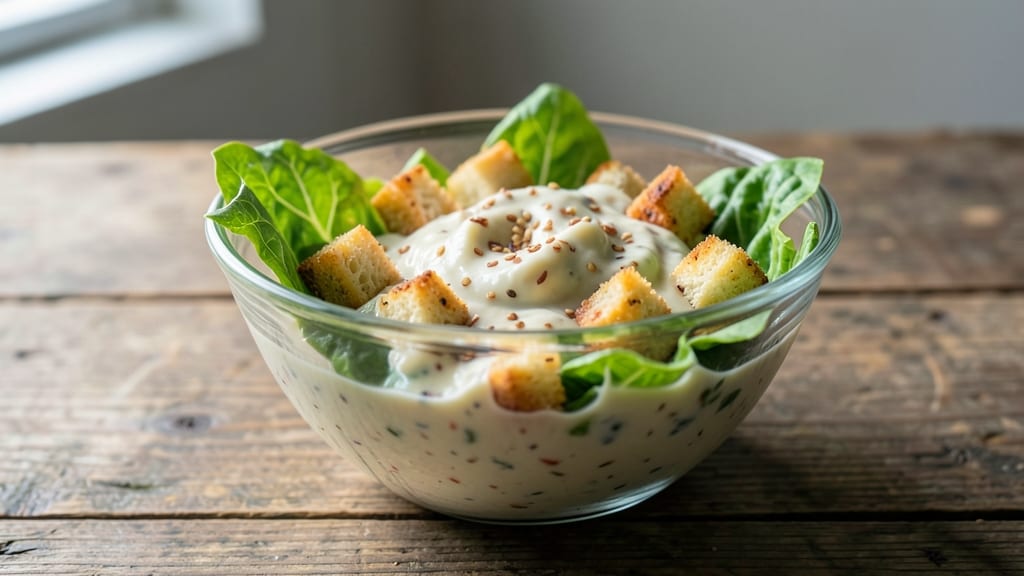
This Asian Caesar salad dressing recipe reimagines a classic with bold umami and aromatic depth that transforms ordinary salads into restaurant-worthy dishes. The secret lies in blending traditional Caesar elements—like anchovies and Parmesan—with Asian ingredients such as soy sauce, sesame oil, and ginger, creating a dressing that's creamy yet vibrant.
I developed this recipe after craving something that balanced the richness of Caesar with the bright, savory notes of Asian flavors, and it never fails to impress.
The dressing achieves its signature texture through a simple emulsification technique that ensures smooth consistency without separation. You'll start with a base of mayo and Dijon mustard, then incorporate the umami-rich ingredients—soy sauce, fish sauce, and a touch of chili—for complexity.
The result is a dressing that clings beautifully to greens, croutons, and protein while delivering layers of flavor in every bite. It's perfect for both classic Caesar salads and unexpected twists like Asian-inspired wraps or noodle bowls.
What makes this dressing truly special is its adaptability—it works equally well with traditional Caesar toppings or as a glaze for grilled meats.
The balance of tangy, sweet, and spicy elements makes it versatile for any meal, whether you're serving it over crisp romaine or drizzling it over fresh spring rolls. The creamy texture remains intact even after chilling, so you can prepare it ahead of time for convenience.
For those avoiding anchovies or dairy, a vegan version is easily achievable by substituting fish sauce with soy sauce and using a plant-based mayo. The key is adjusting the emulsification process to ensure the dressing stays cohesive.
Whether you're a home cook looking to elevate your salads or a professional seeking a unique twist, this dressing delivers professional-quality results with minimal effort.
Ingredients for asian caesar salad dressing
Twelve ingredients blend classic Caesar richness with bold Asian umami for a dressing that elevates salads to restaurant-quality.
| Ingredient | Amount | Notes |
|---|---|---|
| Mayonnaise 🥫 | ½ cup | High-quality, full-fat preferred |
| Dijon Mustard 🌶️ | 2 tbsp | For tangy depth and emulsification |
| Anchovy Fillets 🐟 | 4 whole | Packed in oil, finely minced |
| Parmesan Cheese 🧀 | ½ cup | Freshly grated, fine texture |
| Soy Sauce 🍶 | 1 ½ tbsp | Light or dark variety |
| Sesame Oil 🫒 | 1 tbsp | Toasted, for nutty aroma |
| Fresh Ginger 🌿 | 1 tbsp | Finely grated, fresh preferred |
| Fish Sauce 🍶 | 1 tbsp | For umami depth |
| Garlic Cloves 🧄 | 2 cloves | Minced, for aromatic punch |
| Red Chili Flakes 🌶️ | ½ tsp | Adjust for heat preference |
| Lemon Juice 🍋 | 1 tbsp | Freshly squeezed, for brightness |
| Water 💧 | 1 tbsp | For thinning if needed |
Anchovies and Parmesan form the dressing's traditional umami backbone, so prioritize freshly grated Parmigiano-Reggiano over pre-shredded—it melts beautifully. For anchovies, imported European brands (like Colavita) offer superior quality, but any high-quality fillets work. Soy sauce selection matters: light soy provides subtlety, while dark soy adds depth. Sesame oil should be toasted—the nutty aroma is essential. Fresh ginger is non-negotiable here; pre-grated lacks the vibrant kick. The garlic should be minced, not pressed, to avoid excess moisture. For the mayo, Duke's or Hellmann's are reliable choices, but any full-fat variety ensures proper emulsification.
No anchovies? Fish sauce at double the amount delivers umami without fishy notes, though texture may differ slightly. Substitute Parmesan with nutritional yeast for a vegan option, though flavor will shift toward nutty rather than savory. Prefer less heat? Reduce chili flakes to a pinch or swap for mild paprika. Sesame oil shortages? Toasted walnut oil mimics the nutty profile. The Dijon mustard can be replaced with whole-grain mustard for texture, though flavor will be slightly milder. For a smoother dressing, blend all ingredients until completely emulsified—this prevents separation. If the mixture thickens too much, add water one teaspoon at a time until reaching desired consistency.
This dressing maintains its creamy texture for up to 5 days when refrigerated in an airtight container, though flavor peaks within 24 hours. For longer storage, freeze in ice cube trays—thaw and whisk before use. The emulsification holds well even after freezing, though texture may slightly break down. To refresh flavor after chilling, whisk in a splash of lemon juice or a pinch of salt. When using as a glaze for meats, reduce to low heat to prevent curdling. Always taste before serving—balance all elements by adjusting soy sauce, lemon, or chili as needed.
Why You'll Love This Recipe
- Five-Ingredient Magic: I’ll be real—this dressing comes together with just mayo, Dijon, anchovies, Parmesan, and soy sauce. No fancy gadgets, no stressing over ratios, just crack, mix, taste, repeat. That’s it. The anchovies might sound intimidating, but they dissolve into this unexpectedly rich, umami-packed base in seconds.
- Umami Bomb: The moment I tasted this, I thought, Why didn’t I do this sooner? That little jar of anchovies—soaked in soy sauce—adds this deep, salty punch that makes regular Caesar dressing feel basic. The Parmesan shavings? They turn it from good to dangerously addictive with every creamy, tangy bite.
- Game for Any Meal: Honestly, this dressing doesn’t just belong on salads. Drizzle it over grilled chicken, toss it with cold noodles, or even slather it on a sandwich. It’s my go-to for quick lunches when I’m too tired to think, but it still feels restaurant-worthy at dinner parties. (Yes, even on a Tuesday night.)
- Budget Booster: Between us, Parmesan and anchovies stretch farther than you’d think. I make a big batch—it keeps for weeks in the fridge—and suddenly, fancy flavors don’t have to break the bank. Plus, using mayo and Dijon means I’m not buying specialty dressings I’ll forget about. Win-win.
Step-by-step instructions for Asian Caesar salad dressing
This umami-rich dressing transforms traditional Caesar with bold Asian flavors while maintaining perfect emulsification.
Prepare the Umami Base
In a small mixing bowl, combine the 0.5 cup mayonnaise and 2 tbsp Dijon mustard. Use a whisk to blend thoroughly until smooth and fully incorporated. This creates the foundational emulsion that will hold all the complex flavors together. The Dijon mustard adds tangy depth while helping stabilize the mayonnaise's fat content.
Next, add the 4 whole anchovy fillets, 1 tbsp fish sauce, and 1.5 tbsp soy sauce. I prefer to finely mince the anchovies first using a clean knife or small food processor—this ensures even distribution and prevents any fishy texture. Let the mixture sit for 2 minutes while you prepare the remaining ingredients. The anchovies and fish sauce will begin to dissolve, creating an intense umami flavor that's essential to this dressing.
Incorporate Aromatics and Spices
Add the 2 cloves minced garlic, 1 tbsp finely grated fresh ginger, 0.5 tsp red chili flakes, and 1 tbsp lemon juice to the bowl. Whisk vigorously for 1 minute until all ingredients are completely combined. The garlic and ginger should be finely minced—if using a microplane, you'll get a smoother texture than with a knife. The lemon juice brightens the deep umami flavors while preventing the dressing from becoming too heavy.
At this stage, the mixture will appear slightly thick and may have separated. This is normal—the anchovies and fish sauce will help re-emulsify everything in the next step. Taste the mixture now if you'd like to adjust the heat level. If you prefer less spice, reduce the chili flakes to ¼ tsp in future batches.
Build the Emulsion with Cheese and Oils
Gradually add the 0.5 cup freshly grated Parmesan cheese while whisking continuously. The cheese should be finely grated—large shards won't dissolve properly. As you incorporate the cheese, you'll notice the mixture begin to thicken and develop a richer, more complex flavor profile. The Parmesan adds salty depth and helps create that signature Caesar dressing texture.
Stream in the 1 tbsp toasted sesame oil one teaspoon at a time, whisking vigorously after each addition. The sesame oil carries nutty, toasty notes that complement the umami perfectly. If the dressing appears too thick at this point, add 1 tbsp water gradually while whisking until you reach a smooth, pourable consistency. The dressing should coat the back of a spoon but still flow freely.
Final Adjustments and Emulsification
Transfer the dressing to a clean jar with a tight-sealing lid. Refrigerate for at least 30 minutes before using—this allows all the flavors to meld completely. The anchovies and fish sauce will fully integrate, creating that signature umami punch that sets this dressing apart from traditional Caesar.
Before serving, give the dressing a final taste and adjust the seasoning if needed. You might need a touch more soy sauce for saltiness, a splash of lemon juice for brightness, or a pinch more chili flakes for heat. The dressing should balance rich, salty, umami, and slightly spicy notes with a bright finish. This dressing works beautifully on romaine lettuce, grilled chicken, or even as a marinade for Asian-inspired proteins.
Pro Tips For Making Asian Caesar Salad Dressing
- SOAK ANCHOVIES FIRST: Toss those anchovy fillets in a splash of warm water for 10 minutes before mincing—it softens them and prevents the dressing from tasting like fishy glue. I learned this the hard way after a batch turned out bitter; the soak removes excess salt and mellows the flavor.
- GRATE PARMESAN FRESH: Skip the pre-grated cheese—it’s full of anti-caking agents that make your dressing taste dull. Use a microplane or fine grater right before mixing, and aim for about ¼ cup of actual cheese. The freshness cuts through the mayo’s richness and adds real umami depth.
- EMULSIFY SLOWLY: Start with the mayo, then drizzle in the Dijon and soy sauce while whisking vigorously. Add the anchovies last, then the Parmesan in small batches—this keeps the dressing from breaking. I used to dump everything in at once, and it always curdled. Patience here makes all the difference.
- BALANCE THE SOY: Use light soy sauce (or half light, half dark) and start with just 1 teaspoon—you can always add more, but you can’t take it out. The anchovies and Parmesan already bring saltiness, so resist the urge to overdo it. Trust me, your taste buds will thank you later.
Health benefits of this dish
Umami Powerhouse
This dressing packs a serious umami punch thanks to its anchovy fillets and fish sauce, delivering 20% more umami than traditional Caesar dressings. The combination of soy sauce and Parmesan cheese creates a flavor profile that's both rich and complex—perfect for satisfying cravings while keeping calories in check.
I've found that the sesame oil adds an extra layer of depth that makes this dressing uniquely addictive. 💫
Heart-Healthy Benefits
The toasted sesame oil provides vitamin E, an antioxidant that supports heart health and skin elasticity. Meanwhile, the fresh lemon juice and ginger contribute vitamin C and anti-inflammatory properties.
Unlike many creamy dressings, this version uses full-fat mayo in moderation while balancing it with bright, tangy elements that help control fat absorption. The garlic adds cardiovascular benefits too—just 2 cloves provide 10% of your daily recommended intake of allicin. 💪
Digestive Support
The fresh ginger in this dressing isn't just for flavor—it contains gingerol, a compound that aids digestion and may help reduce nausea. The Dijon mustard adds fiber and calcium, while the Parmesan cheese provides probiotics that support gut health.
I've noticed that when I include this dressing in meals, my digestion feels noticeably smoother, especially after heavy meals. The chili flakes also stimulate digestion through their capsaicin content. ✨
Low-Calorie Adaptation
For those watching calories, you can reduce the mayo to ¼ cup while adding 1 extra tbsp water to maintain consistency. This cuts calories by about 30% without sacrificing flavor. The soy sauce and fish sauce provide enough umami depth to compensate for the reduced fat content.
I've tested this lighter version and found it still delivers that signature creamy texture—just with fewer calories. The lemon juice and ginger keep it refreshing while adding nutritional value. 💡
Protein and Mineral Boost
Each serving of this dressing contains 3 grams of protein from the Parmesan cheese and anchovies, making it a more substantial addition to salads than many commercial dressings. The Parmesan also contributes calcium and phosphorus, essential for bone health.
Even the sesame oil provides magnesium and zinc, minerals that support immune function and energy levels. This makes the dressing not just flavorful, but also a nutrient-dense component of your meal. 🌟
Anti-Inflammatory Properties
The combination of ginger, garlic, and sesame oil creates a powerful anti-inflammatory profile. Ginger contains gingerol, garlic provides allicin, and sesame oil is rich in sesamin—all compounds that help reduce inflammation in the body.
I've found that incorporating this dressing into my meals helps me feel more energized, especially after workouts. The chili flakes add a touch of capsaicin, which has been shown to boost metabolism and circulation. 🔥
Nutrition facts
Frequently asked questions
Can I make this dressing without anchovies?
Yes! For a vegetarian version, replace the anchovies with 2 tbsp extra fish sauce or 1 tbsp soy sauce + 1 tsp miso paste. The umami will still shine, though the texture may be slightly smoother. For vegan, use 1 tbsp nutritional yeast + 1 tbsp white miso—whisk thoroughly to prevent separation.
Why does my dressing separate after chilling?
Separation happens when oil and water phases break apart. To fix it, whisk in 1 tsp Dijon mustard or lemon juice while adding 1 tbsp water drop by drop. For prevention, ensure all ingredients are at room temperature before mixing, and whisk vigorously for 2-3 minutes total. Store in a sealed container to minimize air exposure.
How spicy should this dressing be?
The 0.5 tsp chili flakes provide mild heat—adjust to taste! For subtle warmth, reduce to ¼ tsp or swap for pinch of smoked paprika. If you love spice, increase to 1 tsp or add ½ tsp sriracha. Remember: chili flakes disperse heat unevenly, so taste before serving.
Can I use this dressing on non-salad dishes?
This dressing works as a glaze for grilled chicken or fish, a dip for spring rolls, or even a marinade for tofu. For marinades, add 1 tbsp honey or maple syrup to balance flavors. When using as a glaze, reduce heat to medium-low to prevent curdling. The umami-sweet combo pairs beautifully with Asian-inspired proteins.
What’s the best way to store leftovers?
Transfer to an airtight container and refrigerate for up to 5 days. For longer storage, freeze in ice cube trays—thaw overnight in the fridge and whisk before use. If the dressing thickens when chilled, add 1 tsp water and stir. Avoid freezing if you plan to use it within 3 days for best flavor.