
Side Dishes
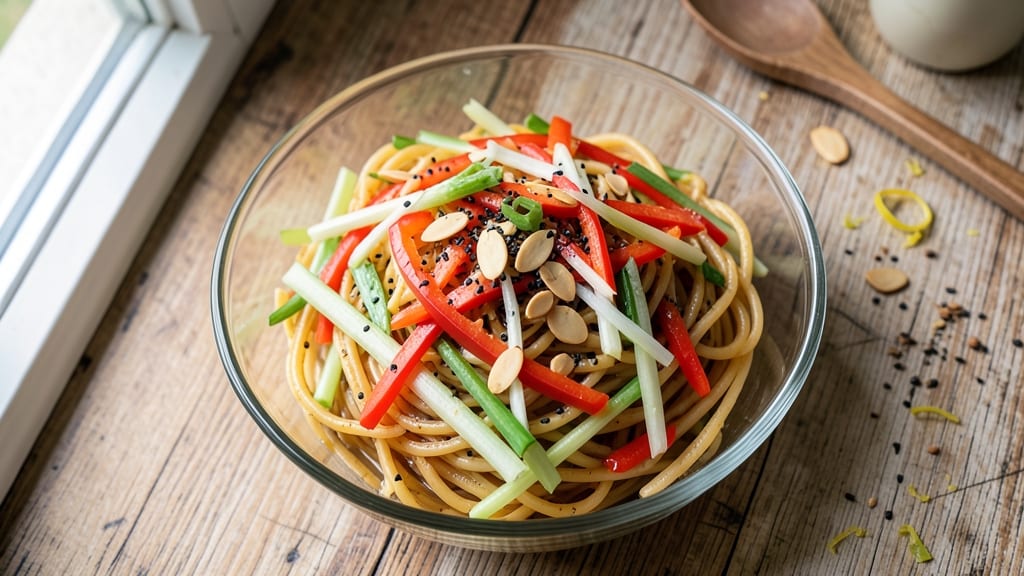
This Asian spaghetti salad recipe transforms a classic side into a vibrant, flavor-packed dish that brings restaurant-quality taste to your table. The secret lies in crisp celery, a sesame-ginger dressing that balances sweet and savory, and perfectly cooked spaghetti that stays al dente even when chilled.
I developed this recipe after craving something fresh, crunchy, and packed with Asian-inspired flavors—without the heaviness of traditional pasta dishes.
The foundation starts with cold spaghetti—cooked just right, rinsed, and shocked in ice water to prevent sticking. This ensures each strand remains firm and holds up to the dressing and toppings.
The dressing itself is where the magic happens: a bright sesame-ginger blend with a touch of honey and rice vinegar, tossed with toasted sesame seeds for depth. Chopped celery, bell peppers, and scallions add the crunch that keeps every bite exciting.
What makes this salad truly special is how the textures and flavors come together—crisp vegetables contrast the tender pasta, while the dressing clings to each strand without making it soggy.
It’s light enough for a summer potluck but hearty enough to stand as a main dish, especially when paired with grilled chicken or shrimp. The best part? It tastes even better the next day, making it perfect for meal prep.
Serve it chilled or at room temperature, garnished with extra sesame seeds and sliced almonds for a touch of elegance. This isn’t just a side dish—it’s a complete, adaptable meal that proves spaghetti salad can be bold, fresh, and unforgettable. Let’s get started on making yours.
Ingredients for asian spaghetti salad
Crisp vegetables, al dente pasta, and a bright sesame-ginger dressing make this salad restaurant-worthy.
| Ingredient | Amount | Notes |
|---|---|---|
| Spaghetti 🍝 | 12 oz | Dry weight, al dente preferred |
| Celery Stalks 🧅 | 3 whole | Fresh, thinly sliced |
| Red Bell Pepper 🍆 | 1 whole | Medium, diced small |
| Green Onions 🧅 | 4 whole | Scallions, thinly sliced |
| Sesame Seeds 🌾 | 2 tbsp | Toasted, plus extra for garnish |
| Sliced Almonds 🌰 | ¼ cup | Toasted, for crunch |
| Extra-Virgin Olive Oil 🫒 | ¼ cup | For cooking pasta |
| Sesame Oil 🫒 | 1 tbsp | For dressing |
| Rice Vinegar 🍶 | 3 tbsp | White or seasoned |
| Honey 🍯 | 2 tbsp | Light, for balance |
| Fresh Ginger 🌿 | 1 tbsp | Grated, finely |
| Low-Sodium Soy Sauce 🍶 | 2 tbsp | For umami depth |
| Salt 🧂 | 1 tsp | Kosher or sea salt |
| Black Pepper 🌶️ | ½ tsp | Freshly ground |
| Ice Cubes ❄️ | 1 cup | For shocking pasta |
The celery and bell pepper are your crunch foundation—look for vibrant, firm produce at the grocery store. Trader Joe's or Whole Foods usually carry the freshest cuts, but any well-stocked supermarket works. Thinly slice the celery on the diagonal for maximum surface area and crunch. The green onions? Use the white and green parts—the green adds color, the white has more flavor. Toasting the sesame seeds and almonds in a dry pan for 2 minutes (just until fragrant) elevates their flavor dramatically. Don't skip this step—it's what makes this salad taste restaurant-quality.
No sesame oil? Toasted peanut oil works in a pinch, though it'll change the flavor profile slightly. Short on rice vinegar? Apple cider vinegar at half the amount gives a similar tang. The honey can be swapped for agave nectar or maple syrup if you prefer. For extra protein, add grilled shrimp or edamame—just toss them in after dressing the salad. The dressing clings best to cold pasta, so shock the spaghetti in ice water immediately after cooking. This prevents the strands from sticking and keeps them firm even when chilled.
This salad keeps beautifully for 3-4 days in the fridge, with flavors deepening over time. Store the dressing separately if you're prepping ahead—toss it together just before serving. The sesame seeds and almonds stay crisp for 2 days in an airtight container. For meal prep, portion into individual containers with the dressing on the side—shake to combine right before eating. The dressing also works as a marinade for grilled chicken or shrimp, so make extra if you're planning a full Asian-inspired meal.
Why You'll Love This Recipe
- No-Cook Crunch: I swear by the celery and bell pepper—just chop ‘em once, toss ‘em in, and that satisfying crunch stays until the last bite. (Yes, even when my kids "help" by shredding the celery into confetti.)
- Sesame Magic: That little sprinkle of toasted sesame seeds? It’s the secret weapon. You won’t believe how much richer the whole dish feels—like a tiny, nutty hug in every forkful.
- Lunchbox Hero: Between us, this is my go-to for packed lunches. The spaghetti holds up for days, the dressing clings perfectly, and my coworkers still ask where I got the recipe. (They’re not getting it.)
- Budget Power Move: Spaghetti and bell peppers stretch this salad into a full meal for four—no fancy ingredients, just smart swaps. I’ve fed a crowd for under $10 and had zero regrets. (Zero.)
Step-by-step instructions for Asian spaghetti salad
Here's how to create a perfectly balanced, restaurant-quality salad with crisp vegetables and vibrant dressing.
Cook and Shock the Spaghetti
Bring a large pot of water to a rolling boil and add the 12 oz spaghetti along with 1 tsp salt. Cook until al dente—about 1 minute less than package directions suggest. The pasta should have a slight bite to it.
Drain the pasta immediately and transfer it to a large bowl. Add the 1 cup ice cubes to shock the pasta, stopping the cooking process instantly. This crucial step prevents the pasta from becoming mushy and preserves its texture. Drain the ice water completely before proceeding.
Prepare the Vegetable Medley
While the pasta cooks, thinly slice the 3 whole celery stalks and dice the 1 whole red bell pepper into small pieces. Thinly slice the 4 whole green onions, separating the white and green parts if desired. The celery and bell pepper should be cut uniformly for even texture throughout the salad.
Toast the 0.25 cup sliced almonds in a dry skillet over medium heat for 3-4 minutes until golden brown and fragrant. Remove from heat and set aside. This step adds a delightful crunch that contrasts beautifully with the tender pasta and crisp vegetables.
Make the Sesame-Ginger Dressing
In a small bowl, whisk together the 1 tbsp sesame oil, 3 tbsp rice vinegar, 2 tbsp honey, 2 tbsp low-sodium soy sauce, and 1 tbsp finely grated fresh ginger. The mixture should be smooth and well combined. Taste and adjust seasoning with additional soy sauce if needed.
Slowly drizzle in the 0.25 cup extra-virgin olive oil while whisking continuously. This gradual addition creates a beautifully emulsified dressing with a silky texture. Set aside while you prepare the remaining components.
Assemble the Salad
Add the prepared vegetables to the shocked spaghetti along with the toasted almonds. Pour the dressing over the mixture and gently toss everything together with tongs. The dressing should coat the pasta and vegetables evenly, creating a vibrant, flavorful base.
Sprinkle with the remaining 2 tbsp sesame seeds and 0.5 tsp black pepper. Taste and adjust seasoning if needed—you may want to add a touch more soy sauce for umami or honey for sweetness. The salad should be perfectly balanced between savory, sweet, and slightly spicy notes.
Serve Immediately
Transfer the salad to a serving platter or individual bowls. Garnish with additional sliced green onions and sesame seeds for extra visual appeal. Serve immediately while the pasta is still warm and the vegetables retain their crisp texture.
This salad makes for an excellent light lunch or refreshing side dish. The combination of warm pasta with cool, crisp vegetables and a tangy dressing creates a truly satisfying meal that's perfect for any occasion.
Pro Tips For Making Asian Spaghetti Salad
- COOK THE PASTA AL DENTE: Asian spaghetti salad needs pasta with bite—cook it 1 minute less than package instructions, then shock it in ice water for 30 seconds. Cold pasta holds up better in the dressing, and the slight firmness keeps the texture from turning mushy when you add crunchy veggies later. (Yes, even if you’re impatient like me, resist the urge to overcook.)
- JULIENNE THE CELERY: Skip the rough chop—use a mandoline for thin, even strips. The celery should be paper-thin so it doesn’t overpower the salad with chewiness, and it’ll soak up the dressing better. If you don’t have a mandoline, stack celery stalks and slice them crosswise into matchsticks with a sharp knife. (Your future self will thank you.)
- DRESSING AFTER VEGGIES: Toss the dressing with the pasta last—after celery, bell pepper, and green onions are already mixed in. Adding it early makes the celery soggy and dulls the bright colors. Wait until everything’s combined, then drizzle and toss gently. (This isn’t the prettiest method, but it’s the tastiest.)
- TOAST SESAME SEEDS FIRST: Dry-toast the sesame seeds in a small pan over medium heat for 30–60 seconds until they smell nutty and fragrant. This prevents them from turning bitter and adds depth to the salad. Sprinkle them in at the very end so they stay crisp. (I learned this the hard way—burnt sesame seeds ruin everything.)
Dietary considerations for this asian spaghetti salad
Gluten-Free Adaptation
Swap the regular spaghetti for gluten-free spaghetti made from brown rice, quinoa, or chickpea pasta. Brands like Barilla GF or Tinkyada work perfectly—they hold up well to the dressing and maintain texture when chilled. Just ensure the package specifies "gluten-free" certification to avoid cross-contamination. 🌱
Vegetarian Versions
This salad is naturally vegetarian, but you can boost protein with edamame (½ cup, shelled) or tofu (½ cup, cubed and pan-fried). For extra richness, add crumbled feta or avocado slices—both pair beautifully with the sesame-ginger flavors. Toss in shredded carrots or jicama for additional crunch and color.
Nut-Free Option
Skip the almonds and replace them with toasted pumpkin seeds (¼ cup) or crushed potato chips (½ cup) for a salty crunch. For extra protein, add chickpeas (½ cup, rinsed and drained) or crumbled bacon (2 oz, cooked). The dressing remains the same, ensuring the salad stays flavorful without nuts.
Low-Sodium Adjustments
Use low-sodium soy sauce (or coconut aminos) and reduce the amount to 1 tbsp instead of 2. Boost umami with 1 tsp fish sauce or 1 tbsp miso paste (white or red).
For extra flavor without salt, add 1 tsp grated lemon zest or 1 tbsp lime juice to the dressing. These tweaks keep the dish flavorful while reducing sodium content.
Dairy-Free Considerations
The recipe is already dairy-free, but if you're adding proteins like chicken or shrimp, ensure they're prepared without butter or cream-based marinades. For a vegan option, use aquafaba (chickpea brine) to replace honey in the dressing—mix 2 tbsp aquafaba with 1 tbsp maple syrup for a similar sweetness.
The salad remains light and refreshing while accommodating dietary needs.
Nutrition facts
Frequently asked questions
Can I use whole wheat or brown rice pasta instead of regular spaghetti?
Yes, you can absolutely substitute! Whole wheat spaghetti adds a nutty flavor and extra fiber, while brown rice or quinoa pasta works well for gluten-free diets. The key is to shock the pasta in ice water immediately after cooking to prevent it from turning mushy. These varieties may take slightly longer to cook—check for al dente texture about 1 minute less than package instructions suggest.
How do I keep the vegetables crisp in this salad?
Crispness comes from two key steps: cutting vegetables right before assembly and using ice-cold water for the celery and bell pepper. Toss the chopped veggies in a bowl of ice water for 5 minutes before draining and adding to the salad. This "shock" method preserves their crunch. Also, add the almonds and sesame seeds just before serving to keep them fresh.
Can I make this salad ahead of time?
This salad actually tastes better the next day as the flavors meld together. Store the dressing separately in the fridge and toss it with the salad just before serving. The pasta and vegetables will stay fresh for 3-4 days in an airtight container. For extra crunch, add fresh green onions and toasted sesame seeds right before eating.
What's the best way to add protein to this salad?
Grilled chicken, shrimp, or edamame work beautifully. For chicken, marinate 1 cup diced chicken breast in the dressing for 30 minutes before grilling, then chop and add to the salad. For shrimp, toss ½ lb peeled shrimp with 1 tbsp soy sauce and 1 tsp ginger, then grill or sauté until pink. Add protein just before serving to keep it warm and tender.
Why does my dressing separate when I toss it with the salad?
This usually happens when the dressing isn't properly emulsified. To fix it, whisk the dressing ingredients more vigorously, especially when adding the olive oil. For a smoother texture, add 1 tsp cornstarch or 1 tsp honey to the dressing mixture before whisking. If separation still occurs, toss the salad gently and let it sit for 5 minutes before serving—this gives the flavors time to blend.