
Salads
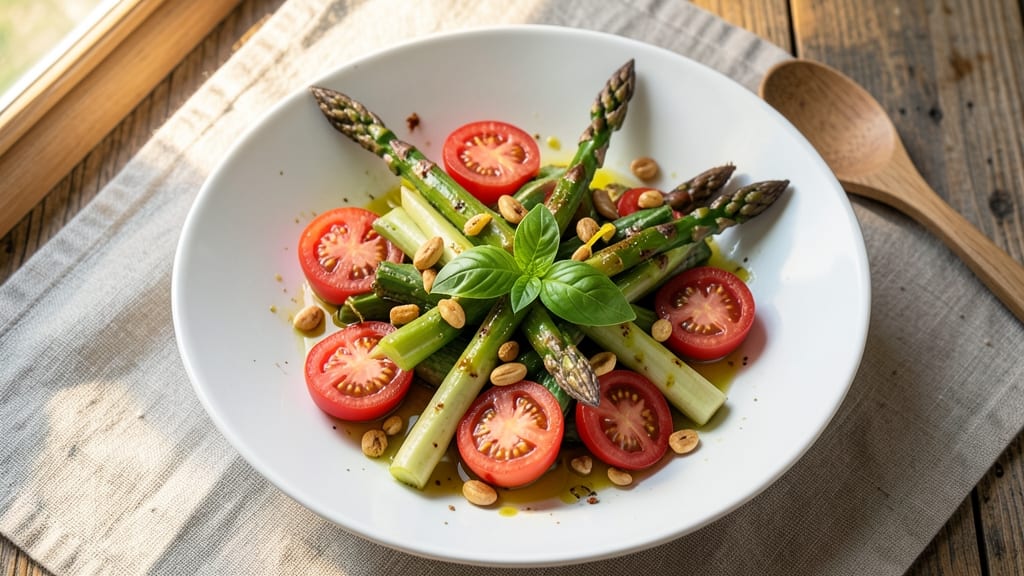
This asparagus and tomato salad recipe transforms spring's freshest ingredients into a vibrant, crunchy dish that's as satisfying as it is beautiful. The secret lies in perfectly trimmed asparagus spears and ripe tomatoes tossed with bright herbs and a zesty dressing that brings out their natural flavors.
I developed this recipe during peak spring harvests when farmers' markets overflow with these ingredients, and it's become my go-to for both light lunches and elegant dinner sides.
What makes this salad special is its balance of textures: crisp asparagus, juicy tomatoes, and crunchy additions like toasted nuts or croutons. The dressing—a simple blend of olive oil, lemon juice, Dijon mustard, and fresh herbs—enhances rather than overpowers the natural sweetness of the vegetables.
This recipe is also incredibly adaptable, making it perfect for vegan diets with a few simple swaps or for those looking to add protein with grilled chicken or white beans.
The result is a salad that's visually stunning with its pop of green and red colors, while the flavors are bright, fresh, and perfectly balanced. Each bite delivers a satisfying crunch, a burst of tomato sweetness, and a hint of herby zing that keeps you coming back for more.
It's the kind of dish that feels both effortless and impressive, perfect for spring and summer entertaining.
Whether you're serving this as a light main course or a side dish, the plating is just as important as the recipe. Arrange the asparagus and tomatoes in an overlapping pattern for visual appeal, then sprinkle with fresh herbs and your choice of garnish.
The salad stays fresh for up to two days in the refrigerator, making it an ideal meal prep option for busy weekdays.
Ingredients for asparagus and tomato salad
Spring's freshest ingredients come together for a salad that's vibrant, crunchy, and full of bright herb zing.
| Ingredient | Amount | Notes |
|---|---|---|
| Fresh Asparagus Spears 🌱 | 1 lb | Trim woody ends, discard tough parts |
| Medium Tomatoes 🍅 | 4 whole | Cherry or vine-ripened preferred |
| Extra-Virgin Olive Oil 🫒 | ½ cup | Lightly fruity variety preferred |
| Fresh Lemon Juice 🍋 | 3 tbsp | Freshly squeezed for brightness |
| Dijon Mustard 🍯 | 1 tbsp | Mild or sharp to taste |
| Fresh Basil Leaves 🌿 | ½ cup | Chopped, stems removed |
| Fresh Parsley Leaves 🌿 | ¼ cup | Chopped, for garnish |
| Toasted Pine Nuts 🥜 | ¼ cup | Or walnuts for budget option |
| Red Wine Vinegar 🍷 | 1 tbsp | For dressing acidity |
| Sea Salt 🧂 | ½ tsp | Diamond Crystal preferred |
| Freshly Ground Black Pepper 🌶️ | ¼ tsp | Cracked peppercorns preferred |
| Balsamic Glaze 🍷 | 1 tbsp | For drizzling, optional |
The asparagus should be bright green and firm—avoid woody stalks. Local farmers' markets have the freshest spears in spring, but grocery store bunches work too if you trim the ends properly. Tomatoes should be vine-ripened (not greenhouse-grown) for that juicy sweetness. Heirloom varieties add extra flavor, but regular beefsteak tomatoes work perfectly fine. Look for basil and parsley with vibrant leaves—no yellowing or wilting. The pine nuts should be toasted until golden for maximum crunch, but walnuts or pecans will work in a pinch if you're watching your budget.
No fresh basil? Dried basil at one-third the amount works, though it lacks that bright freshness. Short on red wine vinegar? Apple cider vinegar or lemon juice are great substitutes. For a vegan option, skip the balsamic glaze or use a vegan-friendly version. The dressing ratio is key—start with the measurements, then adjust to taste. Too tangy? Add more olive oil. Too mild? A splash of vinegar or extra lemon juice helps. If you're adding protein, grilled chicken or white beans work beautifully without overpowering the fresh vegetables.
This salad stays fresh for up to 2 days in the fridge, though the asparagus may soften slightly. Store components separately to maintain crispness—toss everything together just before serving. For meal prep, keep the dressing separate until ready to eat. The pine nuts and herbs can be toasted and chopped ahead of time, but add them fresh when plating for maximum visual appeal. The balsamic glaze adds a sweet contrast, so drizzle it just before serving to prevent the tomatoes from getting soggy.
Why You'll Love This Recipe
- No Chopping Chaos: I swear by this one—just trim the asparagus, halve the tomatoes, and toss. That’s it. No dice, no fuss, no crying over peeling. The spears stay whole for that satisfying crunch, and the tomatoes? Big, juicy slices that hold up perfectly.
- Zesty Brightness: Honestly, the dressing is where this salad shines. That sharp Dijon cut through the freshness of the asparagus, while the lemon juice keeps everything from getting soggy. Drizzle it on just before serving, and you’ve got a flavor punch that’s light but ridiculously satisfying.
- Lunchbox Hero: Between us, this is my go-to for packed lunches. The asparagus stays crisp for hours, and the tomatoes? They don’t turn to mush like other salads. Plus, it’s the kind of dish that feels fancy enough for a picnic but simple enough to throw together on a Tuesday.
- Budget Bright Spot: Fresh asparagus and tomatoes might sound pricier, but here’s the secret: you use way less than you think. A single bunch of asparagus and a couple tomatoes stretch for days, and the olive oil and lemon juice? They’re pantry staples that make everything taste expensive. Leftovers? Toss them in a wrap or over toast—no waste, all flavor.
Step-by-step instructions for asparagus and tomato salad
This vibrant salad comes together in minutes with fresh spring ingredients.
👨🍳 Step 1: Prepare the Asparagus and Tomatoes
Start by trimming the tough woody ends from the 1 lb fresh asparagus spears—simply bend each spear until it snaps naturally at the point where it becomes fibrous. You should be left with about 10-12 inches of tender spear per stalk. Rinse under cold water and pat completely dry with paper towels.
Next, handle the 4 whole medium tomatoes. If using vine-ripened varieties, cut them into ½-inch thick slices—this size balances texture and presentation. For cherry tomatoes, simply halve them. Arrange the tomatoes on a paper towel-lined plate and sprinkle lightly with ½ tsp sea salt. Let them sit for 10 minutes to draw out excess moisture, then pat dry again. This step prevents a watery salad.
🥘 Step 2: Toast the Pine Nuts and Make the Dressing
In a dry skillet over medium-low heat, toast the ¼ cup toasted pine nuts for 3-4 minutes until they turn golden brown and release their nutty aroma. Watch closely—they burn quickly. Transfer immediately to a plate to cool completely. This toasting enhances their flavor and prevents them from becoming greasy in the salad.
While the nuts toast, whisk together the dressing ingredients in a small bowl: ½ cup extra-virgin olive oil, 3 tbsp fresh lemon juice, 1 tbsp Dijon mustard, 1 tbsp red wine vinegar, ½ tsp sea salt, and ¼ tsp freshly ground black pepper. Whisk vigorously for 30 seconds until fully emulsified. The lemon juice should brighten immediately, and the mustard will help bind the oil and vinegar for a silky finish.
🍳 Step 3: Assemble and Toss the Salad
In a large serving bowl, combine the prepared asparagus spears and tomato slices. Sprinkle over the ½ cup chopped fresh basil leaves and ¼ cup chopped fresh parsley leaves. Drizzle the dressing over the vegetables and gently toss with tongs to coat evenly. Work quickly—this salad is best enjoyed immediately while the asparagus remains crisp and the tomatoes retain their juiciness.
Here's the thing—don't overmix. You want the ingredients to be lightly combined, with each component visible. The asparagus should still have some of its natural snap, and the tomatoes should retain their shape. If the salad seems dry after tossing, add 1-2 teaspoons of reserved dressing to refresh the greens.
🍽️ Step 4: Garnish and Serve
Transfer the salad to serving plates, dividing evenly among 4 servings. Sprinkle the cooled pine nuts evenly over the top, then drizzle with 1 tbsp balsamic glaze in zigzag patterns for visual appeal. The balsamic adds a subtle sweetness that balances the bright acidity of the dressing and complements the earthy asparagus.
Serve immediately while the asparagus remains crisp-tender and the tomatoes are still vibrant. This salad pairs beautifully with grilled meats, crusty bread, or as a light vegetarian main course. The contrast of textures—crisp asparagus, juicy tomatoes, crunchy pine nuts—and the balance of flavors make this a refreshing spring centerpiece.
Pro Tips For Making Asparagus And Tomato Salad
- Blanch Asparagus First: I learned this the hard way—raw asparagus is tough and bitter. Drop spears in boiling salted water for 90 seconds, then shock in ice water. They’ll stay crisp, snap cleanly, and take dressing like a pro.
- Cut Tomatoes at the Last Minute: Tomatoes release juice fast, drowning your salad. Halve or quarter them right before tossing—no soggy base, no wasted effort. If you’re really ahead, sprinkle a pinch of salt on the cut sides to slow oxidation.
- Whisk Dressing in Stages: Dumping all the Dijon, lemon, and oil at once risks a clumpy mess. Start with 1 tablespoon mustard and 2 tablespoons lemon juice, then drizzle in olive oil while whisking vigorously. Adjust thickness with water or more lemon—this keeps it silky.
- Use Room-Temp Ingredients: Cold asparagus and chilled tomatoes make the dressing separate like a bad date. Let them sit out for 20 minutes before prepping. The salad will absorb flavors evenly, and the texture stays bright—not wilted or mealy. (Yes, even if you’re impatient like me.)
Common mistakes when making your asparagus and tomato salad
Overcooking Asparagus
Asparagus cooks faster than you think, and once it turns mushy, there's no bringing it back. I've learned the hard way—keep the spears whole until the very last minute. Toss them with dressing just before serving to maintain that perfect crisp-tender texture.
If you're prepping ahead, store the asparagus and dressing separately and combine them only when ready to eat. 🌱
Skipping the Salting Step
That 10-minute salt-and-rest for tomatoes isn't just a suggestion—it's essential. Skipping it leads to a soggy salad as excess moisture from the tomatoes dilutes your dressing. I used to rush this step, but now I always set a timer.
The salt also enhances the tomatoes' natural sweetness, making the salad taste even brighter. 🍅
Uneven Dressing Distribution
Dressing should coat every bite, not pool at the bottom. The key is to toss gently with tongs and work quickly. If your salad seems dry after tossing, don't just dump more dressing on top—reserve 1-2 teaspoons of dressing separately and add it gradually while mixing.
This prevents over-saturation while ensuring even flavor distribution. 🥗
Using Wilted Herbs
Fresh herbs make or break this salad. If your basil or parsley looks even slightly wilted, it'll taste bitter and dull. I always check the stems for moisture and discard any yellowing leaves.
For maximum freshness, store herbs in a glass of water in the fridge like flowers, then chop just before using. This keeps their vibrant color and flavor intact. 🌿
Overmixing the Dressing
The dressing needs to emulsify, but don't over-whisk it into a thick mayonnaise-like consistency. Whisk just until the ingredients combine smoothly—about 30 seconds. Overmixing incorporates too much air, which can make the dressing separate later.
The mustard acts as an emulsifier, so trust it to do the work while you focus on balancing flavors. 🍯
Ignoring the Balsamic Glaze Timing
Drizzling balsamic glaze too early causes the tomatoes to absorb it and become soggy. Always add this garnish just before serving. I like to use a squeeze bottle for elegant zigzag patterns. For a vegan version, opt for a reduced balsamic vinegar glaze that's naturally sweetened with no honey. 🍷
Nutrition facts
Frequently asked questions
Can I use this salad as a main dish instead of a side?
This asparagus and tomato salad is hearty enough to serve as a light main course, especially when paired with protein. Add ½ cup of grilled chicken, ½ cup of white beans, or ¼ cup of crumbled feta cheese to make it more filling. The salad's bright flavors and textures will complement the protein beautifully while keeping it vegetarian-friendly.
How do I make this salad vegan?
To make it fully vegan, simply omit the balsamic glaze (which often contains honey) and use a vegan-friendly alternative like a reduced balsamic vinegar glaze. Also, ensure your olive oil is certified vegan. The original recipe is already plant-based, so no other substitutions are needed—just skip any animal-based garnishes.
Can I prepare this salad ahead of time?
Yes, but store the components separately to maintain freshness. Keep the asparagus and tomatoes in one container with a paper towel to absorb moisture, and store the dressing and herbs separately. Assemble the salad just before serving to preserve the crisp-tender texture of the asparagus and the juiciness of the tomatoes. This method keeps everything vibrant for up to 2 days in the fridge.
What's the best way to store leftover dressing?
Transfer any leftover dressing to an airtight container and store it in the refrigerator for up to 5 days. Before using, give it a good stir and adjust the seasoning if needed—sometimes the flavors meld differently after resting. If the dressing separates, simply whisk it again until fully emulsified.
How can I adjust the flavors if I don't like Dijon mustard?
No problem! Swap the 1 tbsp Dijon mustard for 1 tsp of whole-grain mustard or even ½ tsp of maple syrup for a touch of sweetness. If you prefer a tangier dressing, add an extra ½ tbsp of red wine vinegar. The key is to balance the acidity and richness, so experiment until you find your perfect flavor profile.