
Side Dishes
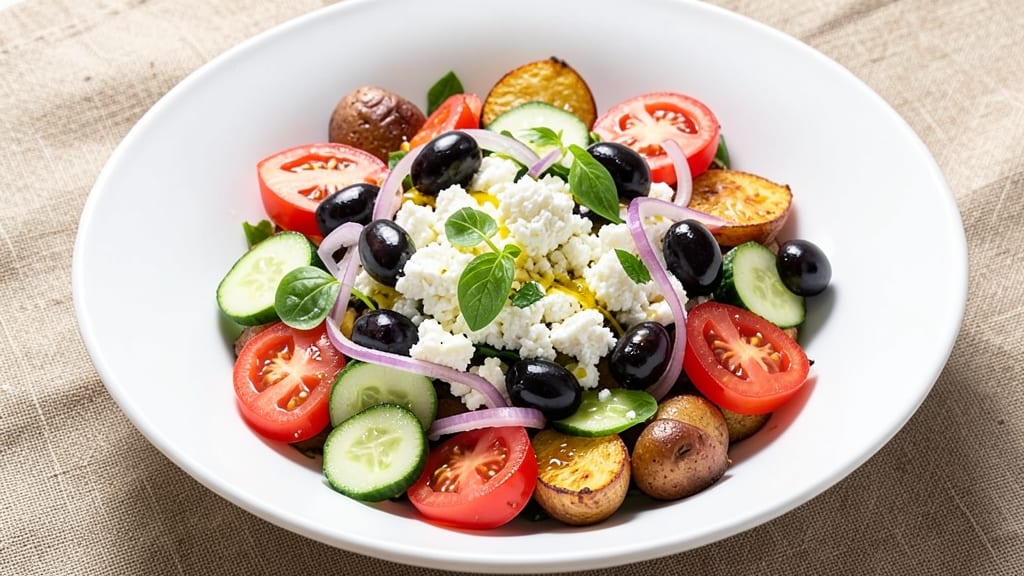
This authentic Greek salad with potato recipe brings the vibrant flavors of Mediterranean cuisine to your table while adding a creamy twist that keeps everyone coming back for seconds. 🌟 The traditional Greek salad—packed with ripe tomatoes, crisp cucumbers, briny olives, and tangy feta—meets a rich potato salad that balances creamy textures with bold seasoning.
I developed this dish after realizing how often Greek salads were served alone, missing the hearty contrast that makes meals truly satisfying.
The secret to this recipe lies in the harmony between components: the bright, acidic Greek salad cuts through the richness of the potato salad, while the creamy, mustard-infused potatoes provide a satisfying bite.
Traditional Greek salad ingredients like red onion, kalamata olives, and fresh oregano remain central, but the potato salad elevates the dish with a creamy base, Dijon mustard, and a touch of celery for crunch. This combination is perfect for summer gatherings, picnics, or as a side for grilled meats.
What you’ll achieve is a balanced, restaurant-quality dish that feels both nostalgic and fresh. The Greek salad stays crisp and vibrant, while the potato salad delivers a creamy, flavorful contrast that complements every bite.
The result is a meal that’s as visually stunning as it is delicious—ideal for those who appreciate the authenticity of Mediterranean flavors with a modern, satisfying twist.
Whether you're serving this at a family dinner or a backyard barbecue, the authentic yet adaptable nature of this recipe ensures it will become a staple. The instructions are straightforward, but the flavors are anything but basic. Let’s bring this Mediterranean-inspired dish to life!
Ingredients for authentic greek salad recipe with potato salad
Mediterranean crunch meets creamy comfort in this balanced duo—just 15 ingredients for restaurant-quality flavors.
| Ingredient | Amount | Notes |
|---|---|---|
| Red Potatoes 🥔 | 2 lb | Yukon gold or red skin preferred |
| Ripe Tomatoes 🍅 | 4 medium | Roma or vine-ripened for best flavor |
| English Cucumbers 🥒 | 2 whole | Seedless, peeled if preferred |
| Red Onion 🧅 | 1 whole | Thinly sliced, white or red |
| Kalamata Olives 🫒 | 1 cup | Pitted, brined or oil-cured |
| Feta Cheese 🧀 | 1 cup | Crumbled, traditional Greek style |
| Fresh Oregano 🌿 | ¼ cup | Chopped, or substitute dried |
| Extra-Virgin Olive Oil 🫒 | ½ cup | For both salad dressings |
| Red Wine Vinegar 🍷 | ¼ cup | For Greek salad dressing |
| Dijon Mustard 🌶️ | 1 tbsp | For potato salad dressing |
| Mayonnaise 🥫 | ½ cup | For potato salad base |
| Celery Stalks 🥬 | 2 whole | Diced small for potato salad |
| Lemon Juice 🍋 | 2 tbsp | Freshly squeezed for brightness |
| Salt 🧂 | 1 ½ tsp | Diamond Crystal preferred |
| Black Pepper 🌶️ | ½ tsp | Freshly ground for both salads |
The potatoes are the foundation here. Yukon golds or red-skinned stay firm when boiled and hold their shape beautifully. Trader Joe's has the best pre-washed variety, but regular supermarket red potatoes work too. For the Greek salad, Roma tomatoes hold up better than beefsteak when chopped—no sad, watery mess. Kalamata olives should be plump and briny; Greek brands like Halkidiki are ideal. The feta? Block form only—pre-crumbled gets gritty and melts wrong. Grab a wedge, crumble it yourself, and thank me later.
No fresh oregano? Dried at half the amount works, but it won’t have that bright Mediterranean punch. The olive oil matters—use something fruity and peppery, not the cheap stuff. For the potato salad, Hellmann's or Duke's mayo keeps things creamy without overpowering. Short on Dijon? Yellow mustard plus a pinch of sugar mimics the depth. The celery adds crunch, but if you hate chopping, pre-diced celery from the salad bar is a time-saver. And yes, you can make both salads ahead—the flavors only get better as they meld.
Potatoes keep 3-4 days in the fridge once boiled, but make the potato salad fresh day-of for best texture. The Greek salad? 2 days max—the tomatoes get sad after that. Store components separately: dressings in small jars, veggies in airtight containers with paper towels to soak up moisture. For serving, toss everything together right before eating—that’s when the magic happens. Leftovers? The potato salad reheats beautifully, while the Greek salad makes great sandwiches the next day.
Why You'll Love This Recipe
- No-Fuss Assembly: The potatoes just need boiling—no peeling, no fuss—while the veggies barely require chopping. Toss everything together with the olives and a drizzle of olive oil, and you’re done. (Yes, even on a Tuesday night.)
- Crunchy-Creamy Magic: Those waxy red potatoes stay firm with a buttery bite, while the tomatoes burst with juicy sweetness. The briny olives and sharp onion cut through it all—like a Mediterranean hug in every bite.
- Weeknight Workhorse: Pack it for lunch, serve it at picnics, or let it sit overnight—it only gets better. Honestly, I’ve had it cold, at room temp, and even reheated (yes, it works), making it my go-to for any occasion.
- Budget-Friendly Feast: Red potatoes and seasonal tomatoes stretch your dollar without sacrificing flavor. Between us, this is the kind of salad that makes you feel fancy without draining your wallet.
Step-by-step instructions for Mediterranean-inspired salad pairings
Let's bring these two iconic salads together with techniques that honor tradition while delivering that perfect crunchy-creamy balance.
👨🍳 Step 1: Prepare the Greek Salad Base
Start by cutting the 2 lb red potatoes into ½-inch cubes—I like to use a mandoline for even pieces, but a sharp knife works too. Toss the potatoes with 2 tablespoons of the extra-virgin olive oil, ½ teaspoon of the salt, and ¼ teaspoon of the black pepper. Spread them on a baking sheet in a single layer and roast at 425°F for 25-30 minutes until they're golden brown and crispy on the edges.
While the potatoes roast, halve the 4 medium ripe tomatoes and slice them into wedges. Peel and slice the 2 whole English cucumbers into ¼-inch thick rounds. Thinly slice the 1 whole red onion and pit the 1 cup Kalamata olives. Chop the 0.25 cup fresh oregano finely—this is where the authentic Greek flavor shines. Arrange all the vegetables on a large platter, keeping the components separate for now.
🍳 Step 2: Make the Greek Salad Dressing
In a small bowl, whisk together 0.25 cup red wine vinegar, ¼ cup of the extra-virgin olive oil, ½ teaspoon of the salt, and ¼ teaspoon of the black pepper. Add the 2 tablespoons lemon juice and the chopped fresh oregano, then whisk until fully combined. Taste and adjust the balance—you want bright acidity with just enough oil to coat the vegetables.
Here's the thing—don't over-dress the salad yet. I like to drizzle just enough to lightly coat the vegetables, then add more as needed. The key is letting the natural flavors of the tomatoes, cucumbers, and olives shine through. Sprinkle the crumbled 1 cup feta cheese evenly over the vegetables right before serving to keep it from getting soggy.
🥘 Step 3: Create the Creamy Potato Salad
In a large bowl, combine the roasted potatoes with 0.5 cup mayonnaise, 1 tablespoon Dijon mustard, ½ teaspoon of the salt, and ¼ teaspoon of the black pepper. Mix gently but thoroughly to coat each potato evenly. The texture should be creamy but not mushy—you want to preserve that crispy exterior we worked so hard to achieve.
Next, dice the 2 whole celery stalks into small pieces and fold them into the potato mixture. Add the 1 cup Kalamata olives and ½ cup feta cheese, breaking the feta into small chunks as you go. Give it one final gentle mix—over-stirring can make the potatoes turn to mush. Taste and adjust seasoning if needed, adding a splash of lemon juice if you want extra brightness.
🍽️ Step 4: Assemble and Serve
For the Greek salad, toss the prepared vegetables with just enough dressing to lightly coat them—remember, we'll add more at the table. Arrange the dressed vegetables on a platter, then sprinkle with the remaining feta cheese and a final sprinkle of fresh oregano. Drizzle with an extra tablespoon of extra-virgin olive oil right before serving to enhance the flavors.
Serve the creamy potato salad alongside the Greek salad, either on the same platter or in separate bowls. The contrast between the crisp, tangy Greek salad and the rich, creamy potato salad is what makes this pairing so special. I like to serve this with warm pita bread on the side—it's perfect for scooping up both salads and soaking up all those delicious juices.
Pro Tips For Making Authentic Greek Salad Recipe With Potato Salad
- BOIL POTATOES UNTIL FIRM: I learned this the hard way—overcooked red potatoes turn to mush in this salad. Boil them in salted water until they’re just fork-tender (about 12-15 minutes), then plunge into ice water to stop cooking. Cold potatoes hold their shape and soak up the dressing better.
- SALT THE CUCUMBERS: Slice the English cucumbers, toss them with ½ teaspoon salt, and let sit for 10 minutes before draining. This removes excess water so they don’t turn the salad into soup. (Yes, even if you’re impatient like me.)
- DICE THE ONION SMALL: Skip the thick slices—finely dice the red onion so it blends into the salad instead of sitting as separate chunks. The acidity mellows as it sits, but tiny pieces distribute flavor evenly. (Your future self will notice the difference.)
- ADD OLIVES LAST: Tuck the Kalamata olives into the salad just before serving. Their briny punch softens slightly when mixed too early, and the texture becomes less satisfying. A quick sprinkle keeps them crisp and bold.
Regional styles of this authentic greek salad recipe with potato salad
Classic Greek Version
In Greece, this dish would feature boiled potatoes instead of roasted, tossed with a lighter dressing of olive oil, lemon juice, and oregano.
The Greek salad would include green bell peppers and capers for extra tang, while the potato salad would skip mayo entirely, using only olive oil and vinegar for a lighter texture. I've adapted this to American tastes by adding creaminess, but the core Mediterranean flavors remain. 🌿
American Southern Style
For a Southern twist, swap the Kalamata olives for pickles and use white vinegar instead of wine vinegar in the Greek salad dressing. The potato salad becomes a classic mayo-based version with hard-boiled eggs and bacon bits for extra richness.
This version feels more familiar to American palates while keeping the Mediterranean inspiration. 🍖
Modern Fusion Approach
My favorite creative take combines the Greek salad with a quinoa-based potato salad—using ½ cup cooked quinoa mixed with the potatoes for extra protein and texture. The Greek salad gets a pomegranate molasses drizzle (just 1 tablespoon) for a sweet-tart contrast.
This version works beautifully as a vegetarian main dish or alongside grilled fish. 💫
Island-Inspired Adaptation
Inspired by Greek islands like Santorini, this version uses cherry tomatoes instead of Roma and adds fresh dill to both salads. The potato salad incorporates roasted garlic (mix 2 cloves into the dressing) for a deeper flavor profile.
Serve with warm crusty bread and a glass of Assyrtiko white wine for an authentic island experience. 🍷
Vegetarian-Friendly Twist
For a fully vegetarian version, keep the Greek salad exactly as written but transform the potato salad into a vegan version using vegan mayo (like Hellmann's Vegan) and nutritional yeast for a cheesy flavor.
Add sun-dried tomatoes and artichoke hearts to the Greek salad for extra Mediterranean flair. This keeps the dish hearty and satisfying for all dietary preferences. 🌱
Holiday Dinner Adaptation
For Thanksgiving or Christmas, add sautéed mushrooms and walnuts to the potato salad, and include roasted red peppers in the Greek salad. The rich flavors pair beautifully with holiday meats like turkey or roast beef.
Garnish with fresh rosemary for a festive touch that elevates the dish for special occasions. 🎄
Nutrition facts
Frequently asked questions
Can I make this recipe without feta cheese?
For a vegetarian version, substitute ½ cup marinated tofu crumbles or vegan feta (like Violife brand). For a dairy-free option, skip the feta entirely and boost the flavors with extra lemon juice and olive oil. The Greek salad will still be delicious—just slightly less rich.
How do I keep the Greek salad from getting soggy?
Dress the salad right before serving, not in advance. If prepping ahead, store the veggies and dressing separately in airtight containers. Toss just before eating to preserve crispness. For extra insurance, pat cucumbers and tomatoes dry with paper towels before assembling.
Can I use sweet potatoes instead of red potatoes?
Yes, but the flavor will differ. Sweet potatoes have a natural sweetness that pairs well with the creamy potato salad's tangy mustard. Roast them at 400°F for 20-25 minutes (they're softer than red potatoes). The Greek salad remains unchanged—just enjoy the sweet contrast!
What's the best way to reheat the potato salad?
Gently reheat in a saucepan over low heat with 1-2 tablespoons of water or broth until warmed through (2-3 minutes). Avoid microwaving—it can make the potatoes gummy. For best texture, serve warm or at room temperature. The Greek salad reheats poorly, so make it fresh each time.
Is this dish kid-friendly?
With some adjustments, absolutely! Skip the olives in both salads and reduce the feta to ¼ cup total. For the potato salad, add ½ cup diced apples or carrots for natural sweetness. Serve with chicken tenders or pita bread for a balanced meal kids will love.