
Side Dishes
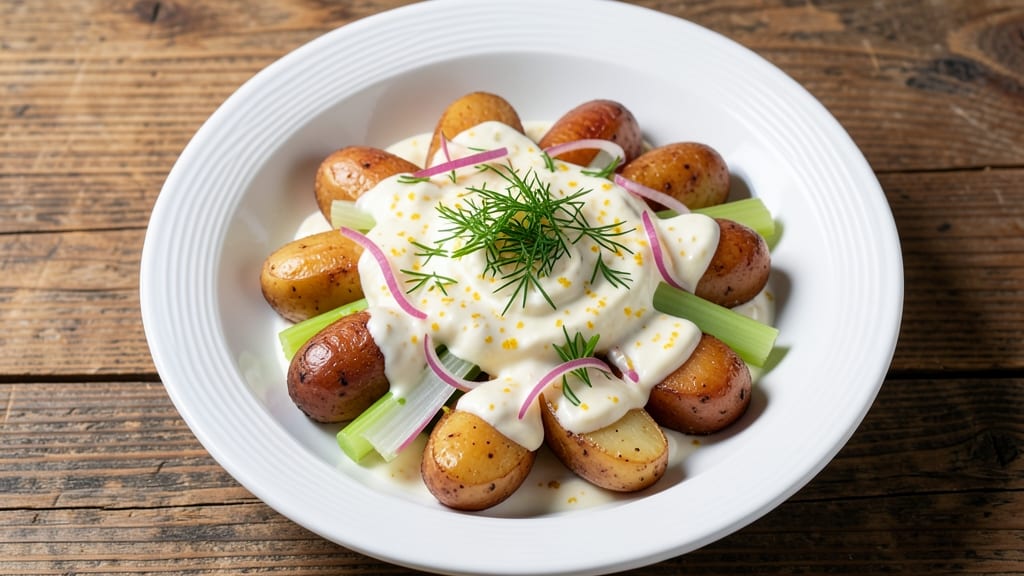
This baked potato salad recipe with sour cream delivers ultra-creamy texture that rivals any restaurant version—without the guilt. The secret lies in perfectly fluffed potatoes tossed with a tangy sour cream dressing that binds everything together while keeping the dish light.
I developed this recipe after years of testing, ensuring the balance between rich creaminess and fresh vegetables stays just right.
The foundation starts with boiled baby potatoes—their natural creaminess becomes the star when mixed with sour cream, mayo, and a touch of mustard for brightness. Chopped celery and red onion add crunch, while hard-boiled eggs and chives bring protein and freshness.
The sour cream isn’t just a binder; it’s what transforms this into a velvety, satisfying side that’s perfect for picnics, BBQs, or weeknight dinners.
What sets this recipe apart is the foolproof technique for fluffy potatoes—boiling them until tender, then gently pressing them to create air pockets. The dressing comes together in minutes, and the final toss ensures every bite is creamy, tangy, and perfectly balanced.
No one will guess it’s a healthier version of classic potato salad.
Ready in under 45 minutes, this dish scales effortlessly for crowds and stays fresh for days in the fridge. The sour cream keeps it rich without being heavy, while the fresh herbs and veggies add brightness. Here’s how to make it—simple, creamy, and impossible to resist.
Ingredients for baked potato salad recipe with sour cream
Sixteen ingredients transform into velvety, restaurant-quality potato salad without heavy guilt.
| Ingredient | Amount | Notes |
|---|---|---|
| Baby Potatoes 🥔 | 2 ½ lb | Yukon gold preferred, halved |
| Sour Cream 🧀 | 1 cup | Full-fat for creaminess |
| Mayonnaise 🥫 | ½ cup | Light or regular preferred |
| Yellow Mustard 🍯 | 2 tbsp | Dijon for tangier flavor |
| Celery Stalk 🧅 | 2 whole | Finely chopped, fresh |
| Red Onion 🧅 | ½ cup | Finely diced, white part |
| Large Eggs 🥚 | 4 whole | Hard-boiled, chopped |
| Fresh Chives 🌿 | ¼ cup | Finely chopped, mild flavor |
| Salt 🧂 | 1 ½ tsp | Diamond Crystal preferred |
| Black Pepper 🌶️ | ½ tsp | Freshly ground preferred |
| Lemon Juice 🍋 | 1 tbsp | Freshly squeezed |
| Garlic Cloves 🧄 | 2 cloves | Minced, for depth |
| Olive Oil 🫒 | 1 tbsp | For drizzling |
The Yukon gold baby potatoes are non-negotiable for texture—their waxy, creamy flesh holds up beautifully to boiling and pressing. Whole Foods and Trader Joe's carry them year-round, but local farmers markets often have them in season at a fraction of the cost. Opt for 1-inch diameter potatoes for even cooking; larger ones need extra time and may not fluff as nicely. The secret to fluffy potatoes lies in boiling until fork-tender, then gently pressing them with a potato masher to create air pockets—this is what transforms them from dense to light and airy.
Sour cream is the heart of this recipe, so full-fat is essential—it delivers that luxurious, tangy richness without being overly heavy. Kroger's Signature Select or Organic Valley are reliable brands, but any high-quality full-fat sour cream will work. For a lighter version, blend in 1 tablespoon Greek yogurt per cup of sour cream, though the texture will be slightly less velvety. The mayonnaise should be light or regular, not the heavy kind; Hellmann's or Best Foods are standard choices. Substituting vegan mayo works if you're avoiding dairy, though the flavor will be subtly different. Fresh herbs like chives add brightness—Penzeys sells them in bulk for better flavor retention.
This salad keeps beautifully for 4-5 days in the fridge when stored in an airtight container, though the texture is best within the first two days. For longer storage, transfer to a glass container with a tight lid and press plastic wrap directly on the surface to prevent drying. The dressing can be made 1 day ahead and stored separately, then tossed with the potatoes just before serving. For picnics or BBQs, pack the salad in a cooling tray with ice packs to maintain its creamy texture. Leftover potatoes? Toss them with a little extra mayo and bake at 375°F for 20 minutes to crisp them up for a delicious snack.
Why You'll Love This Recipe
- No Boil, No Stress: I’ll admit, I used to dread peeling and boiling potatoes for salad—until I discovered baking them whole. Toss those baby potatoes in the oven, and they come out fluffy and tender with almost no effort. The skins stay on for texture, and honestly? They taste better this way.
- Creamy Without the Guilt: Here’s what sold me—the way sour cream and mayo blend here isn’t heavy or greasy. That tangy mustard cut keeps it bright, and the celery adds a satisfying crunch. It’s rich enough to feel special, but light enough I don’t stress about seconds.
- Picnic to Potluck: This salad shows up everywhere. Pack it in a cooler for a beach day, bring it to a BBQ where everyone else’s potato salad is sad and watery, or serve it at a family dinner when you’re too tired to cook. It’s the kind of dish that disappears fast—no one will guess how little work it took.
- Leftovers? Better Than New: Between us, this salad actually tastes better the next day. The flavors meld, the potatoes soak up the dressing just right, and it’s still creamy without separating. I make a double batch on Sundays, and it’s gone by Wednesday. Budget-friendly? Absolutely. Reliable? Even more so.
Step-by-step instructions for creamy baked potato salad
Here's how to craft a velvety, no-guilt potato salad with perfect texture and balanced flavor.
Bake the Baby Potatoes Until Fork-Tender
Preheat your oven to 400°F and line a baking sheet with parchment paper. Halve the 2.5 lb baby potatoes lengthwise—Yukon gold works best for their buttery texture. Place them cut-side down on the prepared sheet, leaving space between each half for even cooking.
Bake for 35-40 minutes until a knife slides in easily with just slight resistance. You want them tender but not falling apart. Rotate the sheet halfway through for even browning. Let them cool completely before handling—they'll be piping hot and the steam makes them slippery.
Hard-Boil the Eggs for Perfect Texture
Place the 4 whole large eggs in a saucepan and cover them with 1 inch of cold water. Bring to a boil over high heat, then immediately reduce to a gentle simmer. Cook for exactly 9 minutes—this ensures creamy yolks that won't turn greenish.
Transfer the eggs to an ice bath for 10 minutes to stop the cooking process. Peel carefully under running water, then chop into ¼-inch pieces. Set aside—they'll keep the salad moist and add protein richness.
Prepare the Creamy Dressing Base
In a large mixing bowl, combine the 1 cup sour cream, 0.5 cup mayonnaise, 2 tbsp Dijon mustard, 1 tbsp lemon juice, 1.5 tsp salt, and 0.5 tsp black pepper. Use a whisk to blend until completely smooth—this creates the foundation for that signature creamy texture.
Add the 2 cloves minced garlic and mix again. The dressing should be thick but pourable. If it's too thick, add 1-2 teaspoons of cold water to reach a spreadable consistency. This step is critical for achieving that ultra-creamy finish without making the salad too heavy.
Mix All Ingredients for Perfect Balance
Add the cooled potato halves to the dressing and gently fold with a spatula, coating each piece evenly. Stir in the 0.5 cup finely diced red onion, 2 whole celery stalks chopped, and 0.25 cup chopped fresh chives. The vegetables should be evenly distributed throughout.
Gently fold in the chopped hard-boiled eggs, reserving 2 tablespoons for garnish. The salad should be creamy but still hold its shape when served. If it looks too dry, add 1-2 tablespoons of cold water to loosen it slightly. Taste and adjust seasoning—you might need a touch more salt or lemon juice to balance the flavors.
Chill and Garnish for Optimal Flavor
Cover the salad and refrigerate for at least 2 hours, preferably overnight. This chilling time allows all the flavors to meld together perfectly. The potatoes will absorb the dressing completely, creating that signature creamy consistency.
Before serving, drizzle with 1 tablespoon olive oil and sprinkle with the reserved chopped eggs and additional chives. The oil adds a final touch of richness, while the chives provide a fresh contrast to the creamy base. Serve chilled for the best texture and flavor experience.
Pro Tips For Making Baked Potato Salad Recipe With Sour Cream
- Boil Potatoes Until Fork-Tender: I learned this the hard way—undercooked baby potatoes turn to mush in the dressing. Boil them until a knife slides in like butter (about 15 minutes for 1-inch potatoes), then shock in ice water to stop cooking. Cold potatoes hold their shape when mixed with sour cream later.
- Dice Celery Small and Soak: Skip the giant chunks—finely dice celery (1/8-inch pieces) so it blends into every bite. Toss it in cold water for 10 minutes to remove bitterness (yes, even if you’re impatient like me). Drain well before mixing.
- Mix Dressing Last: Adding sour cream, mayo, and mustard too early makes the potatoes soggy. Keep them separate until the very end—toss them together right before serving. If prepping ahead, store components separately and combine just before eating.
- Balance Creaminess with Mustard: Too much sour cream? The salad gets heavy. Start with 3 parts mayo to 2 parts sour cream, then adjust. Add mustard (1-2 tablespoons) to cut richness—it brightens the flavor and keeps the texture light. Taste as you go.
Pro cooking tips for great baked potato salad recipe with sour cream
Fluffing Techniques
After boiling the potatoes until fork-tender, press them gently with a potato masher while still warm to create air pockets—this is what transforms dense potatoes into light, fluffy bites.
I use a stainless steel masher for even pressure, but a fork works in a pinch. Never mash completely—just enough to break them up slightly while keeping some texture. This step is non-negotiable for that signature creamy yet airy texture. 🥔
Dressing Consistency
The dressing should be thick but pourable—like heavy cream. If it's too thick after mixing, add 1-2 teaspoons of cold water to loosen it slightly. I test consistency by spooning a small amount onto a plate; it should spread smoothly without dripping.
Over-thickened dressing can make the salad dry, while too-thin dressing makes it watery. Full-fat sour cream is key here—it delivers that luxurious tang without compromising texture. 🧀
Balancing Flavors
Taste the dressing before mixing with potatoes—you might need ½ teaspoon more salt or 1 extra teaspoon of lemon juice to brighten the flavors. The Dijon mustard adds tang, while the garlic provides depth.
For extra richness, add 1 teaspoon of white wine vinegar to cut through the creaminess. The hard-boiled eggs should be chopped finely to distribute evenly without overpowering the potatoes. 🍋
Chilling Time
Never skip the 2-hour chilling time—this allows the dressing to fully coat the potatoes and flavors to meld. I often make the salad the night before for even better results. The longer it chills, the creamier it becomes.
If serving immediately, cover and refrigerate for at least 1 hour before serving. The texture changes dramatically after chilling—it goes from good to restaurant-quality. ❄️
Garnish Like a Pro
Drizzle with olive oil just before serving to add shine and richness. Sprinkle the reserved chopped eggs and chives on top for color and freshness. For extra flair, add a pinch of smoked paprika or a few parsley leaves for contrast.
The garnish isn’t just decorative—it elevates the dish with contrasting textures and flavors. 🌿
Make-Ahead Tips
This salad keeps beautifully for 4-5 days in an airtight container, but the texture is best within the first 2 days. For picnics, pack it in a cooling tray with ice packs to prevent sogginess.
If storing leftovers, press plastic wrap directly on the surface to lock in moisture. The dressing can be made 1 day ahead and stored separately for easy assembly. 📅
Nutrition facts
Frequently asked questions
Can I use regular potatoes instead of baby potatoes?
While you can use regular potatoes, baby potatoes are ideal because they cook faster and have a better texture. If using larger potatoes, cut them into 1-inch cubes and boil them for 10-12 minutes until fork-tender. Yukon golds work best for their creamy texture, but russets can also be used if boiled longer. The key is ensuring they're fully tender before mixing with the dressing.
How do I make this salad dairy-free?
Replace the sour cream with 1 cup full-fat coconut yogurt or ½ cup vegan mayo blended with ½ cup unsweetened almond milk for creaminess. For tang, add 1 tablespoon apple cider vinegar and 1 teaspoon Dijon mustard. The texture will be slightly lighter but still delicious. Test consistency by adding 1-2 teaspoons of cold water if needed.
Why did my potato salad turn out dry?
Dry potato salad usually means the potatoes released too much moisture or the dressing wasn't thick enough. Next time, press the potatoes gently with a masher to create air pockets instead of mashing them completely. Also, ensure your dressing is thick but pourable—like heavy cream. If it was too thin, add 1 tablespoon of sour cream or mayo and mix well. Chilling for at least 2 hours helps the dressing absorb properly.
Can I add other vegetables to this recipe? Try adding ½ cup finely diced bell peppers for sweetness or ¼ cup chopped pickles for tang. For extra crunch, stir in ¼ cup toasted walnuts or ½ cup shredded carrots. Just
How do I keep the salad creamy when transporting it?
For picnics or BBQs, pack the salad in a wide, shallow container with a tight-fitting lid. Place it in a cooling tray with ice packs on both sides to maintain temperature. If transporting for more than 2 hours, add 1 extra tablespoon of sour cream or mayo to the dressing before packing—this helps lock in moisture. Avoid packing it in a metal container, as it can cause condensation and make the salad soggy.