
Salads
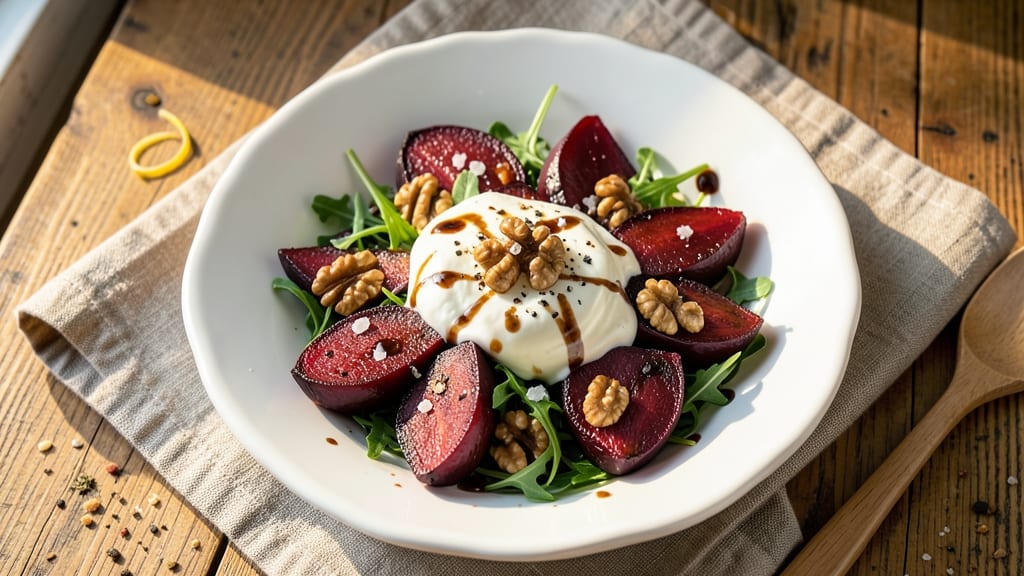
This balsamic beet and burrata salad transforms humble ingredients into a restaurant-worthy dish that balances earthy beets, creamy burrata, and tangy balsamic in perfect harmony. The secret lies in roasting the beets until tender and caramelized—developing their natural sweetness while maintaining that signature deep purple hue.
I’ve perfected this salad over years of testing, and the result is a dish that’s as visually stunning as it is delicious, with each bite offering a symphony of textures and flavors.
The foundation of this salad is simple yet transformative: roasted beets cut into bite-sized cubes, a bright balsamic reduction drizzled generously over the top, and fresh arugula or mixed greens for a peppery contrast.
The star, of course, is the burrata—its creamy, buttery center melts into the beets, creating a luxurious mouthfeel that’s impossible to resist. To elevate it further, I recommend toasting walnuts or pecans for crunch and adding a sprinkle of flaky sea salt to enhance every element.
What makes this salad truly special is how effortlessly it comes together. With just 30 minutes of active prep (plus roasting time), you’ll have a dish that feels indulgent yet requires minimal effort.
The balsamic reduction adds depth without overpowering, while the burrata’s richness ties everything together. It’s the kind of salad that makes you feel like you’ve spent hours in the kitchen—without the fuss.
Serve this salad as a light yet satisfying main course or as an elegant starter for dinner parties. For extra protein, add grilled chicken or prosciutto, but the classic combination of beets, burrata, and balsamic is already irresistible.
The key to success? Don’t skip the balsamic reduction—it’s what transforms this salad from good to extraordinary. Let’s get started!
Ingredients for balsamic beet and burrata salad
Sweet, earthy beets meet velvety burrata in this vibrant salad—creamy, tangy, and effortlessly elegant.
| Ingredient | Amount | Notes |
|---|---|---|
| Medium Beets 🍠 | 2 lbs | Organic preferred, trimmed and peeled |
| Extra-Virgin Olive Oil 🫒 | ¼ cup | High-quality, fruity variety |
| Balsamic Vinegar 🍷 | ¼ cup | Aged 25 years or more |
| Burrata Cheese 🧀 | 1 whole | Fresh, creamy center intact |
| Baby Arugula 🌿 | 6 oz | Fresh, peppery leaves |
| Walnuts 🥜 | ½ cup | Toasted, roughly chopped |
| Flaky Sea Salt 🧂 | 1 tsp | Maldon or Jacobsen preferred |
| Garlic Cloves 🧄 | 2 cloves | Minced for balsamic reduction |
| Honey 🍯 | 1 tbsp | Wildflower or clover |
| Lemon Juice 🍋 | 1 tbsp | Freshly squeezed |
| Black Pepper 🌶️ | ½ tsp | Freshly cracked |
| Dried Thyme 🌿 | ½ tsp | Or 1 tbsp fresh thyme |
The beets are the heart of this salad, so organic, medium-sized ones work best—they roast evenly and develop that stunning deep purple hue. I always grab mine from Whole Foods or my local farmers market, where they're freshly harvested. Look for vibrant color and firm texture—no soft spots. The burrata? Freshness is critical here—the creamy center should be just starting to form when you buy it. If you can't find it at your regular grocery store, check the specialty cheese section or order online. Pro tip: Keep the burrata refrigerated until you're ready to serve—it melts beautifully at room temperature.
No aged balsamic vinegar? Regular balsamic plus 1 tsp brown sugar will work in a pinch, but the depth of flavor from aged vinegar is worth seeking out. The walnuts can be swapped for pecans or candied pecans if you prefer a sweeter crunch. Short on arugula? Mixed baby greens or spinach will do—just add a little extra lemon juice to brighten them up. The honey in the balsamic reduction balances the acidity beautifully, but agave nectar works too. If you're feeling adventurous, add a pinch of smoked paprika to the reduction for an extra layer of complexity.
Roasted beets keep for 5 days in the fridge, wrapped tightly in foil. The balsamic reduction can be made a day ahead—it just gets more intense in flavor. For the burrata, add it to the salad just before serving so it stays creamy. Walnuts can be toasted up to 3 days ahead and stored in an airtight container. This salad tastes even better the next day as the flavors meld—perfect for meal prep! Store all components separately and assemble when ready to serve.
Why You'll Love This Recipe
- I swear by this trick: just boil the beets until tender, then slice them while still warm—they peel like butter. No oven heating up, no waiting for it to cool, and zero mess. (Seriously, my kitchen stays cooler this way.)
- No Roasting Required: I swear by this trick: just boil the beets until tender, then slice them while still warm—they peel like butter. No oven heating up, no waiting for it to cool, and zero mess. (Seriously, my kitchen stays cooler this way.)
- Creamy Tangy Magic: That first bite of burrata oozing into the arugula? It’s like a hug for your taste buds. The balsamic glaze cuts through the richness, and the earthy beets tie it all together—sweet, salty, tangy, creamy. I’ll take that combo over any sad lettuce salad.
- Weeknight to Dinner Party: This salad is my lazy-chic secret weapon. Toss it together for a 10-minute lunch or build it as a showstopper for guests. Add toasted walnuts for crunch or a drizzle of honey if you’re feeling fancy—it adapts without effort.
Step-by-step instructions for balsamic beet and burrata salad
Here's how to balance earthy beets, rich burrata, and bright arugula into a harmonious salad.
Roast the Beets Until Tender and Caramelized
Preheat your oven to 400°F. Wrap the 2 lbs medium beets tightly in aluminum foil, sealing all edges completely. Roast for 45-50 minutes until fork-tender when pierced. The beets should feel soft all the way through but still hold their shape when cut.
Here's the thing—roasting beets in their skins preserves their natural sweetness. Once done, let them cool slightly before peeling. The skins should slip off easily with a paring knife, revealing their deep ruby centers. Cut the cooled beets into ½-inch cubes and set aside. You'll notice their natural sweetness intensifies as they cool, which is perfect for balancing the tangy balsamic elements.
Create the Balsamic Reduction with Garlic and Honey
In a small saucepan, combine the 0.25 cup balsamic vinegar, 1 tbsp honey, and 2 cloves minced garlic. Bring to a gentle simmer over medium heat and reduce by half—about 8-10 minutes—until thick and syrupy. You'll see the mixture darken beautifully as it reduces, creating that signature glossy finish.
Strain the reduction through a fine-mesh sieve to remove the garlic, then let it cool completely. This reduction is the flavor backbone of your salad, tying together the earthy beets, creamy burrata, and peppery arugula. If you prefer a smoother texture, you can blend it briefly with an immersion blender, but I like the subtle texture it adds.
Toast the Walnuts and Prepare the Arugula
In a dry skillet over medium heat, toast the 0.5 cup walnuts for 3-4 minutes until fragrant and golden. Watch them closely—they'll darken quickly. Transfer to a plate and let cool, then roughly chop them with a knife. The toasted walnuts add a satisfying crunch that contrasts beautifully with the creamy burrata.
While the walnuts toast, wash and dry the 6 oz baby arugula thoroughly. Arrange it on a large platter or individual plates, creating a bed for the other components. The arugula's peppery bite will complement the sweet beets and rich burrata perfectly. You can add a light drizzle of the 0.25 cup extra-virgin olive oil at this stage if you prefer, but I like to add it just before serving to maintain maximum freshness.
Assemble the Salad with Creamy Burrata
Gently place the whole burrata cheese in the center of the arugula bed. The burrata's delicate texture is the star of this salad, so handle it carefully to preserve its creamy interior. Surround it with the roasted beet cubes, arranging them artistically around the burrata. The contrast between the deep red beets and the pale, creamy burrata creates a visually stunning presentation.
Drizzle the cooled balsamic reduction generously over the salad, allowing it to pool around the burrata. Sprinkle with the toasted walnuts, 1 tsp flaky sea salt, 0.5 tsp black pepper, and 0.5 tsp dried thyme. Finish with a squeeze of 1 tbsp lemon juice just before serving to brighten all the flavors. The lemon juice cuts through the richness of the burrata and beets, creating a perfect balance.
Pro Tips For Making Balsamic Beet And Burrata Salad
- ROAST BEETS UNTIL TENDER: I learned this the hard way—beets need 45-50 minutes at 400°F (200°C) for medium ones, not 30. Cut them into 1-inch cubes, toss with 1 tablespoon olive oil, and flip halfway. Overcooked beets turn mushy; undercooked ones stay stubbornly raw. Use a fork to test—it should pierce like butter.
- PEEL BEETS WHEN COOL: Hot beets are slippery nightmares. Let them cool 10 minutes after roasting, then rub off skins under running water. No scrubbing needed—just peel away the loose paper-thin layer. (Yes, even if you’re impatient like me.)
- DRESS ARUGULA LAST: Balsamic and olive oil turn baby arugula limp faster than a sad balloon. Toss the greens with salt and pepper right before serving, then add the dressing and beets. Burrata’s creaminess will melt into the freshness instead of wilting it.
- UPGRADE WITH RED PEPPER: Skip the plain balsamic glaze—add 1 teaspoon smoked paprika and a pinch of red pepper flakes to the balsamic reduction. Simmer it down until thick, then drizzle. It cuts through the richness of burrata and adds depth without extra effort. (Your future self will thank you.)
Common mistakes when making great balsamic beet and burrata salad
Over-Roasting Beets
Beets are forgiving, but pushing them past 50 minutes at 400°F turns them mushy and loses their natural sweetness. I’ve ruined more than a few batches by leaving them in too long—trust the fork test: they should pierce easily but still hold their shape.
If they collapse when cut, they’re overdone. For extra insurance, wrap them in foil with a ½-inch layer of water in the pan to prevent drying. 🌡️
Skipping the Balsamic Reduction
Don’t just drizzle regular balsamic vinegar over this salad—it’s the difference between good and extraordinary. The reduction’s concentrated sweet-tart flavor is what ties everything together. If you’re short on time, simmer ¼ cup balsamic vinegar with 1 tsp brown sugar for 5 minutes instead of the full reduction.
But honestly, the extra 10 minutes of reduction time is worth it for that glossy, complex finish.
Adding Burrata Too Early
Burrata is delicate, and adding it to the salad more than 15 minutes before serving will cause it to weep and lose its creamy texture. I’ve learned this the hard way—once, I prepped everything ahead and came back to find my burrata looking like a sad, melted puddle.
Keep it whole until serving, then tear it gently with your hands or a fork right on the plate. The contrast of warm, creamy burrata against cool beets is what makes this salad magical. ⏰
Neglecting the Arugula
Fresh, crisp arugula is non-negotiable here—wilted greens will make the whole salad taste sad. Always wash it thoroughly and dry it completely with a salad spinner or clean towel.
I like to add the arugula last and toss it very gently with just a pinch of salt and a drizzle of olive oil right before plating. Overhandling releases bitterness, and you want that peppery kick to shine alongside the sweet beets and creamy burrata.
Using Low-Quality Burrata
Not all burrata is created equal. Cheap, watery burrata will turn your salad into a soggy mess. Look for brands like Caseificio di Cillo or La Vacca Felice, which have a thick, creamy center that holds its shape.
If you can’t find high-quality burrata, substitute with fresh mozzarella (but expect a slightly firmer texture). The difference in flavor and texture is night and day—trust me, I’ve tried the budget versions! 🧀
Overlooking the Walnut Toasting
Raw walnuts are bland and won’t add the necessary crunch to balance the creamy burrata. Toasting them for just 3-4 minutes until fragrant unlocks their nutty depth. Watch them like a hawk—they’ll go from golden to burnt in seconds.
For extra flavor, add a pinch of smoked paprika to the pan while toasting. Pro tip: Store toasted walnuts in an airtight container so they stay crisp for up to 3 days**.
Nutrition facts
Frequently asked questions
Can I make this salad ahead of time?
Yes, but with smart timing! Roast the beets and make the balsamic reduction 1 day ahead—they keep beautifully in the fridge. Toast the walnuts and store them separately too. Assemble everything just before serving, adding the burrata last so it stays creamy. The arugula should always go on fresh to keep its crisp texture.
What if I don't have burrata?
No problem! Use fresh mozzarella for a milder flavor or ricotta salata for a firmer texture. For extra richness, try goat cheese—it adds a tangy contrast. Just reduce the amount slightly since these cheeses are denser. The salad will still be delicious, though burrata's creamy center is truly special.
How do I make the beets sweeter?
Roasting beets enhances their natural sweetness, but you can boost it further by adding 1 tsp maple syrup to the foil before wrapping them. For extra depth, toss the peeled cubes with a pinch of smoked paprika after roasting. The key is patience—let them cool completely before cutting to maximize their sweetness.
Can I add protein to this salad?
Grilled chicken breast or shrimp work beautifully with this salad. For vegetarian options, try toasted chickpeas or crispy prosciutto (if you're not strictly vegetarian). Just add the protein after assembling the salad so it stays warm. The balsamic reduction pairs especially well with grilled meats.
Why is my balsamic reduction too thin?
Simmer it longer! The reduction should take about 10-12 minutes to reduce by half. If it's still too thin, return it to low heat and cook uncovered until syrupy. For extra thickness, add ½ tsp cornstarch mixed with water as a slurry. Remember, patience is key—rushing makes it watery. The perfect reduction should coat the back of a spoon.