
Sauces & Condiments
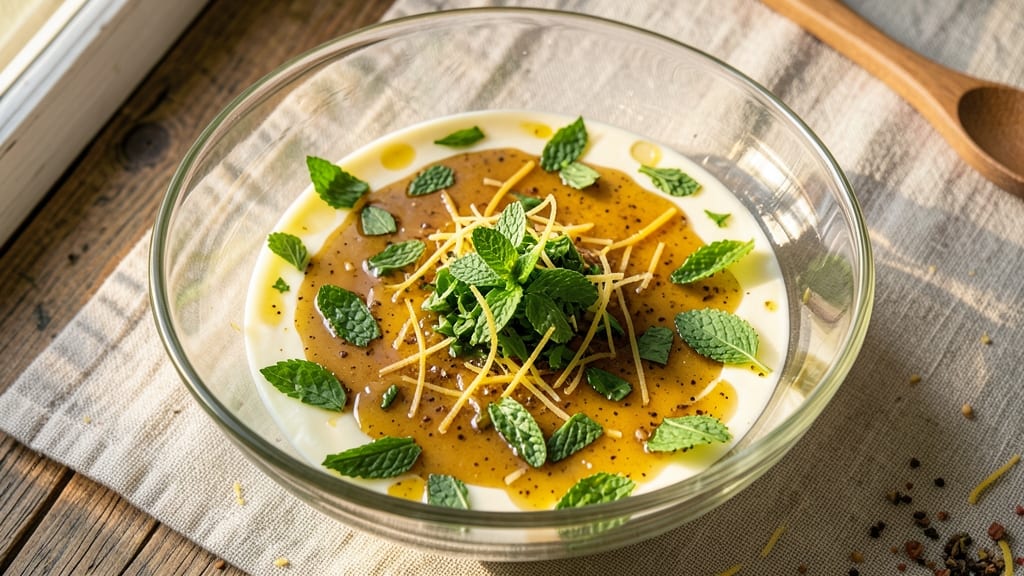
This basil mint salad dressing recipe transforms simple ingredients into a vibrant, herb-infused dressing that elevates any dish. The perfect balance of fresh basil and peppery mint creates a bright, refreshing flavor that works equally well on summer salads or as a sandwich spread.
With just a handful of ingredients and 5 minutes of prep, you'll have a dressing that's lighter than store-bought versions but packed with complex flavor.
The secret lies in the combination of olive oil, lemon juice, and Dijon mustard, which create a stable emulsion that won't separate. Fresh herbs are the star here—finely chopped basil and mint infuse the dressing with their signature aromas while maintaining their vibrant green color.
A touch of honey adds subtle sweetness that rounds out the bright citrus notes, making this dressing versatile enough for both sweet and savory applications.
What makes this dressing truly special is its ability to enhance rather than overpower your dishes. The herbs stay fresh-tasting even after refrigeration, and the dressing maintains its creamy texture for up to 5 days when stored properly.
Whether you're drizzling it over a garden salad, using it as a dip for crudités, or spreading it on sandwiches, this basil mint dressing brings a restaurant-quality freshness to every bite.
For added depth, consider incorporating a minced garlic clove or extra lemon zest. The dressing also works beautifully with roasted vegetables or grilled meats, making it a versatile addition to any meal. Let's get started on creating this herb-infused masterpiece that will become your new go-to dressing.
Ingredients for basil mint salad dressing
Fresh herbs and simple pantry staples create this vibrant, restaurant-quality dressing in minutes.
| Ingredient | Amount | Notes |
|---|---|---|
| Fresh Basil Leaves 🌿 | 1 cup | Packed, stems removed |
| Fresh Mint Leaves 🌿 | ½ cup | Packed, stems removed |
| Extra-Virgin Olive Oil 🫒 | ¾ cup | High quality, fruity |
| Lemon Juice 🍋 | ¼ cup | Freshly squeezed |
| Dijon Mustard 🍯 | 1 tbsp | Mild or regular |
| Raw Honey 🍯 | 1 tbsp | Local preferred |
| Garlic Cloves 🧄 | 1 whole | Minced, optional |
| Sea Salt 🧂 | ½ tsp | Fine grain preferred |
| Black Pepper 🌶️ | ¼ tsp | Freshly ground |
| Ice Water 💧 | 2 tbsp | For emulsion stability |
The herbs are non-negotiable here—farmers market basil and mint have the most vibrant flavor, but grocery store varieties work too as long as the leaves are bright and firm. Trader Joe's often carries pre-washed herb bundles that save time. For the olive oil, California extra-virgin brands like Corto or Pompeian add subtle fruitiness that complements the herbs beautifully. The lemon juice should be freshly squeezed; bottled versions lack the bright acidity needed for a proper emulsion. If you're using garlic, one clove minced adds depth without overpowering, but it's optional for those avoiding its intensity.
No fresh mint? Dried mint at one-third the amount works in a pinch, though the flavor will be more subdued. Substitute honey with agave nectar for a neutral sweetness, or omit entirely if you prefer a more tart dressing. For the mustard, Dijon is essential—it provides the tangy base that binds the emulsion, but if you're out, whole-grain mustard thinned with water can work. The ice water is crucial for stabilizing the dressing; without it, the oil and vinegar can separate. If you forget it, add a splash of cold water during blending instead.
Store this dressing in an airtight container with a thin layer of olive oil on top to preserve the herbs' vibrant color. It keeps for 5 days in the refrigerator, though the herbs may wilt slightly after 3 days. For longer storage, freeze in ice cube trays—thaw and shake before use. The dressing thickens when chilled, so thin with a splash of water or lemon juice if needed. This makes about 1 cup, perfect for 2-3 salads or as a sandwich spread.
Why You'll Love This Recipe
- Five-Ingredient Magic: I swear by this combo—just basil, mint, olive oil, lemon, and mustard. No fancy gadgets, no stress, and honestly? It’s the kind of dressing I’ll make even when I’m too tired to chop.
- Bright & Balanced: That lemon juice cuts through the richness of the olive oil while the mint and basil add a fresh, herbal punch. It’s bright but not sour, creamy but not heavy—like the perfect summer day in a jar.
- Weeknight Superstar: Slather it on grilled chicken, toss it with greens, or drizzle it over pasta. I’ve used it for everything from picnic lunches to last-minute dinner fixes, and it never lets me down.
- Stays Fresh Forever: Make a big batch—it keeps for days in the fridge, and the flavors only get better. Between us, I’ve had this dressing last a full week, and it’s still as vibrant as the day I made it.
Step-by-step instructions for basil mint salad dressing
Here's how to blend vibrant herbs into a silky dressing that elevates any salad.
Prepare the Herb Base
Place the 1 cup fresh basil leaves and 0.5 cup fresh mint leaves in the bowl of a food processor. I always remove stems first—this prevents bitterness and makes the dressing smoother. Pulse until the herbs are finely chopped but not quite paste-like, about 10-15 seconds. You want visible texture, not a smooth puree at this stage.
This initial chopping releases the herbs' aromatic oils, which form the flavor foundation. If your processor has a sharp blade, you might need fewer pulses. Stop before the mixture turns green sludge—we'll refine it further later. The leaves should resemble coarse confetti at this point.
Add Wet Ingredients and Process
With the processor running, slowly drizzle in the 0.75 cup extra-virgin olive oil through the feed tube. This gradual addition creates an emulsion as the oil incorporates into the herb mixture. Process for 30-45 seconds until the herbs are finely minced but the oil remains visible as fine droplets.
Next, add the 0.25 cup lemon juice, 1 tbsp Dijon mustard, 1 tbsp raw honey, 1 whole minced garlic clove, 0.5 tsp sea salt, and 0.25 tsp black pepper. Pulse just until combined—about 10-15 seconds. The mixture should look like a thick, vibrant green paste with visible oil flecks. Don't over-process or the dressing will separate later.
Create the Emulsion
With the processor running, add the 2 tbsp ice water through the feed tube. The cold water helps stabilize the emulsion by creating tiny fat droplets that suspend evenly. Process for 20-30 seconds until completely smooth. You're looking for a velvety texture that coats the back of a spoon without being too thick.
Here's the thing—if the dressing looks too thick after processing, add 1 teaspoon more ice water and pulse again. The water acts as an emulsifier, preventing separation. Conversely, if it's too thin, add 1 teaspoon olive oil and blend briefly. The ideal consistency should cling to a spoon but still drizzle easily from a bottle.
Taste and Adjust
Transfer the dressing to a small bowl and taste immediately. The herbs should be bright and fresh, with a balanced sweetness from the honey and tang from the lemon. If it needs more acidity, add 1 teaspoon lemon juice. For extra depth, add ½ teaspoon minced garlic. If the flavor feels muted, add ½ teaspoon sea salt or ¼ teaspoon black pepper.
Let the dressing sit at room temperature for 5 minutes before using. This resting period allows the flavors to meld completely. The color will deepen slightly, and the texture will thicken just enough to cling beautifully to salad greens. Store any leftovers in an airtight container in the refrigerator for up to 5 days, shaking well before each use.
Pro Tips For Making Basil Mint Salad Dressing
- STACK THE HERBS: Tear basil and mint leaves by hand instead of chopping—this releases more oils and keeps the dressing vibrant longer. I used to pulse them in a food processor, but the texture gets muddy fast.
- SALT THE MUSTARD: Mix ¼ teaspoon fine sea salt into the Dijon before adding lemon juice—it balances the acid and thickens the dressing naturally. I learned this the hard way when my first batch turned too tangy.
- WHISK IN STAGES: Start with half the olive oil, then alternate with lemon juice while whisking vigorously—this emulsifies better than dumping everything at once. Sounds fussy, but it prevents separation.
- USE COLD OIL: Chill the olive oil in the fridge for 10 minutes before combining—it blends smoother and keeps the dressing from turning greasy. I was skeptical until I tried it; now it’s non-negotiable.
Make-ahead tips for this recipe
Prep Ahead Basics
Make this dressing up to 2 days in advance—the flavors actually deepen as the herbs infuse longer. I store mine in a glass jar with a tight-sealing lid, which preserves the vibrant green color better than plastic.
The dressing thickens slightly when chilled, so give it a good shake before using. If it separates completely, just stir vigorously or add 1 teaspoon water to restore the emulsion. 💫
Freezing for Later
For longer storage, freeze the dressing in ice cube trays—each cube makes about 1 tablespoon, perfect for single servings. Once frozen, transfer cubes to a ziplock bag and flatten to save space. Thaw overnight in the fridge and shake well before using.
The texture may be slightly grainy after freezing, but the flavor remains bright and fresh. I love keeping a stash of these cubes for last-minute salad prep. ❄️
Herb Preservation
To keep the herbs looking fresh longer, store the dressing with a thin layer of olive oil on top. This oxygen barrier prevents wilting and maintains the vibrant green color for up to 5 days.
If the herbs start to look dull, add 1 teaspoon fresh lemon juice to revive their brightness. For an extra boost, store the jar in the coldest part of your fridge—this slows down herb degradation. 🌿
Batch Prep Tips
Double the recipe and store in two 8-ounce jars for easy grab-and-go meals. Label each jar with the date to track freshness. I like to prep this dressing on Sunday mornings so it’s ready for the week’s lunches.
If you’re meal prepping for a crowd, divide the dressing into smaller containers—this prevents overpowering larger salads with too much at once. 📅
Reviving Stale Dressing
If your dressing has lost its vibrancy after a few days, don’t toss it! Add 1 teaspoon fresh lemon juice and ½ teaspoon minced garlic to refresh the flavor. Stir well and let it sit for 10 minutes before using.
For texture, blend in 1 tablespoon fresh herbs if you have any on hand. This trick works wonders for salvaging dressing that’s past its peak but still edible. 💡
Portion Control
Use a small squeeze bottle or shot glass to portion out single servings. This keeps the dressing fresh longer and prevents waste. I like to fill a 4-ounce bottle with dressing and store it in the fridge—it’s perfect for drizzling over salads or sandwiches without overdoing it.
For dips, serve in a small ramekin with fresh herbs garnished on top. 🥄
Nutrition facts
Frequently asked questions
Can I make this dressing without a food processor?
You can blend the herbs by hand using a mortar and pestle, or finely chop them with a sharp knife. For the emulsion, whisk the olive oil and lemon juice together first, then gradually add the minced herbs and other ingredients while whisking vigorously. It takes a bit more elbow grease, but you'll still get that creamy texture. The key is to whisk continuously for at least 2-3 minutes to properly emulsify the dressing.
How can I adjust the flavor if the herbs taste too strong?
If the basil or mint flavors are overpowering, balance them by adding 1 extra tablespoon of honey or 1 teaspoon of agave nectar to sweeten the dressing. You can also add 1 teaspoon more olive oil to dilute the herb intensity slightly. For a more neutral profile, reduce the herb amount by 1 tablespoon total in future batches. The honey helps mellow the herbal notes beautifully.
Why did my dressing separate after refrigeration?
Separation usually happens when the emulsion breaks, often due to over-processing or not using enough ice water. To fix it, simply whisk or shake the dressing vigorously until it recombines. For prevention, always use the 2 tablespoons of ice water as called for, and avoid over-blending. If it continues separating, add 1 teaspoon more ice water and blend again. The cold water helps stabilize the emulsion.
What are some creative ways to use this dressing beyond salads?
This versatile dressing works beautifully as a marinade for grilled chicken or fish, a dip for fresh vegetables or pita chips, and even as a sandwich spread. Try drizzling it over roasted potatoes or grilled corn for extra flavor. The dressing also makes an excellent topping for tacos or grain bowls. For a sweet application, use it as a glaze for grilled peaches or as a drizzle over vanilla ice cream.
Can I substitute other herbs for basil or mint?
Yes! For basil, try cilantro or parsley (use the same amount). For mint, tarragon or chives work well (reduce to ¼ cup since they're more delicate). If you want a different flavor profile, consider dill (use ¼ cup) for a tangier dressing. Always taste as you go and adjust other ingredients like lemon or honey to balance the flavors.