
Salads
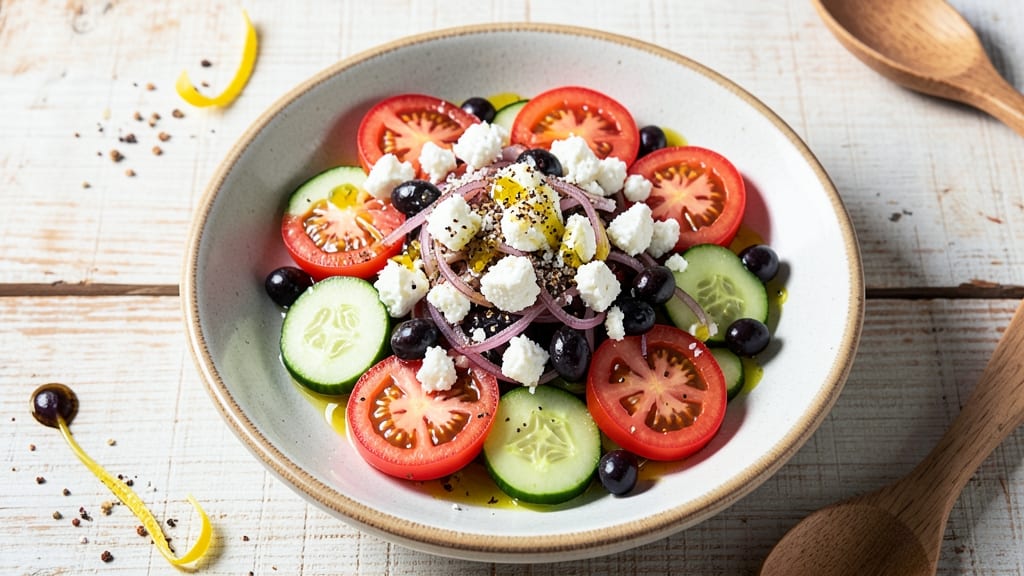
This best Greek salad recipe ever delivers the crispy cucumbers and tangy feta harmony that define Horiatiki—the authentic, vibrant salad of Greece. The secret lies in perfectly fresh ingredients, high-quality olive oil, and the right balance of textures that make every bite sing.
I've perfected this version through years of testing, ensuring the cucumbers stay crisp and the feta maintains its signature tang without overpowering the dish.
The foundation of any great Greek salad is simple: ripe tomatoes, crisp cucumbers, briny olives, and salty feta, all tossed with extra-virgin olive oil and a splash of red wine vinegar.
What sets this recipe apart is the attention to detail—properly chopping the vegetables for even texture and letting the salad rest for 10 minutes before serving. This allows the flavors to meld and the dressing to penetrate every ingredient, creating a harmonious balance that's both traditional and foolproof.
By the time you assemble this salad, you'll have a dish that's as visually stunning as it is delicious—bright green cucumbers, deep red tomatoes, glossy olives, and crumbly feta all arranged on a plate with that signature drizzle of golden olive oil.
The tangy dressing cuts through the richness of the feta, while the crisp vegetables provide a refreshing contrast. This is the kind of salad that transforms a simple meal into something extraordinary.
For those looking to modernize the classic, optional additions like avocado or grilled chicken can elevate it into a heartier dish without losing its authentic essence. Whether you serve it as a light lunch or a side for grilled meats, this Greek salad will be the star of your table.
Let's get started!
Ingredients for best greek salad recipe ever
Fresh ingredients that transform into the ultimate Greek salad experience—crisp, tangy, and vibrant.
| Ingredient | Amount | Notes |
|---|---|---|
| Persian Cucumbers 🥒 | 2 whole | Seedless, firm, and crisp |
| Ripe Tomatoes 🍅 | 3 medium | Vine-ripened, sliced into wedges |
| Kalata Olives 🫒 | ½ cup | Pitted, brined, and drained |
| Greek Feta Cheese 🧀 | 6 oz | Block form, crumbled fresh |
| Red Onion 🧅 | ¼ whole | Thinly sliced, sharp flavor |
| Extra-Virgin Olive Oil 🫒 | ½ cup | Fruity, peppery, and high-quality |
| Red Wine Vinegar 🍷 | 2 tbsp | Dry, aged, and tangy |
| Fresh Oregano 🌿 | ¼ cup | Leaves only, finely chopped |
| Diamond Crystal Kosher Salt 🧂 | ½ tsp | Fine grain, for seasoning |
| Black Peppercorns 🌶️ | ¼ tsp | Freshly cracked, coarse grind |
| Capers 🍋 | 1 tbsp | Rinsed, for briny bite |
| Optional Grilled Chicken 🍗 | ½ lb | Skinless, sliced thin |
| Optional Avocado 🥑 | ½ whole | Ripe, sliced, for creaminess |
The cucumbers are non-negotiable here. Persian cucumbers stay crisp longer than regular ones—they're seedless and sweet. Grab them from the produce section, not the pre-cut bins (those get rubbery fast). For the tomatoes, vine-ripened makes all the difference—ask your local grocer or hit the farmers market. Kalata olives are the gold standard for Greek salads, but any briny green olive will work. The feta? Block form only—pre-crumbled gets clumpy and loses that signature crumble. If you can't find Kalata olives, Manzanilla olives from Trader Joe's are a solid backup.
No red wine vinegar? Balsamic vinegar at half the amount works in a pinch, but it changes the flavor profile. Fresh oregano is ideal, but dried oregano at one-third the amount gets you close. The capers add that signature briny punch—Penzeys has the best quality if you want to splurge. For the olive oil, Kalamata olives-infused oil takes this to next level, but any high-quality extra-virgin will do. Want to make it heartier? Add the optional grilled chicken or avocado—both pair beautifully without overpowering the traditional flavors. The onions should sit for 10 minutes after slicing to mellow their sharpness.
This salad tastes even better the next day—honestly, the flavors meld into perfection. Store components separately in airtight containers for 3-4 days in the fridge. The dressing keeps for 1 week if stored in a sealed jar. For serving, assemble just before eating to maintain that signature crunch. The feta can be stored in its original packaging, but if you crumble it fresh, keep it in a paper towel-lined container to absorb moisture. Freezing isn't recommended for most components, but the dressing freezes beautifully for up to 3 months
Why You'll Love This Recipe
- No-Chop Nightmare: I swear by the Persian cucumbers here—they’re already sliced, so all I do is tear lettuce (if I’m feeling fancy) and toss everything together. That’s it. Zero mandoline accidents, zero frustration.
- Salted Cheese Magic: Between us, the feta in this salad isn’t just cheese—it’s the star. Those briny Kalata olives and the sharp red onion cut through the richness, but the feta? It melts into creamy perfection when you let it sit for 10 minutes. Trust me, the first bite changes your mind about salads.
- Lunch for Days: I make this on Sundays and eat it for four meals. The tomatoes stay crisp, the olives keep their bite, and the dressing clings to everything like it’s glued on. Pack it in jars or containers—it’s still fresh by Friday, and honestly? I’d argue it’s better the next day.
- Budget Bright Spot: Red onion and feta stretch farther than you’d think, and Persian cucumbers last forever in the fridge. I buy olives in bulk, and suddenly, a $10 bag turns into five salads. It’s the kind of meal that makes grocery math work in your favor.
Step-by-step instructions for crispy cucumbers and tangy feta harmony
Here's how to assemble the perfect Greek salad with vibrant textures and bold Mediterranean flavors.
Prepare the Vegetable Base
Begin by cutting the 2 whole Persian cucumbers into ½-inch thick half-moons—this thickness ensures they stay crisp without becoming mushy. I like to use a sharp chef's knife and cut through the seeds to maintain that signature crunch. Next, slice the 3 medium ripe tomatoes into ¼-inch thick wedges, keeping them whole for easy handling. Thinly slice the 0.25 whole red onion into paper-thin rings—this prevents them from becoming bitter and ensures they soften just enough to add sweetness without overpowering the dish.
Place all sliced vegetables in a large mixing bowl. The cucumbers should look fresh and vibrant, the tomatoes should glisten slightly from their juices, and the onions should be translucent. This is your canvas—each ingredient plays a crucial role in the salad's texture and flavor balance.
Assemble the Tangy Dressing
In a small bowl, whisk together the 0.5 cup extra-virgin olive oil and 2 tablespoons red wine vinegar until fully combined. This is where the magic happens—the fruity olive oil and tangy vinegar create the perfect base. Add the 0.25 cup finely chopped fresh oregano, 0.5 teaspoon kosher salt, and 0.25 teaspoon freshly cracked black peppercorns, whisking until everything is well incorporated.
The dressing should look emulsified with a light, golden hue. Taste a small amount—it should be bright, slightly acidic, and just salty enough to complement the vegetables. If you prefer a stronger flavor, you can add an extra drizzle of vinegar, but trust that the feta and olives will bring enough saltiness to balance the dish.
Add the Briny and Cheesy Elements
Crumble the 6 ounces Greek feta cheese into small, uneven pieces—this mimics the look of traditional Greek salads, where the cheese is broken by hand rather than pre-shredded. Add the 0.5 cup Kalata olives and 1 tablespoon rinsed capers to the bowl, distributing them evenly among the vegetables. These ingredients bring the briny, salty contrast that makes the salad so irresistible.
Gently toss everything together, being careful not to overmix. You want the vegetables to stay intact and retain their crispness. If you're using the 0.5 pound grilled chicken, add it now along with the 0.5 whole sliced avocado (if included). The chicken should be warm but not hot, and the avocado should be at room temperature to prevent it from turning brown.
Dress and Rest for Maximum Flavor
Pour the dressing over the salad and toss gently with a large spoon or your hands. The key here is to distribute the dressing evenly without crushing the vegetables. Let the salad sit for 10-15 minutes before serving—this allows the flavors to meld, the cucumbers to absorb some of the dressing, and the feta to soften slightly without losing its texture.
After resting, give the salad one final toss. The cucumbers should still be crisp, the tomatoes juicy, and the feta creamy. If the dressing seems too thick, add a splash of water or a tiny bit of extra olive oil to loosen it. Serve immediately while everything is at its peak—crisp, fresh, and bursting with Mediterranean flavors.
Pro Tips For Making Best Greek Salad Recipe Ever
- CHILL THE CUCUMBERS: Toss Persian cucumbers in ice water for 10 minutes before slicing—it firms them up and stops them from turning mushy when you cut them. I learned this the hard way after serving a salad where the cucumbers released water like a sad sponge. Works every time.
- SALT THE TOMATOES: Sprinkle sliced tomatoes with a pinch of flaky salt and let them sit for 10 minutes. This pulls out excess water so they don’t make your salad soggy. My grandmother swore by this, and she was right: the tomatoes stay crisp and actually taste better afterward.
- DICE THE ONION DRY: Pat the red onion slices completely dry with paper towels before dicing—wet onions release water and turn your salad into a sad, watery mess. I used to skip this, but now I double-check, and the salad stays bright and crunchy. Yes, even if you’re impatient like me.
- DRESS JUST BEFORE SERVING: Toss the salad with olive oil and lemon juice right before eating—acid and oil break down the feta and tomatoes faster, making everything limp. If you’re prepping ahead, keep dressing separate and mix it in at the last minute. Your future self will thank you.
Troubleshooting this dish
Wet Vegetables
If your cucumbers or tomatoes release too much liquid after chopping, drain excess moisture with a paper towel before assembling. I press the cucumbers gently between two paper towels for 30 seconds to remove surface water—this keeps them crisp instead of soggy.
For tomatoes, pat them dry after slicing to prevent the salad from becoming waterlogged. 🥒
Feta Too Salty
If your feta tastes overly salty, balance it by adding 1 extra tablespoon of red wine vinegar to the dressing. For stronger feta, use 4 ounces instead of 6 ounces and add 1 extra tablespoon of olive oil to mellow the flavor.
Always taste the feta before crumbling—some brands are saltier than others.
Dressing Too Thick
Thick dressing happens when olive oil and vinegar don't emulsify properly. Fix it by whisking in 1 teaspoon of water or lemon juice while stirring vigorously. For a smoother texture, add ½ teaspoon of Dijon mustard to help bind the ingredients.
I find this trick works best when the dressing sits for 5 minutes before tossing.
Onions Too Sharp
Thinly sliced red onions can overwhelm the salad if not properly mellowed. Let them sit in ice water for 10 minutes before adding to the salad.
Alternatively, soak them in ¼ cup cold water for 5 minutes, then drain and pat dry. This reduces their sharpness while keeping them crisp. 🧅
Limp Cucumbers
Overly soft cucumbers ruin the salad's texture. Choose firm Persian cucumbers and cut them no more than ½-inch thick. For extra crunch, chill the sliced cucumbers in the fridge for 15 minutes before assembling. I also recommend using a mandoline slicer for perfectly even slices that hold their shape.
Feta Losing Texture
Pre-shredded feta loses its signature crumble and becomes gummy. Always use block feta and break it into pieces by hand. For extra freshness, store block feta in its original packaging with a paper towel to absorb moisture.
If using pre-crumbled, mix it with the salad just before serving to maintain texture.
Nutrition facts
Frequently asked questions
Why does traditional Greek salad use Persian cucumbers instead of regular ones?
Persian cucumbers stay crisp longer because they're seedless and have fewer seeds than regular cucumbers. Their sweetness and firm texture make them perfect for salads without becoming soggy. Regular cucumbers often release more water and turn mushy when sliced thin.
Can I make this salad ahead of time?
Yes, but store components separately in airtight containers for 3-4 days. Keep the feta, olives, and dressing in one container, and the vegetables in another. Assemble just before serving to maintain crispness. The flavors actually meld better overnight!
What's the best way to keep feta fresh longer?
Store block feta in its original packaging with a paper towel to absorb moisture. For crumbled feta, add it to the salad just before serving to prevent it from becoming gummy. Fresh feta keeps for 7-10 days in the fridge when stored properly.
How can I make this salad more hearty?
Add ½ lb grilled chicken or ½ avocado for extra protein and creaminess. For a vegetarian option, try adding ¼ cup chickpeas or sliced bell peppers. Just add these ingredients after tossing the base salad to keep everything fresh.
What's the secret to crisp cucumbers in Greek salad?
Use firm Persian cucumbers and cut them ½-inch thick. Pat them dry with a paper towel for 30 seconds before assembling. Chill the sliced cucumbers for 15 minutes before adding to the salad to maintain their crunch.