
Side Dishes
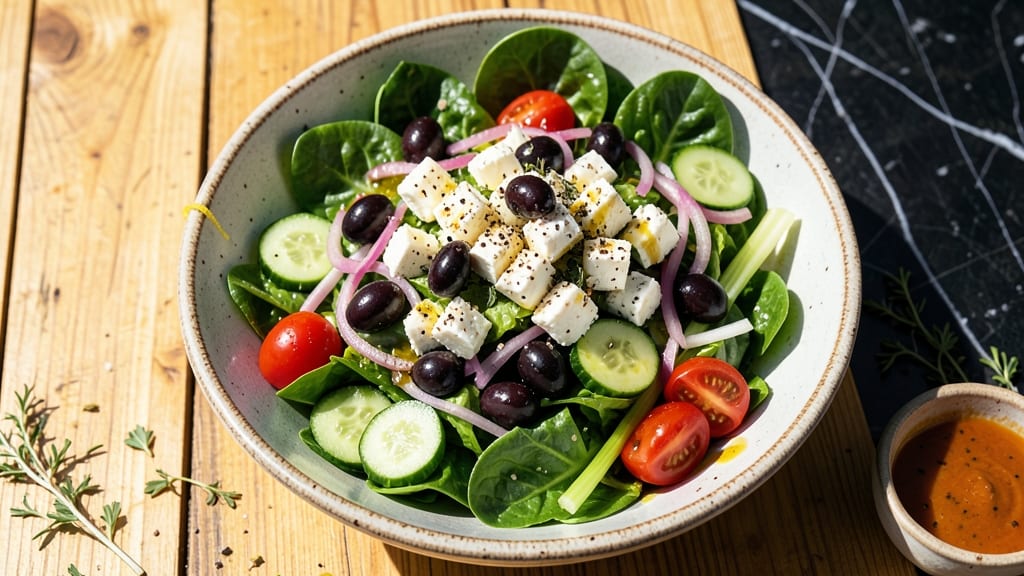
This Big Greek Salad recipe transforms simple ingredients into a vibrant, textured masterpiece that captures the essence of Mediterranean dining. 🌟 The secret lies in crisp celery crowns, juicy tomatoes, and briny olives that create a symphony of textures, all held together by a tangy lemon-olive oil dressing.
I've perfected this version over years of summer gatherings, where it consistently steals the show as both a refreshing side and a satisfying main dish.
What sets this salad apart is the attention to freshness and texture contrast—crisp cucumbers, tender lettuce, and salty feta create layers of flavor that dance on your palate.
The traditional ingredients come together effortlessly, but I've included modern twists like avocado or grilled halloumi for those who want to elevate their plate. This isn't just a side dish; it's a celebration of Mediterranean flavors that brings the taste of Greece to your table.
The result is a salad that's as beautiful as it is delicious—golden, vibrant, and perfectly balanced. Each bite delivers a mix of crisp, creamy, and tangy elements that make it impossible to stop eating.
Whether you're serving it at a summer picnic or as a light lunch, this salad delivers restaurant-quality flavor with minimal effort. The best part? It comes together in just 15 minutes, making it perfect for busy weeknights.
For extra authenticity, I'll share my tips for selecting the freshest ingredients and plating like a pro. The key is in the details—from properly slicing the cucumbers to arranging the feta just so. Let's create a salad that's as impressive as it is delicious.
Ingredients for big greek salad
Fresh Mediterranean ingredients that shine in this crisp, vibrant Greek salad masterpiece.
| Ingredient | Amount | Notes |
|---|---|---|
| Romaine Lettuce 🥬 | 1 whole | Hearts separated for easy serving |
| Cucumber 🥒 | 1 large | English or Persian type preferred |
| Red Onion 🧅 | 1 whole | Thinly sliced for sweetness |
| Kalama Olives 🫒 | ½ cup | Pitted, sliced lengthwise |
| Cherry Tomatoes 🍅 | 1 pint | Halved for vibrant color |
| Celery 🧅 | 3 stems | Thinly sliced for crisp texture |
| Feta Cheese 🧀 | 8 oz | Crumbled, traditional Greek |
| Extra-Virgin Olive Oil 🫒 | ½ cup | High quality, fruity |
| Fresh Lemon Juice 🍋 | ¼ cup | Freshly squeezed |
| Dried Oregano 🌿 | 1 tsp | Mediterranean blend preferred |
| Salt 🧂 | 1 tsp | Diamond Crystal preferred |
| Black Pepper 🌶️ | ½ tsp | Freshly ground |
| Avocado 🥑 | 1 medium | Sliced for creamy texture |
| Red Bell Pepper 🌶️ | 1 medium | Thinly sliced for sweetness |
| Red Wine Vinegar 🍷 | 1 tbsp | For dressing tang |
The lettuce is your canvas—Romaine hearts hold up best under the weight of toppings, but butter lettuce works too. Whole Foods or local farmers markets have the freshest options, especially in summer. Look for crisp, vibrant leaves with no wilting. The cucumbers should be firm and cool to the touch—Persian types are milder and sweeter. For the olives, Kalamata are traditional, but any pitted variety works. I always buy extra feta because it's impossible to resist—crumbled by hand gives the best texture. The avocado and bell pepper are your modern twists; grab ripe but firm avocados that yield slightly to gentle pressure.
No Kalamata olives? Green olives or even sun-dried tomatoes add a similar briny punch. Short on avocado? Add extra cucumber or white beans for creaminess. The dressing can be simplified with just olive oil and lemon, but the red wine vinegar plus oregano really elevates it. For a vegan version, skip the feta and use vegan feta or marinated tofu cubes. The oregano is non-negotiable—Mediterranean blend has the right earthy notes. If you can't find it, regular dried oregano works at double the amount. The celery crowns? Slice them thinly—almost translucent—and they'll add that signature crunch.
This salad tastes even better the next day—store in airtight containers with dressing on the side to keep everything crisp. Feta keeps for 1 week in the fridge wrapped in parchment, while avocado stays fresh for 3-4 days if sliced and stored with lemon juice. I always double the dressing because it's perfect for drizzling on grilled meats too. For serving, arrange the lettuce first, then layer toppings in concentric circles—feta in the center so everyone gets a piece. The colors will look stunning in a wide, shallow bowl.
Why You'll Love This Recipe
- No Knife Skills Needed: I swear, this salad is the only one where I can skip chopping. The Romaine stays whole, cucumbers get sliced thick (no dice required), and those Kalama olives? Just rip open the jar and dump. My lazy Sundays thank me every time.
- Salty, Sweet, Crunchy Magic: Between us, the red onion and Kalama olives steal the show—sharp, briny, and just enough bite. Then you add those juicy cherry tomatoes, and suddenly you’ve got a flavor party in your bowl. No dressing needed, but if you use one? Even better.
- Lunchbox Legend: Honestly, this is my go-to for work lunches or picnics. Pack it in a jar (dressing on the side, obviously), and it stays crisp for days. My coworkers think I’m a salad chef, but it’s really just 10 minutes of prep the night before.
- Budget-Friendly Pantry Hero: Romaine and cucumbers stretch forever, and those Kalama olives? You’ll use them in everything after this. I’ve made this salad for six people for under $8—no joke. It’s the kind of dish that makes you feel fancy without breaking the bank.
Step-by-step instructions for big Greek salad
Here's how to assemble this vibrant, textured salad with perfect crunch and bright flavors.
👨🍳 Step 1: Prep and Assemble the Base Vegetables
Start by separating the hearts of the 1 whole Romaine Lettuce - this makes serving easier and keeps the leaves crisp. Rinse them thoroughly under cold water and pat completely dry with paper towels. I like to tear them into bite-sized pieces rather than chopping, as this preserves their natural texture.
Next, thinly slice the 1 large Cucumber into ¼-inch rounds - use a mandoline for even slices if you have one. Peel the 1 whole Red Onion and slice it paper-thin. The key here is to slice against the grain so the layers separate naturally. Halve the 1 pint Cherry Tomatoes and remove any stems. Thinly slice the 3 stems Celery on the diagonal for uniform pieces.
Finally, slice the 1 medium Red Bell Pepper into thin strips. I like to remove the seeds and white membranes first for a cleaner texture. Arrange all these vegetables on a large platter, keeping them separate for now. This organized approach makes the final assembly look professional and ensures even distribution.
🥘 Step 2: Create the Feta and Olive Crunch Layer
Crumble the 8 oz Feta Cheese into small, uneven pieces - the bigger the chunks, the more satisfying the texture. I use my fingers for this because it creates that perfect rustic presentation. Arrange these feta pieces in an even layer across the vegetable base, leaving about 1-inch borders around the edges.
Slice the 0.5 cup Kalama Olives lengthwise and arrange them around the feta, creating a circular pattern. This not only looks beautiful but also ensures each serving gets a good distribution of both components. The olives should be spaced about ½-inch apart to maintain their individual crunch.
Here's a pro tip: If your feta is particularly salty, rinse it briefly under cold water and pat dry before crumbling. This prevents the salad from becoming overwhelmingly briny, especially if you're using a high-quality, aged feta.
🍳 Step 3: Make the Signature Dressing
In a small bowl, whisk together the 0.5 cup Extra-Virgin Olive Oil, 0.25 cup Fresh Lemon Juice, 1 tbsp Red Wine Vinegar, 1 tsp Dried Oregano, 1 tsp Salt, and 0.5 tsp Black Pepper. The dressing should be emulsified but still have a slight sheen - this indicates proper balance between the oil and acidic components.
Taste and adjust the seasoning. I often find I need a bit more salt at this stage, especially if using high-quality extra-virgin olive oil which can be quite peppery. The dressing should be tangy but not overpowering - you want it to complement rather than dominate the fresh vegetables.
Real talk: Don't make this dressing too far in advance. The lemon juice will continue to brighten as it sits, and the olive oil may separate. Whisk it just before serving to maintain that perfect emulsification.
🥘 Step 4: Add Avocado and Final Touches
Slice the 1 medium Avocado into ¼-inch thick rounds and arrange them on top of the feta layer. The avocado should be added just before serving to prevent browning. I like to place the slices in a circular pattern around the perimeter of the platter, creating a visual border that frames the salad.
Gently toss the dressing ingredients together one final time and drizzle it evenly over the entire salad. The amount should be generous but not pooling - you want each bite to be moistened but not soggy. I use about ⅓ of the dressing for this initial drizzle, reserving the rest for serving.
For that final touch, sprinkle a pinch of freshly cracked black pepper over the top. The pepper's heat will contrast beautifully with the cool avocado and creamy feta, elevating the entire flavor profile.
🍽️ Step 5: Serve with Confidence
Use two large serving spoons to portion the salad - one for the lettuce base and one for the feta/olive topping. This ensures each serving has that perfect balance of textures and flavors. Serve immediately while the avocado is at its peak freshness and the dressing is still vibrant.
For an authentic touch, I like to serve this salad with warm pita bread on the side. The contrast between the cool, crisp salad and warm, soft bread is pure Mediterranean magic. The salad will keep well in the refrigerator for up to 2 hours, though the avocado will darken slightly over time.
This salad delivers that perfect balance of textures - crisp vegetables, creamy feta, briny olives, and buttery avocado - all tied together with a bright, tangy dressing. Each bite should offer a symphony of flavors that makes you want to take another bite!
Pro Tips For Making Big Greek Salad
- CHILL THE CUCUMBER: Cut it 10 minutes before serving and toss with a pinch of salt—this draws out excess water so your salad stays crisp, not soggy. I learned this the hard way after watching a perfectly good cucumber turn into a sad, limp mess by lunchtime.
- SLICE ONION THINLY: Use a sharp knife and make even, paper-thin slices—no thick rounds. The sharper the bite, the better the flavor balance, and they’ll soften just enough without disappearing into mush. (Yes, even if you’re impatient like me.)
- DRESS LETTUCE LAST: Toss the dressing with everything except the romaine until serving. That way, the leaves stay crisp and don’t wilt under the weight of the oil. Pro move: Add the dressing right before eating so every bite is fresh.
- PICK FIRM CHERRY TOMATOES: Skip the squishy ones—they’ll bleed juice and turn your salad into a watery disaster. Look for tomatoes that yield slightly when pressed but hold their shape. A handful of perfect ones makes all the difference.
Troubleshooting your big greek salad
Wet Lettuce Woes
If your Romaine lettuce looks wilted or soggy after washing, it's likely trapped water that's weighing down the leaves. To fix this, I use a salad spinner for 10-15 seconds after rinsing, then pat dry with paper towels.
For extra crispness, place the dry lettuce in the fridge for 15 minutes before assembling. This chilling step tightens the cell structure and prevents the salad from becoming limp. 🥬
Mushy Cucumbers
Cucumbers are notorious for turning mushy, especially if sliced too thickly. For perfect texture, slice them into ¼-inch rounds using a sharp knife or mandoline. Toss the slices immediately with 1 tsp lemon juice and ½ tsp salt to draw out excess moisture.
Let them sit for 5 minutes before adding to the salad, then drain any liquid that collects in the bowl. This pre-treatment keeps them crisp for hours.
Feta Dissolving
If your feta cheese melts into the salad instead of maintaining its crumbly texture, it's likely too warm or not dry enough. Always use feta straight from the fridge and pat it thoroughly dry with paper towels before crumbling.
For extra insurance, I recommend using a block of feta rather than pre-crumbled—it holds its shape better. Add the feta just before serving to prevent it from absorbing moisture from other ingredients.
Dressing Separation
The classic sign of separated dressing is when you see oil pooling on top of the lemon mixture. To fix this, whisk the dressing vigorously for 30 seconds right before using.
For a more stable emulsion, I add 1 tsp Dijon mustard to the dressing ingredients—it acts as a natural emulsifier. If you're making the dressing ahead, store it in a tightly sealed jar and shake well before using.
The mustard trick works especially well for those who prefer their dressing to stay cohesive.
Olive Overload
If your olives are too briny and overpowering the other flavors, it's likely because they weren't rinsed first. Most store-bought olives are packed in brine, which can make the salad taste unbalanced. Rinse ½ cup Kalamata olives under cold water and pat them dry before adding to the salad.
For a milder flavor, soak them in ¼ cup water for 10 minutes before draining and using. This simple step reduces the saltiness while keeping that signature briny kick.
Avocado Browning
When avocado turns brown too quickly, it's a sign of oxidation. To prevent this, slice the avocado just before serving and immediately toss the slices in 1 tbsp lemon juice.
For extra protection, place the sliced avocado in a sealed container with a paper towel pressed against it to absorb moisture. If browning already occurred, sprinkle the salad with ½ tsp citric acid or extra lemon juice—it helps neutralize the metallic taste that develops.
The key is working with the avocado as close to serving time as possible.
Nutrition facts
Frequently asked questions
Can I make this salad ahead of time?
Yes, but with a few key adjustments! Assemble all ingredients except the avocado and dressing up to 2 hours ahead. Store them separately in airtight containers in the fridge. Add avocado and dressing just before serving to maintain crispness. The feta will keep its texture best if added last-minute too.
What's the best way to store leftovers?
Divide leftovers into airtight containers, keeping dressing separate. Store the salad (without avocado) for 1 day in the fridge. For the avocado portion, store it separately with a sprinkle of lemon juice on top. Reassemble with fresh dressing when ready to eat for the best texture.
Can I make this salad without feta?
For a vegan version, substitute with marinated tofu cubes or vegan feta. You can also add ¼ cup crumbled halloumi cheese (grilled for extra flavor) or simply omit it and increase the olive oil. The salad will still be delicious while maintaining its signature Mediterranean flavors.
How do I make this salad more substantial?
For a heartier version, add ½ cup cooked chickpeas or ¼ cup chopped walnuts for crunch. You could also include grilled chicken breast (about 1 cup diced) or white beans for extra protein. The salad will still be light but more satisfying as a main dish.
What's the secret to the perfect dressing ratio?
The ideal ratio is 2:1 olive oil to lemon juice, plus the other seasonings. For this recipe, that's 0.5 cup olive oil to 0.25 cup lemon juice. Start with these measurements, then adjust to taste—more lemon for brightness, more oil for richness. The dressing should coat the back of a spoon but not be overly thick.