
Main Courses
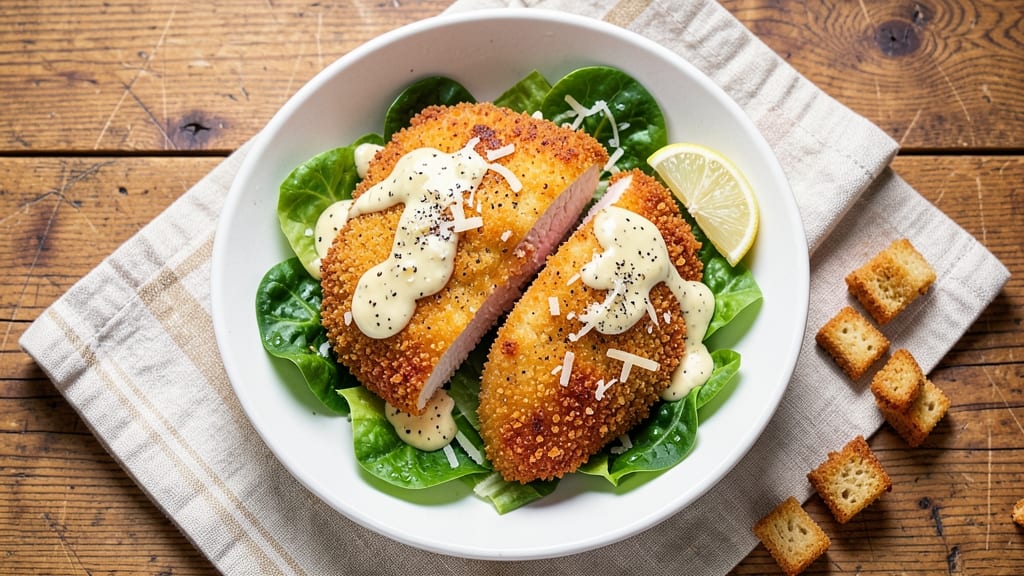
This breaded chicken Caesar salad delivers restaurant-quality crunch and creaminess in one satisfying dish. The secret lies in a double breading technique that creates an irresistible golden crust, while the classic Caesar components come together for a perfect balance of textures and flavors.
I've perfected this method over countless weeknight dinners, and it never fails to impress. What makes this recipe stand out is the combination of crispy chicken and creamy dressing, elevated by a Parmesan crunch that adds depth to every bite.
The chicken stays juicy inside while developing that satisfying crunch on the outside, and the dressing—made with real anchovies, garlic, and Dijon—brings authentic flavor without being overpowering. This is the kind of salad that feels indulgent yet remains light enough for lunch or dinner.
The assembly is straightforward but strategic: crisp chicken over fresh romaine, topped with classic Caesar elements that create a symphony of textures. The breading mixture is simple yet effective, using panko for maximum crunch and Parmesan for that signature salty bite.
Each component plays its part to create a dish that's both comforting and impressive. Whether you're serving this for a casual lunch or a dinner party, the technique scales beautifully. The crispy chicken stays crispy even when assembled with the dressing, and the salad holds together perfectly for easy serving.
Let's get started on creating this showstopper salad!
Ingredients for breaded chicken caesar salad
Restaurant-quality crunch meets creamy depth with these carefully selected ingredients for your Caesar salad masterpiece.
| Ingredient | Amount | Notes |
|---|---|---|
| Boneless, Skinless Chicken Breast 🍗 | 1 ½ lb | Pounded to even 1/4-inch thickness |
| All-Purpose Flour 🌾 | ½ cup | For initial breading layer |
| Panko Breadcrumbs 🍞 | 2 cups | Japanese-style for maximum crunch |
| Parmesan Cheese 🧀 | ½ cup | Freshly grated, fine grade |
| Large Eggs 🥚 | 2 whole | Room temperature for even coating |
| Fresh Romaine Lettuce 🥬 | 1 head | Hearts separated for presentation |
| Caesar Dressing 🥫 | 1 cup | Store-bought or homemade recipe |
| Anchovy Fillets 🐟 | 2 whole | For authentic dressing flavor |
| Garlic Cloves 🧄 | 3 cloves | Minced for dressing base |
| Dijon Mustard 🍯 | 1 tbsp | For dressing emulsification |
| Extra-Virgin Olive Oil 🫒 | ½ cup | For frying and dressing |
| Lemon Juice 🍋 | 2 tbsp | Freshly squeezed for brightness |
| Dried Parsley 🌿 | 1 tbsp | For dressing garnish |
| Kosher Salt 🧂 | 1 tsp | For seasoning and breading |
| Ground Black Pepper 🌶️ | ½ tsp | Freshly cracked for heat |
| Vegetable Oil 🫒 | 2 cups | For deep frying (peanut oil preferred) |
The chicken breast selection is critical—look for plump, uniform pieces with minimal connective tissue. Whole Foods or your local butcher often carry premium cuts ideal for breading, though standard supermarket chicken works fine. Pound the breasts to even thickness using a meat mallet or rolling pin; this ensures even cooking. For the Parmesan, Parmigiano-Reggiano is non-negotiable—pre-grated versions contain anti-caking agents that ruin texture. Store your Parmesan wedge in the freezer to preserve freshness; it'll grate beautifully straight from cold. The anchovies, though small, pack serious flavor—imported European fillets dissolve seamlessly into the dressing without fishy aftertaste.
No panko on hand? Regular breadcrumbs toasted in a dry pan work in a pinch, though texture suffers. Substituting the anchovies? High-quality fish sauce at half the amount delivers umami depth without texture. For the dressing, Dijon mustard can be swapped for whole-grain mustard, though it may slightly alter emulsification. The olive oil should be fruity and peppery—California avocado or Italian extra-virgin brands excel here. Fresh lemon juice is essential; bottled versions lack brightness. For the breading, toast your flour and Parmesan mixture in the frying oil for 30 seconds before dredging—this eliminates raw flour taste and amplifies the Parmesan's nutty notes. The vegetable oil for frying should have a high smoke point; peanut oil adds subtle flavor but isn't strictly necessary.
Freshly fried chicken stays crispy for up to 2 hours when assembled over chilled romaine. Store components separately: chicken in a single layer on paper towels to maintain crunch, dressing in an airtight container. The anchovies and garlic in the dressing keep for 1 week refrigerated or 3 months frozen. For meal prep, assemble the salad just before serving—this prevents soggy lettuce. The breading mixture can be prepped 2 days ahead and stored in the fridge; bring to room temperature before using. When reheating leftovers, air fry at 375°F for 3 minutes to restore crispiness without sogginess.
Why You'll Love This Recipe
- Crispy in Minutes: I swear by the egg-and-flour dip—just dunk the chicken, let the excess drip off, then coat in panko. That first bite? Chef’s kiss. No waiting for breading to set, no soggy results.
- Parmesan Magic: Between us, the grated Parmesan in the breading isn’t just for flavor—it’s the secret weapon. It melts into the chicken while keeping that golden crunch, and honestly? The first time I skipped it, I regretted it instantly.
- Lunchbox Hero: This salad holds up perfectly for meal prep. Pack the chicken and dressing separately, toss with romaine when you’re ready—no wilted greens or soggy breading. My kids actually eat their greens now. (Don’t tell them I’m bragging.)
- Budget-Friendly Feast: Skinless chicken breasts stretch further than you’d think when sliced thin, and panko’s cheap but makes it feel fancy. I’ve fed six people for under $15 with leftovers that taste just as good cold the next day.
Step-by-step instructions for breaded chicken Caesar salad
Transform simple ingredients into a restaurant-quality dish with perfectly crispy chicken and velvety dressing.
Prepare the Chicken Cutlets
Begin by pounding the 1.5 lb boneless, skinless chicken breast between two sheets of plastic wrap to an even ¼-inch thickness. This ensures even cooking and prevents dryness. Season both sides generously with ½ teaspoon ground black pepper and 1 teaspoon kosher salt, pressing the seasoning into the meat so it adheres well.
Place the seasoned chicken between two fresh sheets of plastic wrap and pound again to confirm even thickness. The goal is uniform cooking—thicker areas will stay underdone while thinner sections may overcook. Once evenly pounded, let the chicken rest at room temperature for 15 minutes while you prepare the breading station.
Create the Breading Station
Set up three shallow dishes: one with the ½ cup all-purpose flour mixed with ¼ teaspoon ground black pepper, one with the 2 cups panko breadcrumbs combined with ½ cup freshly grated parmesan cheese, and one with the 2 whole large eggs beaten until frothy. The flour creates adhesion, the egg binds, and the panko-parmesan combo delivers that signature crunch.
I like to arrange these stations in order of use—flour first, then egg, then breadcrumbs—so the breading process flows smoothly without cross-contamination. Keep the breading ingredients at room temperature for best results, as cold ingredients can make the coating brittle and prone to falling off during frying.
Bread the Chicken Perfectly
Dredge each chicken cutlet first in the flour mixture, pressing gently to adhere. Shake off any excess, then dip into the beaten eggs, allowing any excess to drip off. Finally, press the cutlet firmly into the panko-parmesan mixture, coating all sides completely. The breading should be uniform and adhere tightly—this ensures maximum crispiness when fried.
Place the breaded cutlets on a wire rack set over a baking sheet. This allows air to circulate underneath, preventing sogginess. Let them rest for 5 minutes while you prepare the frying station. This brief rest helps the breading adhere more securely, reducing the chance of it falling off during frying.
Fry to Golden Crispiness
Heat 2 cups vegetable oil in a deep skillet or Dutch oven to 350°F. Use a thermometer to monitor the temperature—oil that's too hot will burn the breading, while oil that's too cool will result in greasy, uncrispy chicken. Once the oil reaches temperature, carefully add the breaded chicken cutlets in a single layer, being careful not to splash.
Fry for 4-5 minutes per side until the chicken reaches an internal temperature of 165°F and the breading is a deep golden brown. The breading should be crispy enough to resist gentle pressure with tongs. Transfer the fried chicken to a paper towel-lined plate to drain excess oil, then tent loosely with foil to keep warm while you assemble the salad.
Assemble the Caesar Salad
Separate the hearts of the 1 head fresh romaine lettuce and divide among four plates. Drizzle each portion with ¼ cup caesar dressing, then arrange two fried chicken cutlets on top of each salad. The warm chicken will slightly wilt the lettuce, creating a perfect textural contrast between the crispy breading and tender greens.
Garnish each salad with a sprinkle of 1 tablespoon dried parsley and an additional crack of black pepper. Serve immediately while the chicken is still warm and the breading maintains its crisp texture. The combination of creamy dressing, crispy chicken, and fresh lettuce delivers that perfect balance of textures and flavors promised in every bite.
Pro Tips For Making Breaded Chicken Caesar Salad
- Pound Chicken Evenly: I used to eyeball this step, and half my chicken would turn out rubbery while the other half was overcooked. Grab a rolling pin or meat mallet and tap each breast to ¼-inch thickness—no thicker than your thumb. The thinner the cut, the faster it cooks, and the crispier the breading stays.
- Mix Cold Eggs: Warm eggs won’t cling worth a damn. Crack them into a bowl, grab an ice cube from your freezer, and drop it in for 10 seconds—just enough to chill the mixture. The breading sticks like glue, and you won’t end up with half your chicken falling apart when you flip it.
- Skip the Overcrowding: I learned this the hard way—shoving too many pieces in the pan turns your crispy dream into a soggy mess. Fry 2-3 pieces at a time in a nonstick skillet with ¼-inch oil (enough to coat the bottom, not drown it). If you’re impatient like me, work in batches instead of rushing.
- Toast Panko First: Sounds weird, but it works: Spread your panko on a baking sheet and toast it in a 375°F oven for 3-4 minutes before mixing with Parmesan. The extra crunch stays crispy longer, and the cheese melts just enough to bind everything together—no more breading that turns to dust when you cut in.
Regional styles of these flavors
Southern Fried Twist
In the South, this dish gets a smoky kick with hot sauce drizzled over the Caesar dressing. I like to use Crystal Hot Sauce for its tangy heat—just 1 teaspoon mixed into the dressing per serving.
Add pickled jalapeños for extra crunch and acidity. The Southern style also calls for cornbread croutons instead of traditional ones, adding a sweet, crumbly texture that pairs perfectly with the crispy chicken. 🌶️
California-Inspired Lightness
West Coast chefs often swap the creamy dressing for a lighter vinaigrette—mix ¼ cup olive oil, 2 tablespoons lemon juice, 1 tablespoon Dijon, and 1 teaspoon honey with a pinch of salt. Top with avocado slices and toasted almonds for crunch.
The breaded chicken stays the same, but the salad becomes a refreshing, bright dish perfect for warm days. Add grilled shrimp for extra protein if you're feeling adventurous.
Italian-Inspired Parmesan Crunch
For an authentic Italian touch, replace panko with fine breadcrumbs and add 1 tablespoon dried oregano to the breading. Use Parmigiano-Reggiano exclusively—no substitutes—and finish with toasted pine nuts instead of croutons. The dressing gets a boost with 1 anchovy fillet (finely chopped) and 1 clove garlic (minced) for depth.
Serve with crusty Italian bread on the side for dipping. This version feels like a Roman bistro classic.
Midwest Comfort Style
The Midwest leans into hearty textures with crispy fried onions (sautéed in butter until golden) and blue cheese crumbles mixed into the dressing. The breaded chicken uses cornmeal in the breading for extra crunch, and the salad is often served with mashed potatoes on the side.
This version is all about comfort—rich, creamy, and satisfying, perfect for cold weather. 🥔
Asian Fusion Crisp
For an Asian-inspired twist, add 1 tablespoon soy sauce and 1 teaspoon sesame oil to the breading mix. Use wonton wrappers instead of panko for a delicate crunch. The dressing gets a kick with 1 teaspoon rice vinegar and ½ teaspoon grated ginger.
Serve over butter lettuce with mandarin orange segments and sesame seeds for a fresh, vibrant salad that’s still packed with protein. This version is a crowd-pleaser at summer potlucks.
Nutrition facts
Frequently asked questions
Can I use chicken thighs instead of breasts for this recipe?
Chicken thighs work beautifully and stay juicier than breasts. For best results, pat them dry thoroughly and pound to ½-inch thickness. Adjust frying time to 5-6 minutes per side since thighs cook slower. The extra fat in thighs actually helps keep the breading extra crispy.
How do I keep the breading from falling off during frying?
The secret is proper preparation! First, make sure your chicken is completely dry before breading. Second, let breaded cutlets rest for 5 minutes on a wire rack before frying to help the coating set. Finally, don't overcrowd the oil—fry in batches if needed. The oil should be at 350°F and the chicken should go in gently to avoid splashing.
Can I make this salad ahead of time?
You can prep components separately but assemble it fresh for best texture. Fry the chicken and store it on a wire rack (not stacked) for up to 2 hours to maintain crispiness. Keep dressing in a sealed container and lettuce refrigerated. Reheat chicken in a 375°F air fryer for 3 minutes before serving. The breading will lose crispness if assembled too early.
What's the best way to make the dressing creamy without mayo?
For a dairy-based creamy dressing, blend ½ cup sour cream with ¼ cup mayonnaise (or Greek yogurt for tang) and proceed with the recipe. Alternatively, use ¼ cup crème fraîche for a lighter texture. The key is to emulsify properly by adding oil slowly while blending. For vegan options, use silken tofu blended with lemon juice and nutritional yeast.
Why does my Caesar dressing look too thin?
This usually happens when the oil is added too quickly during blending. Slowly drizzle the oil while blending on high speed to create proper emulsification. Another trick: chill the dressing for 30 minutes before using—this helps thicken it. If it's still too thin, mix in 1 teaspoon cornstarch dissolved in 1 tablespoon cold water and blend again briefly.