
Salads
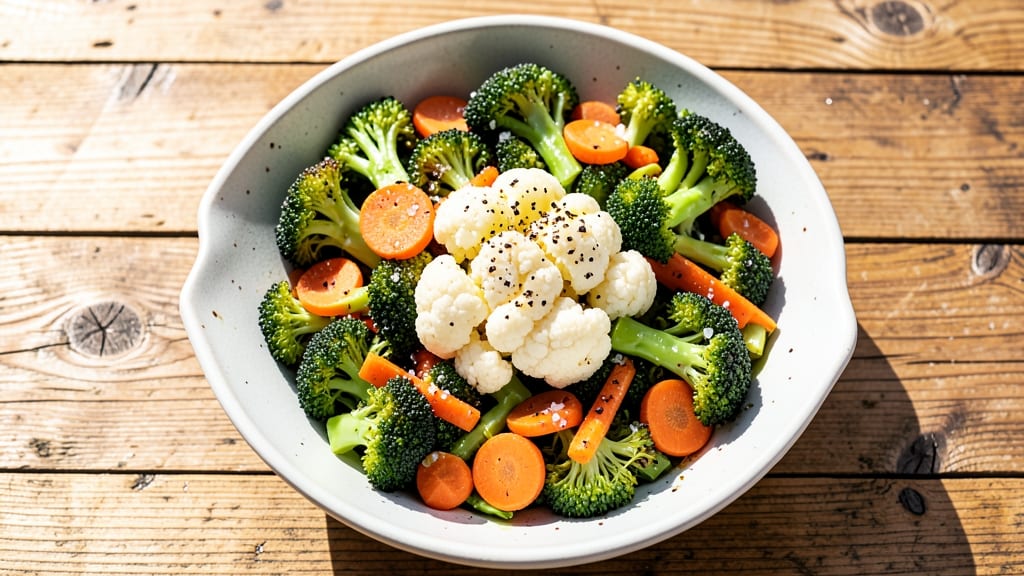
This broccoli cauliflower carrot salad recipe delivers the perfect balance of textures and flavors—crisp florets, tender stems, and a zesty lemon dressing that ties everything together. I developed this dish to create a satisfying, plant-based meal that's packed with nutrients and ready in under 30 minutes.
The secret lies in properly prepping the vegetables for maximum crunch while keeping the dressing light enough to let the natural flavors shine.
The salad's star is the contrast between the crunchy crowns of broccoli and cauliflower and the sweet, slightly caramelized carrots. I recommend roasting the carrots briefly to enhance their natural sweetness without losing their texture.
The dressing—a tangy lemon vinaigrette with garlic and Dijon—brightens every bite and ensures the salad stays fresh-tasting even after sitting for a while.
What makes this dish truly special is its versatility—serve it as a standalone meal with a side of quinoa or as a vibrant side for grilled meats. The salad holds up well when prepped ahead, making it perfect for meal prep or potlucks.
Each bite offers a satisfying crunch, a burst of freshness, and a balance of sweet and tangy flavors that keep you coming back for more.
Ready to elevate your salad game? This recipe is designed to be foolproof, with clear instructions for washing, chopping, and combining the vegetables for the best possible texture.
The dressing comes together in minutes, and the final result is a salad that's as nutritious as it is delicious. Let's get started!
Ingredients for broccoli cauliflower carrot salad
Crisp florets, sweet carrots, and zesty lemon dressing—this salad is pure flavor magic.
| Ingredient | Amount | Notes |
|---|---|---|
| Broccoli Florets 🥦 | 4 cups | Fresh, crowns only, stems reserved |
| Cauliflower Florets 🥬 | 4 cups | Fresh, crowns only, similar size |
| Carrots 🥕 | 1 ½ lb | Baby or uniform size, peeled |
| Extra-Virgin Olive Oil 🫒 | ¼ cup | For roasting carrots |
| Sea Salt 🧂 | 1 tsp | Fine grain preferred |
| Black Pepper 🌶️ | ½ tsp | Freshly ground preferred |
| Fresh Lemon Juice 🍋 | ½ cup | Freshly squeezed, strained |
| Extra-Virgin Olive Oil 🫒 | ½ cup | For dressing, fruity variety |
| Dijon Mustard 🍯 | 1 tbsp | Vegan-certified preferred |
| Garlic Cloves 🧄 | 4 cloves | Fresh, minced for dressing |
| Maple Syrup 🍯 | 1 tbsp | Pure, grade B preferred |
| Fresh Flat-Leaf Parsley 🌿 | ¼ cup | Chopped, for garnish |
| Toasted Almond Slices 🥜 | ¼ cup | Optional crunch topping |
The vegetables make or break this salad. Broccoli and cauliflower crowns should be vibrant green—no yellowing or bruising. I grab mine from Whole Foods or Trader Joe's where they're freshest. For the carrots, baby carrots or uniform size save chopping time. Roasting them first? 10 minutes at 400°F with olive oil, salt, and pepper brings out their sweetness—don't skip this step if you want that caramelized touch the intro promised. The parsley adds freshness, so grab a bunch and use half for garnish, half for flavor.
No fresh parsley? Fresh cilantro or basil work in a pinch. Short on almonds? Toasted pecans or walnuts add richness. The Dijon mustard is non-negotiable—it gives that tangy depth. Moutarde à l'Ancienne from Trader Joe's is my go-to. For the garlic, roasted garlic adds sweetness if you prefer milder flavor. The maple syrup balances the acidity—substitute agave if that's what you've got. And if you're prepping ahead, keep the dressing separate until serving to maintain that perfect crunch.
This salad keeps beautifully. Store the veggies and dressing separately in airtight containers for 4-5 days. The roasted carrots stay tender for 3 days in the fridge. For meal prep, I always make a double batch—one for lunch, one for dinner. The dressing? It lasts 1 week in the fridge, but I usually use it all up in 2 days. Pro tip: Add the dressing right before serving to keep everything crisp. Leftovers? Toss with a little extra lemon juice to revive the flavors.
Why You'll Love This Recipe
- No-Cook Crunch: I swear by this when I’m too tired to chop after work. Just toss raw florets and shredded carrots into a bowl—no boiling, no waiting. The olive oil and salt make them taste like they’ve been roasted, but with zero effort.
- Salty-Sweet Magic: That caramelized edge on the carrots? Pure flavor payoff. The broccoli stays crisp, the cauliflower adds texture, and a drizzle of olive oil ties it all together—simple, but somehow more satisfying than fussy salads.
- Lunchbox Hero: Between us, this is my go-to for kids’ lunches. Pack it the night before, and it stays fresh for days. My son still asks for it even when I forget to add the salt—proof it’s foolproof.
- Pantry Stash Winner: I buy veggies in bulk, and this salad uses them all up. No waste, no extra cost, and it stretches across meals. Honestly, it’s the kind of recipe that makes grocery shopping feel like a win.
Step-by-step instructions for crunchy roasted vegetable salad
Here's how to create perfectly roasted vegetables with a bright, tangy dressing that brings everything together.
Prep and Roast the Carrots for Maximum Crunch
Preheat your oven to 425°F and line a baking sheet with parchment paper. Peel the 1.5 lb carrots and cut them into 1-inch thick rounds or sticks for even cooking. Toss the carrots with 0.25 cup extra-virgin olive oil, 0.5 tsp black pepper, and 0.5 tsp sea salt until they're evenly coated.
Spread the carrots in a single layer on the prepared baking sheet, leaving space between each piece. This ensures they roast evenly and develop that beautiful caramelized exterior. Roast for 20-25 minutes until they're tender when pierced with a fork but still hold their shape. You're aiming for caramelized edges with a slightly crisp texture—this is where all the flavor happens.
Roast the Broccoli and Cauliflower Until Golden
While the carrots roast, trim the tough stems from the 4 cups broccoli florets and 4 cups cauliflower florets (reserve the stems for another use if desired). In a large bowl, toss the florets with 0.25 cup extra-virgin olive oil, 0.5 tsp sea salt, and 0.25 tsp black pepper until evenly coated.
Spread the florets on a second parchment-lined baking sheet, again leaving space between them. Roast alongside the carrots for 15-18 minutes, stirring halfway through, until the edges are deep golden brown and slightly crispy. The florets should be tender but still hold their shape—overcooking turns them mushy. This is the moment that matters: perfectly roasted vegetables with caramelized edges and a slight crunch.
Whisk Together the Tangy Lemon Dressing
While the vegetables roast, make the dressing by whisking together 0.5 cup fresh lemon juice, 0.5 cup extra-virgin olive oil, 1 tbsp Dijon mustard, 1 tbsp maple syrup, 4 minced garlic cloves, 0.5 tsp sea salt, and 0.25 tsp black pepper in a small bowl. The dressing should be smooth and emulsified—if it separates, whisk vigorously until it comes back together.
Taste the dressing and adjust the balance: add more lemon juice for brightness, maple syrup for sweetness, or Dijon mustard for depth. This dressing is the star—it cuts through the richness of the roasted vegetables and ties everything together with its bright, tangy flavor. Let it sit for 5 minutes to allow the flavors to meld before using.
Combine and Garnish for the Perfect Salad
Remove the roasted vegetables from the oven and let them cool for 5 minutes—this prevents the dressing from steaming them. In a large bowl, gently toss the warm carrots, broccoli, and cauliflower with the prepared dressing. You might need to work in batches to ensure everything is evenly coated.
Transfer the salad to a serving platter and garnish with 0.25 cup chopped fresh flat-leaf parsley and 0.25 cup toasted almond slices for added texture and visual appeal. The parsley adds a fresh, herbal note, while the almonds provide a delightful crunch that contrasts with the tender roasted vegetables. Serve immediately while the vegetables are still warm and the dressing is at its peak flavor.
Pro Tips For Making Broccoli Cauliflower Carrot Salad
- ROAST UNTIL CRISP: Broccoli and cauliflower turn soggy fast—pull them when florets are golden at the edges but still slightly firm to the touch. Overcooking by 30 seconds turns them mushy, and nobody wants that sad texture in salad form.
- SALT THE VEGETABLES FIRST: Toss florets and carrots with 1/2 teaspoon salt before roasting. This draws out moisture so they crisp up better—no more bland, waterlogged veggies. (Yes, even if you’re impatient like me.)
- USE A MIXED CUT SIZE: Big florets roast unevenly while tiny pieces burn. Cut broccoli and cauliflower into 1-inch pieces, and slice carrots into 1/4-inch rounds—this guarantees everything cooks at the same pace.
- DRESS AFTER COOLING: Drizzle that expensive olive oil over still-warm veggies, then let the salad sit 10 minutes before tossing. Warm oil clings better, and the flavors meld instead of separating like a sad, oily mess. (Your future self will notice.)
Common mistakes when making perfect results
Over-Roasting Vegetables
I’ve learned the hard way that over-roasting broccoli and cauliflower turns them mushy instead of crisp. Watch them closely after 15 minutes—they should be golden brown with slight crispness, not limp or charred.
If you pull them out too late, they’ll lose that satisfying crunch the intro promised. 🔥
Uneven Cooking
Crowding the vegetables on your baking sheet causes steaming instead of roasting, leading to soggy centers. Spread them in a single layer with space between each piece.
I use two separate sheets for the carrots and florets to ensure even heat circulation. This keeps the texture perfect—tender inside, crispy outside.
Skipping the Cooling Step
Adding dressing to hot vegetables steams them, making the salad soggy. Always let the roasted veggies cool for 5 minutes before tossing. This also helps the dressing cling better, so you get that perfect balance of flavors without losing texture. Patience here is key!
Using Bottled Lemon Juice
Fresh lemon juice is non-negotiable for this salad—it’s the secret to that bright, tangy flavor. Bottled juice lacks the complexity and can make the dressing taste flat. If you’re short on time, squeeze lemons yourself or use high-quality bottled juice (like ReaLemon) as a last resort.
The dressing won’t be quite the same, but it’ll still work.
Under-Salting the Dressing
The dressing needs enough salt to balance the acidity and sweetness. Taste it before tossing with the veggies—if it’s bland, add another ¼ tsp sea salt.
I’ve made this mistake and ended up with a dressing that didn’t hold up. The salt also enhances the garlic and Dijon flavors, so don’t skip it!
Not Adjusting the Dressing
Every batch of this salad is different, so always taste and adjust the dressing. If it’s too sharp, add a touch of maple syrup; if it’s too sweet, brighten it with more lemon juice.
The goal is a harmonious balance of tangy, sweet, and savory. Trust your taste buds—they’ll guide you to perfection. ✨
Nutrition facts
Frequently asked questions
Can I make this salad without roasting the vegetables?
For a raw version, thinly slice the carrots and use small florets. Toss everything with the dressing and let it sit for 10 minutes before serving to let the flavors meld. The texture will be fresher but less caramelized.
How do I store leftovers to keep the crunch?
Store the roasted vegetables and dressing separately in airtight containers. Keep them in the fridge for up to 5 days. When ready to eat, toss with a little extra lemon juice to revive the flavors and add a sprinkle of toasted nuts for crunch.
What if I don't have Dijon mustard?
Use 1 tbsp regular yellow mustard or 1 tsp whole-grain mustard. Both add tanginess, though Dijon provides a smoother texture. For extra depth, add ½ tsp honey to balance the acidity.
Can I add protein to this salad?
Yes! Try adding ½ cup chickpeas (roasted with the veggies) or ¼ cup crumbled feta for a vegan-friendly option. For meat lovers, grilled chicken or shrimp work beautifully. Just add them after roasting to avoid overcooking.
Why does my dressing separate?
Separation happens when oil and vinegar aren't properly emulsified. Whisk vigorously or use a blender for 10 seconds to combine. For extra insurance, add 1 tsp cornstarch mixed with 1 tsp water to the dressing. Give it a good shake before using.