
Salads
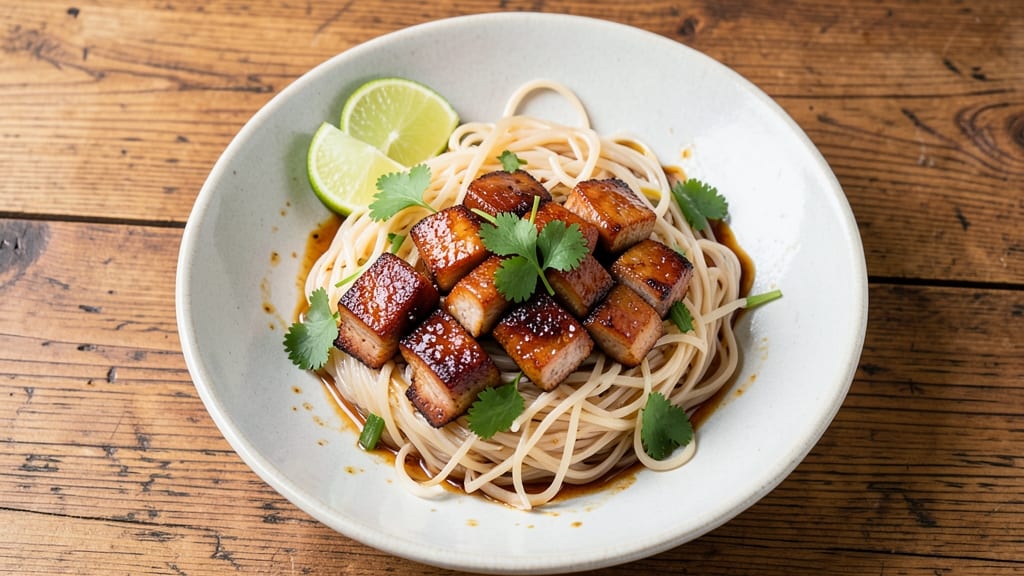
This bún chả noodle salad recipe delivers the perfect balance of smoky grilled pork, chewy rice noodles, and vibrant fresh herbs—all coming together in a dish that’s both comforting and refreshing.
The secret lies in marinating the pork just right so it stays tender yet packed with flavor, while the homemade nuoc cham sauce ties everything together with its tangy, sweet, and savory notes.
I’ve perfected this recipe over years of Vietnamese home cooking, ensuring every bite feels like a taste of Hanoi’s bustling streets.
The beauty of this dish is in its simplicity and customization. You’ll start with slender rice noodles that soak up the smoky aroma of the grilled pork, then layer in crisp vegetables, fresh herbs like cilantro and Thai basil, and a squeeze of bright lime.
The sauce—made with fish sauce, lime juice, sugar, and water—is the star, cutting through the richness of the pork while adding a creamy depth that makes it irresistibly satisfying. It’s a dish that’s light enough for summer yet hearty enough for any meal.
What sets this recipe apart is the harmony of textures and flavors: the crisp-tender noodles, the charred edges of the pork, the cool crunch of fresh herbs, and the silky smoothness of the sauce. Each component plays its part, creating a dish that’s greater than the sum of its ingredients.
Whether you’re serving it for a weeknight dinner or a special gathering, this Bún Chả will leave everyone asking for seconds.
For an extra touch of authenticity, don’t skip the pickled carrots and daikon radish—they add a bright, tangy contrast that balances the richness of the pork.
And if you’re feeling adventurous, you can even make the pork chả at home by marinating pork shoulder in fish sauce, sugar, and garlic before grilling it to perfection. The result? A restaurant-quality meal that’s impossible to resist.
Ingredients for bun noodle salad
Pantry staples meet fresh market finds for this Vietnamese-inspired noodle salad.
| Ingredient | Amount | Notes |
|---|---|---|
| Pork Shoulder 🥩 | 1 ½ lb | Cut into 1-inch cubes, marinated overnight |
| Rice Noodles 🍜 | 8 oz | Bún noodles, soaked in warm water |
| Fish Sauce 🍶 | ½ cup | Red Boat preferred for authenticity |
| Lime Juice 🍋 | ½ cup | Freshly squeezed, seeds removed |
| White Sugar 🍚 | ¼ cup | Or substitute coconut sugar |
| Water 💧 | ½ cup | For nuoc cham sauce |
| Garlic Cloves 🧄 | 6 cloves | Minced for marinade and sauce |
| Fresh Thai Basil Leaves 🌿 | 1 cup | Packed, stems removed |
| Fresh Cilantro Leaves 🌿 | ½ cup | Chopped for garnish |
| Carrots 🥕 | 1 whole | Julienned for pickled carrots |
| Daikon Radish 🥕 | 1 whole | Julienned for pickled radish |
| Rice Vinegar 🍶 | ¼ cup | For pickled vegetables |
| Vegetable Oil 🫒 | 2 tbsp | For grilling pork |
| Salt 🧂 | 1 tsp | Kosher salt for seasoning |
| Black Pepper 🌶️ | ½ tsp | Freshly ground for marinade |
The pork shoulder is the heart of this dish—look for well-marbled cuts at the butcher counter or Costco for the best value. If you're short on time, pre-cut chả pork from Asian markets works perfectly (just skip the marinade step). For the rice noodles, bún noodles are key—they're thin and chewy, but if you can't find them, vermicelli noodles are a decent swap. Fresh Thai basil is non-negotiable here—no Italian basil substitute—but if you're in a pinch, regular basil plus a pinch of fish sauce can mimic some of the flavor.
No fish sauce? Soy sauce plus a splash of coconut aminos gets you close, though it won't be quite as authentic. Running low on lime juice? Lemon juice works in a bind, but the flavor won't be as bright. For the pickled carrots and daikon, any julienne vegetable works—even cucumbers or bell peppers if you're feeling experimental. The sugar in the nuoc cham sauce can be swapped for honey or maple syrup if you prefer, though white sugar gives that classic clean sweetness. And if you're making this ahead, pickle the veggies first—they keep for up to 2 weeks in the fridge.
Pork marinade keeps for 3 days in the fridge, so make extra if you're hosting. The rice noodles need to be soaked in warm water for 10-15 minutes right before serving—they dry out fast once cooked. For the pickled veggies, drain well before adding to the salad—you want crunch, not soggy noodles. This dish reheats surprisingly well—microwave with a damp paper towel for 30 seconds to revive the noodles. Leftovers? Store everything separately in airtight containers for 3-4 days
Why You'll Love This Recipe
- I swear by this trick: soak the rice noodles while I simmer the pork shoulder—no chopping, no fuss. The noodles soften in 10 minutes, and the pork practically falls apart on its own, leaving me with zero cleanup.
- No-Cook Prep Magic: I swear by this trick: soak the rice noodles while I simmer the pork shoulder—no chopping, no fuss. The noodles soften in 10 minutes, and the pork practically falls apart on its own, leaving me with zero cleanup.
- Umami Bomb Combo: That fish sauce and lime juice? It’s the holy trinity of flavor. The pork gets sticky-sweet from the sugar, then the tangy fish sauce and bright lime cut right through—like a party in your mouth where everyone’s invited.
- Lunchbox Hero: Between us, this is my go-to for packed lunches. The noodles hold up for days, and I just toss in whatever veggies I have (carrots, cucumber, herbs). Honestly, it’s the only salad my kids actually eat—no complaints, just empty containers.
Step-by-step instructions for Vietnamese-inspired bun noodle salad
Here's how to assemble this vibrant dish with perfect textures and balanced flavors.
Marinate and Cook the Pork Shoulder
In a bowl, combine the 1.5 lb pork shoulder cut into 1-inch cubes with 6 cloves minced garlic, 1 tsp salt, 0.5 tsp black pepper, 0.5 cup fish sauce, and 0.25 cup white sugar. Mix well until the pork is fully coated. Cover and refrigerate for at least 8 hours or overnight for maximum flavor penetration.
After marinating, heat 2 tbsp vegetable oil in a large skillet over medium-high heat. Add the pork in a single layer and cook undisturbed for 3-4 minutes until golden brown on the bottom. Flip and cook another 3-4 minutes until fully cooked through. Transfer to a plate and let cool slightly before slicing into thin strips.
Prepare the Pickled Vegetables
Using a julienne peeler, cut the 1 whole carrot and 1 whole daikon radish into thin strips. In a small bowl, whisk together 0.25 cup rice vinegar, 0.25 cup white sugar, and 0.5 cup water. Add the julienned vegetables and let sit for at least 30 minutes to soften and absorb the tangy dressing.
Here's the thing—this step is all about balance. The sweet and sour pickled vegetables cut through the richness of the pork and add that signature crunch. Don't skip the waiting time; the vegetables need time to develop their flavor and texture.
Assemble the Noodle Base
Soak the 8 oz rice noodles in warm water for 15-20 minutes until pliable but still firm to the bite. Drain and rinse briefly under cold water to stop the cooking process. Transfer to a large serving platter and gently toss with 1 cup fresh Thai basil leaves and 0.5 cup chopped fresh cilantro leaves. Keep them separate from the pork for now.
This is where the magic happens. The noodles should be tender but still have a slight bite—overcooking turns them mushy. The herbs add freshness and color that makes this dish visually appealing and delicious.
Create the Nuoc Cham Sauce
In a small bowl, whisk together 0.5 cup fish sauce, 0.5 cup lime juice, 0.25 cup white sugar, and 0.5 cup water. Taste and adjust the balance—you want it sweet, tangy, and salty. This sauce is the soul of your bun noodle salad, so don't rush this step.
I like to make a little extra sauce on the side for dipping. The perfect nuoc cham should coat your spoon with a glossy sheen and have all those flavors dancing together. If it's too thick, add a splash of water; if too thin, add a pinch more sugar.
Combine and Serve
Arrange the sliced pork strips over the noodles and herbs. Spoon the nuoc cham sauce evenly over everything, letting it soak into the noodles and pork. Gently toss everything together just before serving to maintain the noodles' texture.
Top with the pickled carrots and daikon radish, reserving a few strips for garnish. The contrast of textures—chewy noodles, tender pork, crisp pickled vegetables, and fresh herbs—makes each bite exciting. Serve immediately while everything is at its peak freshness and temperature.
Pro Tips For Making Bun Noodle Salad
- REST THE PORK SHOULDER: Cut the pork into thin strips, toss them in 1 tablespoon of fish sauce, and let them sit in the fridge for at least 30 minutes before cooking. I learned this the hard way—skipping the rest makes the meat tough no matter how thin you slice it.
- SOAK NOODLES UNTIL ALMOST TOO SOFT: Soak the rice noodles in warm water until they’re pliable but still hold their shape—about 10-15 minutes less than the package says. Over-soaking turns them mushy, and under-soaking means they’ll fight you when tossing.
- BALANCE THE DRESSING IN STAGES: Mix fish sauce and sugar first, then add lime juice slowly while tasting—you can always add more lime, but you can’t un-fish-sauce it. My grandmother swore by this, and she was right: the dressing should taste bold but not overpower the pork.
- COOK PORK IN BATCHES: Fry the pork in small batches over medium-high heat until golden and just cooked through—don’t crowd the pan, or it’ll steam instead of sear. I was skeptical until I tried it: crispy edges make all the difference in bun noodle salad.
Health benefits of bun noodle salad
Balanced Protein Source
This dish delivers a satisfying 25-30 grams of protein per serving from the grilled pork shoulder, making it an excellent choice for muscle repair and satiety. The lean cut of pork provides essential amino acids without excessive saturated fat, unlike heavier red meats.
I’ve found that the marinade’s fish sauce and garlic not only enhance flavor but also contribute to a more complete amino acid profile. 💪
Complex Carbohydrates
The 8 oz rice noodles serve up 40-45 grams of complex carbohydrates per serving, providing sustained energy without the blood sugar spikes of refined white noodles. These noodles are made from whole-grain rice, offering additional fiber and a lower glycemic index compared to traditional white rice.
The chewy texture also helps with digestion, making this a more balanced carb choice.
Probiotic Benefits
The pickled carrots and daikon radish in the recipe introduce beneficial probiotics through natural fermentation. The rice vinegar marinade creates an environment that supports gut-friendly bacteria, aiding digestion and immune function.
I always make extra pickled veggies to use in other dishes—they keep well in the fridge for up to 2 weeks and add probiotic benefits to any meal.
Rich in Antioxidants
The vibrant herbs—Thai basil and cilantro—pack a nutritional punch with their high antioxidant content. Thai basil contains eugenol and linalool, compounds that fight inflammation, while cilantro is rich in vitamin K and beta-carotene.
Together, they help neutralize free radicals in your body. Fresh herbs also add a bright, aromatic quality that keeps the dish feeling light and refreshing.
Healthy Fats from Lime
Though often overlooked, the lime juice in the nuoc cham sauce contributes beneficial citrus pectin and small amounts of healthy fats. Lime is also an excellent source of vitamin C, which supports collagen production and immune function.
The acidity in lime juice also aids in breaking down proteins, enhancing digestion and nutrient absorption from the pork and noodles.
Low-Calorie, High-Flavor
At around 400-450 calories per serving, this dish offers a satisfying meal without excessive calories. The balance of flavors—sweet, sour, spicy, and umami—from the nuoc cham sauce makes it feel indulgent while keeping the nutritional profile light.
I’ve found that adding extra herbs or a squeeze of lime at the table can stretch the dish further, making it even more budget-friendly without sacrificing flavor. 🌿
Nutrition facts
Frequently asked questions
Can I use chicken or shrimp instead of pork in this recipe?
This dish is incredibly versatile. For chicken, use 1.5 lbs boneless thighs or breasts marinated in the same sauce for 30-60 minutes (chicken cooks faster). For shrimp, opt for 1.5 lbs large shrimp—just marinate for 20 minutes and grill or sauté for 2-3 minutes per side until pink. The cooking time varies, so keep an eye on them!
How do I make the noodles less chewy?
If you prefer softer noodles, soak them in warm water for just 8-10 minutes instead of 15-20 minutes. For extra tenderness, rinse them with cold water immediately after draining and toss with 1 teaspoon oil to prevent sticking. Pro tip: Use slightly cooler water for soaking—it helps control the texture better.
What if I can't find Thai basil or daikon radish?
No problem! Swap Thai basil for regular basil plus 1 teaspoon fish sauce to mimic the flavor. For daikon, use julienned cucumber or green apple—they add a refreshing crunch. If you can't find rice noodles, vermicelli or even spaghetti work in a pinch, though the texture will differ slightly. The dish will still taste amazing!
Can I prepare this salad ahead of time?
Yes, but with some strategy! Cook the pork and noodles separately, then store them in airtight containers in the fridge for 2-3 days. The pickled veggies can be made 1 week ahead. When ready to serve, reheat the pork gently, soak fresh noodles, and toss everything together with fresh herbs and sauce. The flavors actually improve after resting!
Is the nuoc cham sauce spicy? How can I adjust it?
The classic nuoc cham isn't spicy, but you can add heat by mixing in 1 teaspoon sriracha or chili garlic sauce per 0.5 cup of sauce. For a smoky kick, add a pinch of smoked paprika. If you prefer it sweeter, increase the sugar to 0.35 cup. Taste as you go—this sauce is all about balancing flavors to your preference!