
Salads
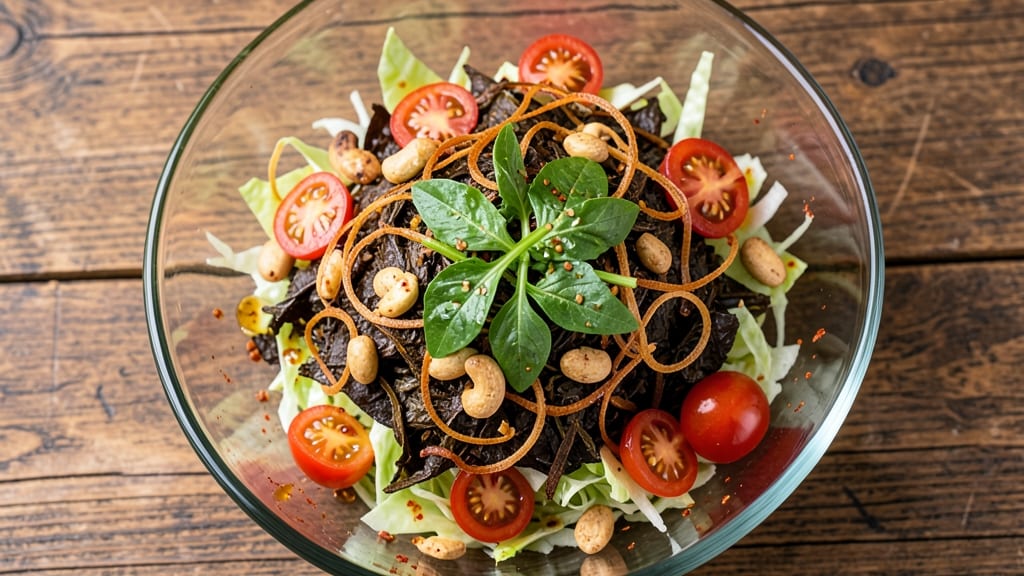
This Burmese tea salad recipe brings the bold flavors of Myanmar to your table with a perfect balance of tangy, spicy, and crispy elements.
The key to this dish lies in the crispy shallots and tamarind dressing, which transform simple ingredients like shredded tea leaves and cabbage into something unforgettable.
I developed this recipe after discovering how traditional Burmese salads combine fresh vegetables with fermented tea and aromatic spices, creating a dish that's both refreshing and deeply satisfying.
The salad starts with a base of shredded tea leaves—often laphet thoke—which add a unique earthy flavor, paired with crisp cabbage, juicy tomatoes, and mustard greens for texture. The tamarind dressing, tangy and slightly sweet, ties everything together, while toasted peanuts and crispy shallots add crunch.
This dish is traditionally served with mont di, a fermented tea that enhances the salad's complexity, but it works beautifully on its own as a vibrant side or light meal.
What makes this recipe stand out is the crispy shallots, which add a satisfying crunch that contrasts perfectly with the soft vegetables. The tamarind dressing, made with lime, chili, and a touch of sugar, balances the salad's flavors without overpowering them.
Each bite delivers a mix of textures and tastes—tangy, spicy, sweet, and savory—that make this salad a standout dish.
Whether you're serving it as a side for grilled meats or as a refreshing main dish, this Burmese tea salad is sure to impress. The preparation is straightforward, and the ingredients are easy to find, making it a great addition to any meal.
Let's get started on creating this flavorful and culturally rich dish!
Ingredients for burmese tea salad
The vibrant heart of Burmese cuisine starts with these 14 ingredients—where crispy shallots meet tangy tamarind dressing.
| Ingredient | Amount | Notes |
|---|---|---|
| Shallots 🧅 | 1 ½ lb | Thinly sliced for crispy frying |
| Laphet Thoke Tea Leaves ☕ | ½ cup | Shredded, dried tea leaves |
| Green Cabbage 🥬 | 4 cups | Shredded, thinly sliced |
| Cherry Tomatoes 🍅 | 1 lb | Halved, seedless preferred |
| Mustard Greens 🌱 | 2 cups | Chopped, stems removed |
| Raw Peanuts 🥜 | ½ cup | Toasted, unsalted |
| Tamarind Paste 🍯 | ¼ cup | Unsweetened, high quality |
| Fresh Lime Juice 🍋 | ½ cup | Freshly squeezed |
| Red Chili Paste 🌶️ | 2 tbsp | Adjust for heat preference |
| Coconut Sugar 🍯 | 2 tbsp | Or substitute brown sugar |
| Vegetable Oil 🫒 | 1 cup | For frying shallots |
| Salt 🧂 | 1 tsp | Diamond Crystal preferred |
| Black Pepper 🌶️ | ½ tsp | Freshly ground |
| Fish Sauce 🍶 | 1 tbsp | Optional, vegetarian substitute: soy sauce |
The shallots are non-negotiable for that signature crunch. Look for firm, dry bulbs at Whole Foods or your local Asian market—avoid any with sprouting or soft spots. For the tea leaves, laphet thoke is ideal, but any strong black tea will work if shredded finely. The peanuts should be raw and unsalted—Trader Joe's has great bulk options. Tamarind paste varies wildly in quality; Thai Kitchen brand is reliable, but check for lumps and strain if needed. The cabbage needs to be crisp, so store it in a sealed bag in the fridge until use—it wilts fast once chopped.
No tamarind paste? Lime juice plus 1 tbsp maple syrup mimics the tang, though purists will notice the difference. Short on chili paste? Fresh red chilies blended with a pinch of salt works beautifully. The fish sauce is traditionally used, but soy sauce or vegan fish sauce keeps this vegetarian while maintaining umami depth. For the shallots, double-fry for extra crispiness—first at medium heat until soft, then crank the heat to blister them. The tomatoes can be any variety, but heirloom or grape tomatoes add the most juice and sweetness when halved.
Shallots stay crisp for 2 days if stored in an airtight container, but they're best fresh. The dressing keeps for 5 days in the fridge—shake before using as the tamarind will settle. For meal prep, assemble the salad just before serving to maintain that perfect crunch. The tea leaves lose their intensity after 3 days, so use them quickly. This dish reheats poorly, so plan to eat it fresh—it's meant to be a vibrant, refreshing bite, not a leftovers meal.
Why You'll Love This Recipe
- No-Chop Nightmare: I swear, this salad is the only one I make when I’m too tired to julienne. Shallots get a quick pulse in the food processor—three seconds—and the cabbage and mustard greens stay in big, satisfying chunks. Honestly, the only prep is rinsing the greens and tearing the tomatoes, which my kids can do while watching cartoons.
- Umami Bomb: That Laphet Thoke tea leaves? They’re the secret weapon. The moment they steep in warm water, the salad transforms—earthy, slightly bitter, with this deep, smoky warmth that clings to every bite. Between us, it’s the kind of flavor that makes you pause mid-bite and think, “Wait, why haven’t I done this before?”
- Lunchbox Hero: This salad holds up better than anything I buy pre-packaged. Toss it with a little sesame oil the night before, and it’s still crisp and vibrant the next day—perfect for work lunches or school snacks. My daughter even brings it to soccer practice, and she’s not a picky eater. (Yes, even on a Tuesday night.)
- Pantry Stretch: I make this when I’m low on fresh herbs or fancy ingredients. Shallots and cabbage last forever, and mustard greens? They’re the cheapest green in the store. The tea leaves add luxury for pennies, and cherry tomatoes just need to be there—no fancy prep. It’s my go-to when the grocery budget’s tight, but the flavor’s anything but.
Step-by-step instructions for Burmese tea salad
A balance of textures and flavors defines this dish—crispy fried shallots, earthy tea leaves, and a tangy tamarind dressing.
Fry the Shallots Until Crispy
Heat the 1 cup vegetable oil in a deep skillet over medium heat until it reaches 350°F. Add the 1.5 lb shallots, sliced paper-thin, in batches to avoid overcrowding. Fry for 3-4 minutes until they turn a deep golden brown and crisp up. Remove with a slotted spoon and drain on paper towels. The shallots should be so crisp they shatter slightly when touched—this is your goal for that satisfying crunch.
Don’t walk away during frying. The shallots burn quickly once they reach the right color. If you see any pieces darkening too fast, remove them immediately. These crispy shallots will be the star of your salad, so take your time getting them just right.
Prepare the Tangy Tamarind Dressing
In a small bowl, whisk together the 0.25 cup tamarind paste, 0.5 cup fresh lime juice, 2 tbsp red chili paste, 2 tbsp coconut sugar, 1 tbsp fish sauce, 1 tsp salt, and 0.5 tsp black pepper. Start with a small amount of water—about 2 tablespoons—to help dissolve the tamarind paste. The mixture should be smooth and slightly thick, like a loose syrup. Taste and adjust the balance of sweet, sour, and spicy to your preference.
This dressing is the heart of the salad. The tamarind paste provides that signature tangy depth, while the lime juice brightens it up. If the dressing seems too thick after whisking, add 1 more tablespoon of water at a time until it reaches a pourable consistency. Set aside while you prepare the remaining ingredients.
Assemble the Vegetable Base
In a large mixing bowl, combine the 4 cups green cabbage, 2 cups mustard greens, and 1 lb halved cherry tomatoes. Toss gently with your hands or a large spoon to distribute the vegetables evenly. The cabbage should be thinly shredded, and the mustard greens finely chopped—this ensures they wilt slightly when dressed, adding texture without overwhelming the salad.
Add the 0.5 cup toasted raw peanuts and 0.5 cup laphet thoke tea leaves to the bowl. The tea leaves add an earthy, slightly bitter contrast that balances the sweetness of the dressing. Give everything another gentle toss to distribute the peanuts and tea leaves evenly. Avoid overmixing, as this can make the greens too soft.
Combine and Serve Immediately
Pour the tamarind dressing over the vegetable mixture and toss gently but thoroughly. The dressing should coat each ingredient evenly, but don’t overmix—you want to preserve the individual textures. Add the crispy fried shallots last and toss just once or twice to keep them intact. Serve the salad immediately while the shallots are still crispy and the greens retain their bite.
For the best experience, serve this salad at room temperature or slightly chilled. The contrast of the warm, crispy shallots against the cool, tangy dressing and fresh greens is what makes this dish truly special. If you’re serving a crowd, assemble it just before serving to keep the shallots from losing their crunch.
Pro Tips For Making Burmese Tea Salad
- STORE TELEAF DRY: Skip the fridge—Laphet Thoke tea leaves lose their punch when damp. Keep them in a sealed jar or paper bag on your counter until you’re ready to crush them. I used to toss them in the fridge "to preserve freshness," but they’d come out limp and flavorless—now I just leave them out and crush them right before tossing into the salad.
- SHRED CABBAGE THIN: Thin, even slices make all the difference. Use a sharp knife and cut the green cabbage lengthwise into quarters, then slice each quarter into paper-thin strips—about 1/8-inch thick. Thicker slices stay crunchy but taste bland; thin slices absorb the dressing better and keep the texture right. (Yes, it’s tedious, but trust me.)
- DRESS SHALLOTS FIRST: Toss the minced shallots with the dressing before adding them to the salad. They’ll soften just enough to release their sweetness without turning bitter or mushy. I learned this after a batch where the shallots stayed raw and sharp—now they’re the thing that makes the salad sing.
- CHILL THE SALAD: Let the dressed salad sit in the fridge for at least 30 minutes before serving. The flavors meld, the mustard greens soften slightly, and the tea leaves steep into the dressing instead of floating on top. I know, I know—you want it now. But wait. It’s worth it.
Creative variations of this burmese tea salad
Spicy Fermented Tea Twist
Swap the tamarind dressing for a mont di (fermented tea) version by mixing 3 tbsp mont di, 2 tbsp lime juice, 1 tbsp chili paste, and 1 tsp coconut sugar.
The funky, umami-rich fermented tea replaces tamarind’s tang while adding depth. This variation is closer to traditional Burmese street food salads and pairs beautifully with grilled meats. 🌶️
Sweet Potato Addition
For a heartier salad, add 1 cup roasted sweet potato cubes—toss them in 1 tbsp oil, ½ tsp salt, and ¼ tsp turmeric, then roast at 400°F for 20 minutes.
Their natural sweetness complements the tangy dressing and adds a satisfying texture. This works especially well for a vegetarian main dish.
Crunchy Lotus Root
Incorporate 1 cup julienned lotus root—parboil for 5 minutes, then shock in ice water to maintain crispness. The lotus root’s delicate crunch and mild sweetness elevate the salad’s texture profile. This ingredient is commonly used in Southeast Asian salads and adds an elegant touch. 🥬
Protein-Packed Upgrade
Boost nutrition by adding ½ cup shredded chicken (poached in ginger-lime broth) or ½ cup crispy tofu. For the tofu, press and cube firm tofu, then pan-fry in 1 tbsp oil until golden.
Both options add protein without overpowering the salad’s fresh flavors. This makes the dish more filling as a standalone meal.
Herb-Infused Dressing
Elevate the dressing by blending in 2 tbsp fresh cilantro and 1 tbsp mint leaves with the tamarind mixture. The herbs add brightness and complexity, balancing the salad’s earthy tea leaves.
For extra depth, add 1 clove garlic and ½ tsp grated ginger to the dressing base. This variation is especially refreshing during warm weather.
Smoky Charred Onions
Replace shallots with 1 lb charred red onions—grill or broil until blackened, then peel and slice. The smoky depth adds a new dimension to the salad’s flavor profile.
This works particularly well when serving with grilled proteins or as part of a mezze spread. The onions should be slightly caramelized but still hold their shape. ✨
Nutrition facts
Frequently asked questions
What makes Burmese tea salad different from regular salads?
This salad features fermented tea leaves (like laphet thoke) and a tamarind-chili dressing that gives it a unique tangy-spicy profile. Unlike Western salads, it relies on crispy fried shallots for crunch and toasted peanuts for nutty depth. The earthy tea leaves add a distinct umami flavor that sets it apart from typical green salads.
Can I make this salad ahead of time?
Prepare the dressing and chop vegetables 1 day ahead, but fry the shallots fresh before serving to maintain crispness. Store components separately in airtight containers. The tea leaves lose flavor after 3 days, so use them quickly. Assemble right before eating to preserve texture.
What's a good vegetarian fish sauce substitute?
Use soy sauce or vegan fish sauce (made from mushrooms) for umami depth. Start with 1 tbsp and adjust to taste. For extra richness, add ½ tsp miso paste to the dressing. The key is balancing saltiness with the tamarind's tang.
How spicy should the chili paste be?
Start with 1 tbsp of mild chili paste and adjust to your heat preference. For extra kick, add ½ tsp red pepper flakes or fresh chili slices. The tamarind dressing balances the heat, so don't be afraid to experiment! The salad should be spicy but not overwhelming.
Can I use regular green tea instead of laphet thoke?
Yes, but the flavor will be milder. For best results, use strong black tea (like Assam) and shred it finely. The tea leaves should be dried and brittle to mimic the texture of laphet thoke. If using green tea, toast it lightly in a dry pan first to enhance its earthy notes.