
Salads
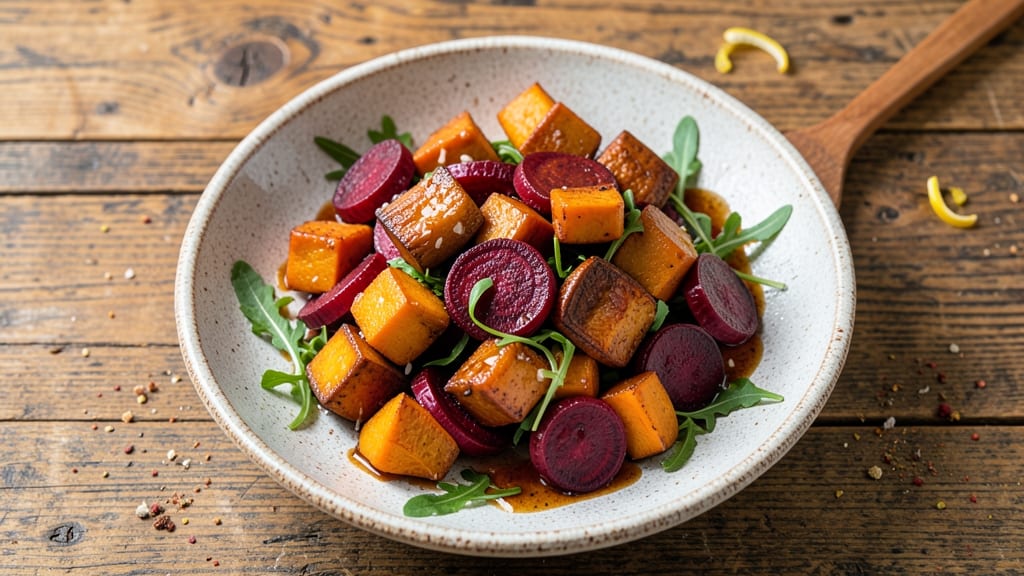
This butternut and beetroot salad delivers crispy, caramelized edges that transform humble vegetables into a showstopping dish. The natural sweetness of roasted butternut squash and earthy beets creates a perfect balance, while a bright maple-mustard vinaigrette ties everything together.
I developed this recipe after realizing how much more flavorful roasted vegetables become when paired with fresh, crisp elements—it’s a game-changer for fall salads.
The secret lies in the roasting technique: high heat for 10 minutes ensures those edges get beautifully crispy while keeping the centers tender. Beets add a deep, vibrant color and natural sweetness that pairs perfectly with the squash’s nutty flavor.
This salad is hearty enough to stand alone but light enough for a side dish—ideal for vegan meals or anyone craving a nutrient-packed dish.
Assembling the salad is where the magic happens. Warm, crispy roasted vegetables contrast with cool, fresh greens and crunchy nuts or seeds, creating layers of texture. The maple-mustard dressing adds a tangy kick that cuts through the richness of the roasted components, balancing the dish perfectly.
Every bite delivers a mix of sweet, earthy, and slightly crispy flavors that make this salad unforgettable.
For extra depth, toasted pecans or pumpkin seeds add crunch, while fresh herbs like parsley or mint bring a bright finish. This salad holds up well for meal prep, making it perfect for busy weeks.
The combination of roasted and raw elements ensures each bite is exciting and full of flavor—no bland salads here.
Ingredients for butternut and beetroot salad
Earthy roasted vegetables meet vibrant fresh greens in this nutrient-packed vegan salad.
| Ingredient | Amount | Notes |
|---|---|---|
| Butternut Squash 🎃 | 1 ½ lb | Cubed, peeled, medium dice |
| Beets 🟣 | 2 medium | Roasted, peeled, cubed |
| Extra-Virgin Olive Oil 🫒 | ¼ cup | For roasting vegetables |
| Maple Syrup 🍯 | 2 tbsp | Pure, grade B preferred |
| Dijon Mustard 🍯 | 1 tbsp | For vinaigrette base |
| Apple Cider Vinegar 🍏 | 1 ½ tbsp | Raw, unfiltered preferred |
| Fresh Arugula 🌿 | 4 cups | Baby leaves preferred |
| Pumpkin Seeds 🥜 | ½ cup | Toasted, unsalted |
| Fresh Parsley 🌿 | ¼ cup | Chopped, flat-leaf preferred |
| Salt 🧂 | 1 ½ tsp | Diamond Crystal kosher |
| Black Pepper 🌶️ | ½ tsp | Freshly cracked |
| Smoked Paprika 🌶️ | ½ tsp | For roasted vegetables |
| Fresh Lemon Juice 🍋 | 1 tbsp | Bright, organic preferred |
The beets and butternut squash are the stars here, so prioritize quality. Organic beets from Whole Foods or your local farmers market deliver the deepest color and sweetest flavor. For squash, look for firm, heavy specimens with smooth skin—avoid any with soft spots. Roasting at 425°F for 25 minutes (cut-side down first) ensures those crispy edges while keeping centers tender. Smoked paprika adds depth without overpowering the natural sweetness of the vegetables, while a pinch of salt during roasting enhances their caramelization.
No organic beets? Conventional beets from Trader Joe's work perfectly—just scrub them well. Substituting butternut for delicata squash (peelable skin) saves prep time. The vinaigrette can be made ahead, but the fresh parsley should be added just before serving. For extra crunch, toast pumpkin seeds in a dry pan over medium heat for 3-4 minutes until fragrant. Need more tang? Add an extra teaspoon of apple cider vinegar. The salad holds together beautifully for 2 days in the fridge—just keep dressing separate until serving.
This salad reheats beautifully, making it perfect for meal prep. Store components separately: roasted vegetables in one container, greens and dressing in another. Assemble just before eating to maintain crispness. The dressing keeps for 5 days in the fridge, while roasted vegetables can be prepped 3 days ahead. For extra richness, drizzle with a touch of tahini before serving. Every bite delivers that perfect balance of earthy, sweet, and tangy flavors—no bland salads here.
Why You'll Love This Recipe
- One-Pan Magic: I swear by this recipe because it’s all about minimal cleanup—roast the squash and beets together, then toss with the dressing. No extra bowls, no fuss, just warm, caramelized veggies that practically fall apart with a fork.
- Sweet-Savory Balance: That maple-Dijon dressing? Chef’s kiss. The deep earthiness of roasted beets meets the buttery squash, then the tangy-sweet dressing ties it all together—like a hug for your taste buds. (Yes, even on a Tuesday night.)
- Meal Prep MVP: Between us, this salad keeps perfectly for days. Pack it for work lunches, serve it cold at a picnic, or reheat slices of squash for a quick side. Honestly, I’ve had leftovers for five days and it’s still fresh-tasting.
- Budget Brightener: Roasted squash and beets are dirt cheap compared to fancy greens, and this recipe stretches easily for a crowd. Plus, the olive oil and maple dressing add richness without breaking the bank—just enough to feel special without the splurge.
Step-by-step instructions for roasted butternut and beetroot salad
Transform simple ingredients into a vibrant salad with perfectly crispy roasted vegetables and a bright, balanced dressing.
🔥 Step 1: Roast the Vegetables for Maximum Crispiness
Preheat your oven to 400°F and position racks in the upper and lower thirds. Line two rimmed baking sheets with parchment paper and arrange the 1.5 lb cubed butternut squash and 2 medium cubed beets in a single layer, leaving space between pieces. This ensures even roasting and maximum crispiness.
Drizzle the vegetables evenly with 0.25 cup extra-virgin olive oil and sprinkle with 1.5 tsp salt, 0.5 tsp black pepper, and 0.5 tsp smoked paprika. Toss gently to coat, making sure every cube gets an even dusting of spices. Roast for 25-30 minutes, flipping the vegetables halfway through, until they're deep golden brown and tender when pierced with a fork.
Here's the thing—don't overcrowd the pans. If your vegetables are touching, they'll steam instead of crisp up. I've learned this the hard way, and the difference in texture is dramatic. The butternut squash should caramelize beautifully, while the beets will develop a rich, earthy sweetness.
🥘 Step 2: Prepare the Maple-Dijon Vinaigrette
While the vegetables roast, whisk together 2 tbsp maple syrup, 1 tbsp Dijon mustard, 1.5 tbsp apple cider vinegar, and 1 tbsp fresh lemon juice in a small bowl. This combination creates a perfect balance of sweet, tangy, and slightly peppery notes that complement the roasted vegetables.
Slowly drizzle in the remaining 2 tbsp extra-virgin olive oil while whisking continuously. The vinaigrette should emulsify into a smooth, glossy dressing. Taste and adjust seasoning with additional salt or vinegar if needed. The dressing should be bright and acidic enough to cut through the richness of the roasted vegetables.
I like to make this dressing ahead of time—it actually improves as it sits, allowing the flavors to meld together. If you're short on time, make it while the vegetables roast, but don't rush the whisking. A proper emulsion is crucial for that silky texture that coats every bite.
👨🍳 Step 3: Assemble the Salad with Textural Contrast
Once the vegetables are perfectly roasted, transfer them to a large mixing bowl. Add the 4 cups fresh arugula, 0.5 cup toasted pumpkin seeds, and 0.25 cup chopped fresh parsley. The arugula should be slightly wilted from the heat of the roasted vegetables, which is perfect—it adds a tender contrast to the crispy roasted bites.
Pour the vinaigrette over the salad and toss gently but thoroughly. You want the dressing to coat the vegetables and greens evenly without mashing the arugula. The pumpkin seeds will add a satisfying crunch that balances the softness of the roasted vegetables and greens. Taste as you go, adjusting the dressing if needed—sometimes the roasted vegetables absorb more than expected.
This is where the magic happens: the sweetness of the roasted vegetables, the peppery bite of the arugula, the crunch of the pumpkin seeds, and the bright acidity of the dressing all come together in perfect harmony. The smoked paprika on the roasted vegetables adds a subtle depth that ties everything together.
⏰ Step 4: Rest and Serve for Optimal Flavor Development
Let the salad rest for 10 minutes before serving. This brief pause allows the flavors to meld together and the dressing to fully absorb into the vegetables and greens. It also gives the pumpkin seeds time to re-crisp slightly after being tossed with the warm roasted vegetables.
Serve immediately while the vegetables are still warm and the dressing is vibrant. The contrast between the warm, crispy roasted vegetables and the cool, peppery arugula creates a truly satisfying bite. This salad holds up well for about 2 hours at room temperature, making it perfect for meal prep or serving at gatherings.
For an extra touch, garnish each serving with an additional sprinkle of pumpkin seeds and a few fresh parsley leaves. The presentation should be vibrant and inviting, with deep red beets, golden butternut squash, and bright green arugula creating a visually stunning dish that's as beautiful as it is delicious.
Pro Tips For Making Butternut And Beetroot Salad
- Roast Squash & Beets Separately: I learned this the hard way—roasting them together means the beets bleed all over the squash, turning it muddy. Use two trays: 400°F (200°C) for squash (30-40 mins, cut-side down) and 375°F (190°C) for beets (45-50 mins, wrapped in foil first). The lower temp keeps beets from turning to mush while roasting.
- Peel Beets While Warm: Skip the cold peeling struggle. Toss roasted beets straight into ice water for 5 minutes, then rub under running water—the skins slide off like magic. Cold beets are stubborn; warm ones peel in seconds. (Yes, even if you’re impatient like me.)
- Balance Sweetness with Acid: Maple syrup and Dijon mustard need a check—taste before tossing. If the dressing tastes cloying, add a splash of apple cider vinegar or lemon juice (start with ½ teaspoon). The acid cuts the sweetness and makes the olive oil sing. I used to skip this and wondered why the salad felt flat.
- Cut Squash Uniformly: Chunks bigger than 1.5 inches stay tough; smaller than ½ inch burn. Aim for 1-inch cubes—consistent size means even roasting. A mandoline makes this easy, but a sharp knife works if you’re patient. Uneven pieces = some al dente, some overcooked. (Your future self will thank you.)
Creative variations of this butternut and beetroot salad
Autumnal Harvest Twist
Swap the pumpkin seeds for toasted pecans and add dried cranberries for a festive autumn version. The pecans bring rich, buttery crunch while the cranberries add a tart contrast that brightens the earthy flavors.
I like to toast ½ cup pecans in a dry skillet for 3-4 minutes until golden, then mix in ¼ cup dried cranberries with the roasted vegetables. This variation feels especially cozy when served with a warm bowl of butternut squash soup. 🍂
Spiced Citrus Kick
Infuse the vinaigrette with zested orange peel and a pinch of cayenne pepper for a bright, spicy twist. Add 1 tsp orange zest and ¼ tsp cayenne to the dressing while whisking, then finish with a splash of fresh orange juice.
The citrus cuts through the richness of the roasted vegetables while the cayenne adds a subtle heat. Garnish with thinly sliced orange segments for a pop of color and freshness. 🍊
Mediterranean-Inspired
Transform this salad into a Mediterranean-inspired dish by adding kalamata olives and feta cheese (or vegan feta for a plant-based version). Toss in ½ cup pitted kalamata olives and crumble ¼ cup vegan feta over the top.
For extra depth, drizzle with 1 tbsp tahini-lemon dressing> (mix 2 tbsp tahini with 1 tbsp lemon juice and 1 tbsp water). The briny olives and creamy feta create a delicious contrast to the sweet roasted vegetables. 🌿
Smoky BBQ Glaze
Add a smoky depth by brushing the roasted vegetables with a BBQ glaze before serving. Mix 2 tbsp BBQ sauce (like Sweet Baby Ray's) with 1 tsp maple syrup and ½ tsp smoked paprika, then drizzle over the roasted vegetables before assembling the salad.
The smoky-sweet glaze complements the natural sweetness of the beets and squash beautifully. For extra heat, sprinkle with crumbled vegan chorizo or smoked paprika. 🔥
Protein-Packed Boost
Make this salad more substantial by adding a protein element. For a vegan option, mix in ½ cup cooked quinoa or ½ cup marinated tofu cubes. For non-vegan versions, try grilled chicken breast or crumbled tempeh.
The protein adds heartiness while keeping the dish balanced. I recommend marinating the tofu in 1 tbsp soy sauce, 1 tbsp maple syrup, and ½ tsp garlic powder for 15 minutes before grilling. 💪
Nutrition facts
Frequently asked questions
Can I use cooked beets instead of roasting fresh ones?
Pre-cooked beets (from a jar or can) work perfectly and save time. Just drain and chop them to the same size as roasted cubes. For best results, heat them briefly in a pan with a touch of olive oil to remove any canned taste before adding to the salad. The texture will be slightly softer than roasted, but the flavor remains rich and sweet.
How do I prevent the butternut squash from getting mushy?
Keep the squash cubes even-sized (about 1-inch) and leave space between them on the baking sheet. Roast at 400°F for 25-30 minutes, flipping halfway. Overcrowding causes steaming instead of crisping. For extra insurance, start checking at 20 minutes—they're done when fork-tender with crisp edges.
What's the best way to store leftovers?
Store components separately: roasted vegetables in one container, greens and dressing in another. Keeps for 3 days in the fridge. Re-assemble just before eating to maintain crispness. The dressing can be made 5 days ahead, while roasted veggies stay good for 3 days—reheat gently in a pan to restore crispiness.
Can I make this salad ahead of time?
Yes! Prep all components separately: roast the vegetables 1 day ahead, store the dressing 5 days ahead, and chop garnishes fresh. Assemble just before serving for the best texture contrast. The flavors actually improve overnight as everything melds together.
What's a good substitute for arugula?
Try baby spinach or mixed greens for a milder flavor, or kale (massaged first) for heartier texture. Avoid iceberg—it lacks the peppery bite that balances the sweet roasted vegetables. For extra richness, add 1 cup chopped radicchio (its slight bitterness pairs beautifully).