
Sauces & Condiments
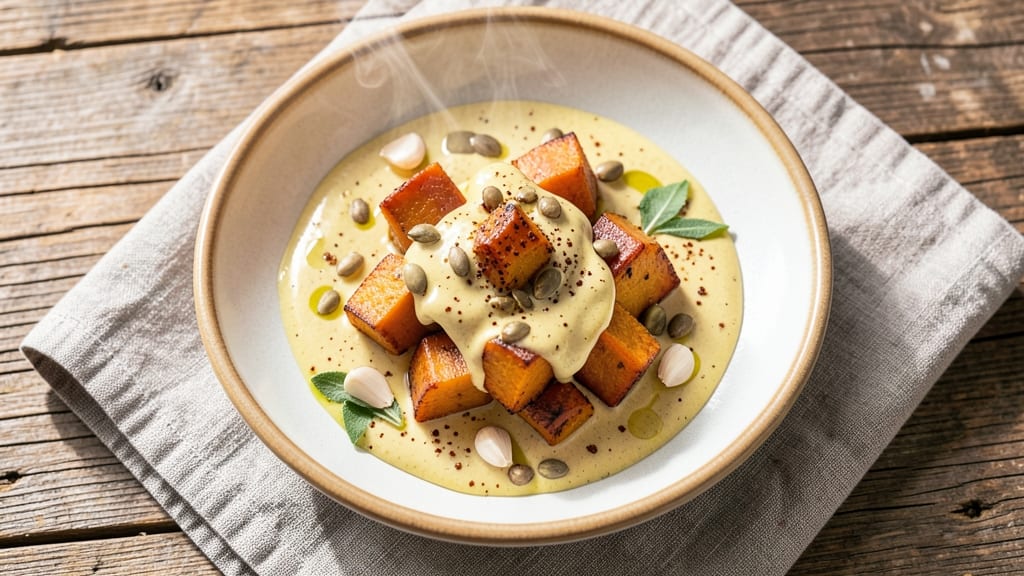
This butternut squash salad dressing transforms humble roasted squash into a velvety, creamy elixir that elevates any green salad. The secret lies in blending roasted squash with tangy lemon, rich tahini, and fresh herbs—creating a dressing that's both sweet and complex.
I developed this recipe after craving something beyond basic vinaigrettes, and it's become a staple in my kitchen for its depth and versatility.
The beauty of this dressing is its balance: the natural sweetness of roasted butternut squash pairs perfectly with the earthiness of tahini and the brightness of lemon. A touch of garlic and Dijon mustard adds layers of flavor, while fresh dill and parsley contribute a vibrant herbal note.
What makes it truly special is how it clings to greens, turning simple salads into restaurant-worthy dishes.
This vegan-friendly dressing stays fresh in the refrigerator for up to a week, making it ideal for meal prep. The texture is luxuriously smooth, with just the right amount of body to coat each leaf without weighing it down.
Whether drizzled over arugula, kale, or mixed greens, it transforms ordinary salads into something extraordinary.
For extra depth, consider adding a splash of maple syrup or balsamic vinegar to enhance the sweet-tangy profile. The dressing also pairs beautifully with roasted vegetables, grain bowls, or even as a dip for crudités. Let's get started on creating this creamy, herb-infused masterpiece!
Ingredients for butternut squash salad dressing
Eight simple ingredients blend into this velvety dressing that turns salads into restaurant-worthy bites.
| Ingredient | Amount | Notes |
|---|---|---|
| Medium Butternut Squash 🎃 | 1 ½ lb | Peeled, cubed, roasted until tender |
| Tahini 🥜 | ½ cup | Sesame paste for richness |
| Fresh Lemon Juice 🍋 | ¼ cup | Freshly squeezed for tang |
| Extra-Virgin Olive Oil 🫒 | ½ cup | High quality, fruity variety |
| Garlic Cloves 🧄 | 3 cloves | Peeled, roughly chopped |
| Dijon Mustard 🌶️ | 1 tbsp | For depth of flavor |
| Fresh Dill 🌿 | ¼ cup | Chopped, stems removed |
| Fresh Parsley 🌿 | ¼ cup | Chopped, for brightness |
| Maple Syrup 🍯 | 1 tbsp | For subtle sweetness |
| Sea Salt 🧂 | 1 tsp | Fine grain preferred |
The butternut squash is the star here—look for sweet, firm varieties like Sugar Pie or Waltham Butternut. Whole Foods or Trader Joe's usually carry the best ones, or check your local farmers market for seasonal squash. Roast it until fork-tender (about 25-30 minutes at 400°F), then blend until completely smooth. No lumps allowed—the texture should be silky. Tahini is non-negotiable for that rich, nutty depth, but Trader Joe's has the best-priced, high-quality stuff. If you can't find tahini, cashew butter works in a pinch—just add a splash of water to thin it out.
Fresh lemon juice is a must—bottled won't cut it. Mexican or Persian limes add extra zing if you're feeling fancy. No Dijon mustard? Yellow mustard at half the amount gets you close, but you'll miss that peppery kick. The herbs can be swapped—cilantro or basil both work, though dill and parsley give that classic freshness. Want it sweeter? Add another tablespoon of maple syrup. Creamier? Blend in 2 tbsp vegan mayo. The olive oil should be extra-virgin—California or Italian varieties have the best fruity notes. If yours tastes like soap, toss it.
This dressing keeps beautifully in the fridge for up to 7 days—just give it a quick whisk before using. For extra shelf life, store it in a glass jar with a tight seal. Freezes for 3 months if you want to prep ahead. I like to make a double batch—one for salads, one to drizzle over roasted veggies. The flavor actually improves after a day or two as everything melds together. If it separates, just shake or blend again. Trust me, it's worth the effort—your greens will never taste the same again.
Why You'll Love This Recipe
- No Roasting Required: I’ll admit, I used to dread roasting squash—peeling, cubing, waiting. This dressing skips all that. Just blend raw squash flesh with tahini and lemon, and boom—creamy, nutty magic without a single charred edge.
- Tahini’s Rich Umami Punch: Between us, tahini makes this dressing ridiculously good. That deep, toasty flavor from the squash and garlic? It’s like a cozy hug for your taste buds, especially when the lemon cuts through the richness.
- Dresses Any Bowl: Honestly, I’ve drizzled this over kale salads, grain bowls, even grilled chicken. The squash’s natural sweetness balances hearty dishes, and the tahini keeps it from tasting flat—no matter what you’re serving.
- Lasts All Week: I make a big batch on Sundays and store it in the fridge. The tahini keeps it stable for days, and the lemon prevents it from turning bitter. Perfect for when you’re too tired to blend fresh.
Step-by-step instructions for roasted butternut squash dressing
Here's how to transform simple ingredients into a velvety dressing with caramelized squash and bright herb notes.
Roast the Butternut Squash Until Caramelized
Preheat your oven to 400°F and line a baking sheet with parchment paper. Toss the 1.5 lb cubed butternut squash with 1 tablespoon of the extra-virgin olive oil and ½ teaspoon of the sea salt. Spread in a single layer, leaving space between pieces so they brown evenly.
Roast for 25-30 minutes until the edges are deep golden brown and the squash is tender when pierced with a fork. You want it caramelized—not mushy—so watch closely after 20 minutes. The aroma should be sweet and nutty, almost like roasted chestnuts. Let the squash cool slightly before blending.
Blend the Roasted Squash with Tahini and Lemon
Transfer the warm squash to a high-speed blender. Add the 0.5 cup tahini, 0.25 cup fresh lemon juice, 1 tablespoon Dijon mustard, and 1 tablespoon maple syrup. Blend on medium speed until smooth, scraping down the sides as needed. The tahini will thicken the mixture, so don't rush this step—you want a completely silky texture.
Here's the thing—tahini can be stubborn. If the mixture looks too thick, add 2-3 tablespoons of water to help emulsify. You're aiming for a creamy, pourable consistency, not a paste. Taste and adjust seasoning with more sea salt if needed.
Incorporate Herbs and Garlic for Freshness
While the blender is running, drizzle in the remaining 0.5 cup extra-virgin olive oil in a slow, steady stream. This prevents the dressing from breaking and creates that luxurious, emulsified texture. Add the 3 peeled garlic cloves, 0.25 cup chopped fresh dill, and 0.25 cup chopped fresh parsley, blending until fully incorporated.
The herbs should be finely chopped to avoid graininess. If you're using a regular blender, pulse the herbs first in a separate food processor to break them down. The dressing should now have a vibrant green hue from the herbs and a rich, nutty aroma from the roasted squash.
Adjust Consistency and Flavor
Taste the dressing and make final adjustments. For a thinner consistency, add 1-2 tablespoons of water at a time. For a thicker dressing, blend in 1-2 teaspoons of tahini or let it sit for 10 minutes to thicken naturally. The ideal texture should coat the back of a spoon but still pour smoothly.
If it needs more brightness, add a splash of lemon juice. For extra depth, a pinch more sea salt or a drizzle of maple syrup can balance the flavors. The dressing should taste rich from the tahini and squash, tangy from the lemon, and fresh from the herbs—with just a touch of sweetness from the maple.
Store and Use Within 5 Days
Transfer the dressing to a clean glass jar and refrigerate. It will thicken slightly when chilled, so give it a good stir before using. This dressing keeps for up to 5 days in the fridge, making it perfect for meal prep. It pairs beautifully with grain salads, roasted vegetables, or even as a drizzle over grilled chicken.
For extra flair, garnish with a sprinkle of fresh parsley or a drizzle of extra-virgin olive oil before serving. The contrast of warm, roasted squash and cool, creamy tahini makes this dressing truly special—worth every step of the process.
Pro Tips For Making Butternut Squash Salad Dressing
- ROAST SQUASH UNTIL SOFT: Butternut squash should yield to a fork—not just caramelize. Roast at 400°F (200°C) for 35-40 minutes, cut-side down, until the flesh collapses easily. Overcooking turns it to mush; undercooking leaves it rubbery. Flip once halfway if your pan’s uneven.
- WHISK TAHINI FIRST: Tahini thickens like glue when cold. Whisk it with a splash of warm water (start with 1 tablespoon) before adding lemon or oil—this keeps the dressing silky, not grainy. I learned this the hard way after scraping clumps off my whisk for 10 minutes.
- PRESS GARLIC THROUGH A GARLIC PRESS: Minced garlic burns fast and adds bitterness. Press 2-3 cloves through a garlic press directly into the dressing while it’s still warm from roasting. This keeps the flavor bright and avoids that "cooked-onion" aftertaste.
- EMULSIFY WITH LEMON GRADUALLY: Drizzle lemon juice in slowly while whisking vigorously—this prevents separation. Start with 1 tablespoon, then add more as you taste. The oil and tahini need time to bond; rushing it turns the dressing into two sad layers. (Yes, I’ve ruined this step.)
Troubleshooting great butternut squash salad dressing
Separation Issues
If your dressing separates after blending, don't panic—this happens when the tahini and lemon juice aren't fully emulsified. To fix it, add 1 tablespoon of water at a time while blending on high speed until smooth.
For stubborn separations, try adding ½ teaspoon of Dijon mustard—it acts as a natural emulsifier. If the dressing still looks oily, whisk vigorously or blend again with 1 teaspoon of tahini to restore creaminess. 🌡️
Too Thick or Too Thin
Consistency problems are easy to adjust. For a thicker dressing, let it rest for 10 minutes in the fridge—it naturally thickens when chilled. If it's still too thin, blend in 1 teaspoon more tahini at a time.
For a thinner texture, add 1 tablespoon of water while blending. The ideal consistency should coat the back of a spoon but still pour smoothly over greens. Taste as you go—this is all about balance!
Lumpy Texture
Lumps usually mean the herbs or squash weren't blended long enough. Pulse the herbs in a food processor first to break them down, then blend everything together in short bursts until completely smooth.
If the squash is still chunky, blend it separately with 2 tablespoons of water until silky before adding other ingredients. A high-speed blender makes this easier, but even a regular blender can achieve smooth results with patience. 💪
Flavor Imbalance
If your dressing tastes too sweet, add 1 teaspoon of lemon juice to brighten it. Too tangy? Balance with ½ teaspoon of maple syrup or a pinch of sea salt. Missing depth? A splash of balsamic vinegar or an extra peeled garlic clove adds complexity.
Taste as you go—this dressing is forgiving, and adjustments are easy. The goal is a harmonious blend of sweet, tangy, and herbal notes.
Herbs Not Incorporating
Herbs often resist blending if they're too fibrous. Finely chop them before adding to the blender, or pulse them separately in a food processor until they resemble paste. For stubborn stems, strain the dressing through a fine-mesh sieve after blending.
If you're short on time, skip the parsley and use ¼ cup extra dill—it's still delicious, just with a stronger herbal punch. 🌿
Storage Separation
After refrigeration, the dressing may thicken and separate slightly. Simply stir or shake the jar vigorously before using. For extra insurance, store it in a glass jar with a tight seal and give it a quick blend or whisk before each use.
If it still looks oily, add 1 teaspoon of water and blend again. The flavors actually improve after a day or two in the fridge, so don't worry if it looks different—just stir it up! ❄️
Nutrition facts
Frequently asked questions
Can I make this dressing without tahini?
Yes! For a nut-free version, replace the tahini with ½ cup cashew butter or ¼ cup almond butter. Add 1-2 tablespoons of water to thin it out since nut butters are thicker. The flavor will be slightly less rich, but still delicious. For a dairy-free alternative, ¼ cup vegan mayo works too—just reduce the olive oil by 1 tablespoon to balance the fat content.
How do I adjust this for a sweeter or tangier flavor?
For extra sweetness, add 1-2 teaspoons of maple syrup or a splash of agave nectar. Need more tang? Increase the lemon juice by 1 tablespoon or add ½ teaspoon of balsamic vinegar. Pro tip: Roast the squash longer (up to 35 minutes) for deeper caramelization, which naturally enhances sweetness. Taste as you go—this dressing is all about balance!
Can I use canned butternut squash instead of fresh?
Drain and rinse 1 (15 oz) can of butternut squash puree and use it directly in place of roasted squash. Skip the roasting step entirely. For extra richness, add 1 teaspoon of coconut oil to the blender. The texture will be slightly thinner, so reduce the olive oil by 1 tablespoon to compensate. Canned squash works best for quick prep—just don't expect the same caramelized depth as roasted.
What are the best greens to pair with this dressing?
This creamy dressing shines with bitter greens like arugula, kale, or radicchio, but it also works beautifully with mild options like spinach or mixed baby greens. For heartier salads, try it with shredded cabbage or roasted Brussels sprouts. The rich tahini and squash base balances even strong flavors, making it versatile for any leafy green or crunchy vegetable combination.
Will this dressing work for non-salad uses?
Yes! This dressing doubles as a dip for crudités (carrots, celery, bell peppers) or a grain bowl sauce. It also pairs perfectly with roasted sweet potatoes, grilled tofu, or even as a pasta sauce (toss with cooked penne). For extra flair, top with toasted pumpkin seeds or crumbled vegan feta. The creamy texture makes it ideal for any dish needing a rich, herby element.