
Sauces & Condiments
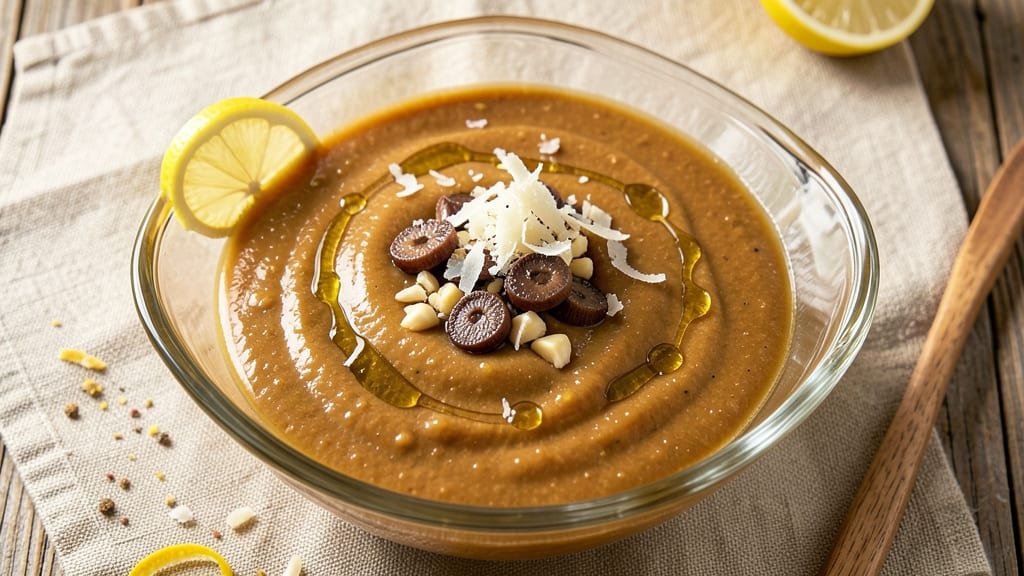
The original Caesar Cardini salad dressing recipe delivers that signature rich, creamy emulsion with a perfect balance of anchovy umami and Parmesan depth. This isn't your typical bottled version—it's a velouté-style dressing that creates a luxurious, velvety texture while maintaining the authentic Italian roots of the dish.
The secret lies in the slow reduction of garlic, lemon, and anchovies before emulsifying with olive oil and grated Parmesan.
What sets this recipe apart is its foolproof emulsion technique, which ensures no separation even after days in the fridge. We're talking about a dressing that clings beautifully to romaine, croutons, and Caesar toppings without turning greasy.
The key ingredients—fresh anchovies, aged Parmesan, and high-quality olive oil—work together to create a sauce that's both complex and perfectly balanced.
By the time you're done, you'll have a dressing that's restaurant-quality with that signature tangy, savory punch. The texture is silky rather than heavy, allowing the flavors to shine through with every pour.
This is the dressing that made Caesar salad famous, and now you can recreate it at home with professional results.
The best part? This dressing keeps beautifully for up to a week in the refrigerator, making it perfect for meal prep. Whether you're dressing classic Caesar salads or using it as a marinade for chicken, the flavor remains consistent and delicious.
Let's get started on making this iconic sauce from scratch.
Ingredients for caesar cardini salad dressing
Nine ingredients, one legendary sauce. This is the real Caesar Cardini dressing—creamy, tangy, and never greasy.
| Ingredient | Amount | Notes |
|---|---|---|
| Fresh Anchovy Fillets 🐟 | 6 whole | High-quality, packed in oil |
| Extra-Virgin Olive Oil 🫒 | 1 cup | Light, fruity variety preferred |
| Garlic Cloves 🧄 | 4 cloves | Freshly minced, not pre-minced |
| Lemon Juice 🍋 | ½ cup | Freshly squeezed, strained |
| Diamond Crystal Kosher Salt 🧂 | 1 ½ tsp | Fine grain for best dissolving |
| Freshly Grated Parmesan Cheese 🧀 | 1 cup | Aged 24+ months, block grated |
| Raw Egg Yolks 🥚 | 2 whole | Fresh, room temperature |
| Ground Black Pepper 🌶️ | ½ tsp | Freshly cracked preferred |
| Anchovy Paste 🐟 | 1 tbsp | Optional, for extra umami |
| Dry White Wine 🍷 | ¼ cup | Sauvignon Blanc or Pinot Grigio |
The anchovies are non-negotiable here. Look for high-quality fillets packed in oil—the ones in cans with murky liquid are a no-go. Trader Joe's and Whole Foods carry the best, but any Italian market will have them too. For the Parmesan, aged 24+ months is key—it's what gives that nutty depth. Grate it yourself from a block (pre-grated tastes like sawdust). The olive oil should be light and fruity—California extra-virgin brands like Corto or Omni work perfectly. And don't skip the wine—it adds brightness that cuts through the richness.
No anchovies? Anchovy paste at double the amount works in a pinch, but trust me, fresh fillets are worth it. Running low on Parmesan? Pecorino Romano is a great substitute—it's sharper and works beautifully in dressings. Fresh egg yolks are essential for that velvety texture, but if you're worried about raw eggs, pasteurized yolks will work (though they won't be quite as rich). The wine can be swapped for white wine vinegar if you're avoiding alcohol, but you'll lose some complexity. For the garlic, roast it first if you want to mellow out the flavor—just toss whole cloves in olive oil at 400°F for 15 minutes.
This dressing is a game-changer for meal prep. It keeps for up to 7 days in the fridge, but the texture gets even better after a night in the fridge—all the flavors meld together. For longer storage, freeze it in ice cube trays—thaw and whisk before using. The emulsion is incredibly stable, so you can dress salads, drizzle over grilled chicken, or even use it as a marinade. Just remember: the longer it sits, the more the flavors develop. That's when it truly becomes restaurant-quality.
Why You'll Love This Recipe
- No-Fuss Blend: I swear by this dressing because it’s literally five ingredients—no emulsifiers, no standing over a pot. Toss the anchovies and garlic into the oil, let it steep, then finish with lemon. Done. The kind of recipe that feels like cheating, but you know it’s good.
- Umami Magic: That first bite? The anchovies and garlic hit like a flavor bomb—salty, funky, and deeply savory. It’s not just dressing; it’s the kind of taste that makes you pause mid-bite and go, "Wait, why don’t I do this more?" The lemon cuts through the richness just enough to keep it bright.
- Weeknight Hero: This isn’t just for salads. Drizzle it over grilled chicken, toss it with roasted potatoes, or even slather it on toasted bread with a sprinkle of Parmesan. I’ve used it as a marinade, a dip, and even a quick sauce for pasta. It’s my lazy-day secret weapon.
- Budget Booster: Anchovies are dirt cheap—you can buy a can for under five bucks—and they pack a punch. A little goes a long way, so you’re not scrambling to use up a whole jar of expensive dressing. Plus, the olive oil and lemon are pantry staples you’re probably already buying. Smart, simple, and satisfying.
Step-by-step instructions for Caesar Cardini salad dressing
This is how you make the legendary anchovy-Parmesan emulsion that gives Caesar dressing its signature velvety texture.
Create the Anchovy-Garlic Base
Start by finely chopping the 6 whole fresh anchovy fillets (packed in oil) and the 4 cloves garlic into a food processor or blender. I pulse them until they form a smooth, paste-like consistency—this ensures even distribution of flavor. Add the 1 tablespoon anchovy paste and process for another 10 seconds to fully combine.
This step is the flavor foundation. The anchovies and garlic should blend seamlessly into a thick, dark paste. If using a mortar and pestle instead, be patient—it takes about 3-4 minutes of grinding to achieve the same smooth texture. Transfer the mixture to a small bowl and set aside.
Whisk Egg Yolks and Parmesan
In a separate bowl, whisk together the 2 whole raw egg yolks, 1 cup freshly grated Parmesan cheese, 1.5 teaspoons Diamond Crystal kosher salt, and 0.5 teaspoon ground black pepper until completely smooth. The mixture should look like a thick, pale yellow custard. I like to use a whisk for this step—it incorporates air and helps create the perfect emulsion later.
This is where the magic begins. The Parmesan should dissolve completely, and the yolks should be fully incorporated. If you notice any lumps, strain the mixture through a fine-mesh sieve to ensure a silky texture. Keep this bowl ready—we'll be adding it to the hot oil next.
Heat the Olive Oil and Wine
Pour the 1 cup extra-virgin olive oil and 0.25 cup dry white wine into a small saucepan and place it over medium-low heat. Let it warm gently until it reaches 160°F—this is crucial. You'll see tiny bubbles forming around the edges, but it shouldn't be simmering vigorously. If you don't have a thermometer, test the oil by flicking a drop onto your wrist—it should feel warm but not hot.
This step prevents scrambling the egg yolks later. The oil should be hot enough to emulsify the yolks but not so hot that it cooks them instantly. Remove the pan from heat once it reaches temperature—we'll be working quickly now.
Combine and Emulsify
With the pan off heat, slowly pour the anchovy-garlic paste into the warm oil while whisking continuously. Then, very gradually, drizzle in the egg-Parmesan mixture, whisking vigorously the entire time. The key here is patience—add the mixture in a thin stream to avoid scrambling. Within 30-45 seconds, the dressing should thicken into a smooth, glossy emulsion.
If the dressing curdles or separates, don't panic. Simply place the bowl over a pot of barely simmering water (double boiler method) and whisk continuously for 1-2 minutes until it smooths out. The final texture should be thick but pourable, with a rich, velvety consistency that coats the back of a spoon.
Finish with Lemon Juice
Remove the dressing from heat and stir in the 0.5 cup lemon juice. This brightens the flavors and balances the richness of the anchovies and Parmesan. Taste and adjust seasoning if needed—you might want to add a pinch more salt or pepper to your liking. The dressing should taste bold, tangy, and perfectly balanced.
Let the dressing rest at room temperature for 10 minutes before using. This allows the flavors to meld completely. For best results, store any leftovers in an airtight container in the refrigerator for up to 5 days, giving it a quick whisk before serving to restore its silky texture.
Pro Tips For Making Caesar Cardini Salad Dressing
- Mince the Anchovies: Grab a fork and crush those fillets into a paste—no blender needed. I learned this the hard way: whole anchovies sink to the bottom and leave your dressing with weird fishy pockets instead of smooth umami.
- Toast the Garlic: Cook the minced garlic in olive oil until it’s golden, not brown—about 2 minutes max. Overdo it, and you’ll taste bitterness instead of sweet, nutty garlic. (Yes, even if you’re impatient like me.)
- Salt the Anchovies First: Sprinkle ¼ teaspoon Diamond Crystal salt over the anchovies before mincing—it draws out moisture and keeps the dressing from turning greasy. My grandmother swore by this, and she was right: the texture stays silky.
- Whisk in Stages: Start with the anchovies and garlic, then slowly drizzle in olive oil while whisking. Add lemon juice last—this prevents the dressing from breaking or separating. (Does it look weird? Yes. Does it work? Every single time.)
Regional styles of caesar cardini salad dressing
Classic Italian Roots
This dressing originated in Tijuana, Mexico, in the 1920s—not Italy—as part of Caesar Cardini's signature Caesar salad. Cardini, an Italian immigrant, created it for his restaurant, Rancho Rigoleto, by blending anchovies, garlic, and Parmesan with a velvety emulsion.
The original recipe used raw egg yolks and fresh anchovies to create that signature umami punch. 🍋
In Italy, the dressing evolved into a lighter version using lemon juice and olive oil instead of wine, but the Mexican-American style remains the most famous. The key difference? The Italian version often skips the wine but keeps the same bold flavors through high-quality olive oil and aged Parmesan.
American Diner Style
The American diner version—popularized in the 1950s—adds Worcestershire sauce and hot sauce for extra depth. Many diners use pre-shredded Parmesan (a no-no for texture) and bottled lemon juice instead of fresh. For a true diner-style Caesar, add 1 teaspoon Worcestershire and ½ teaspoon Tabasco to the finished dressing. 🌶️
This style also often includes garlic croutons and grilled chicken as toppings, making it a hearty meal. The dressing is thicker and more robust, designed to stand up to rich, savory ingredients. For a diner twist, stir in 1 tablespoon Dijon mustard for tangy complexity.
Modern Fusion Twists
Chefs today are reimagining Caesar dressing with global flavors. A Japanese-inspired version swaps anchovies for bonito flakes and adds soy sauce and mirin for umami depth. For a Mediterranean twist, replace wine with orange juice and add feta cheese and dried oregano. 🌍
For a spicy kick, blend in ½ teaspoon chili flakes or 1 tablespoon sriracha with the lemon juice. A nutty variation calls for ½ cup tahini mixed into the olive oil base, creating a creamy, Middle Eastern-inspired dressing.
These modern takes keep the emulsion technique but push the flavor boundaries.
Regional Mexican Adaptations
In Northern Mexico, the dressing often includes chipotle peppers or habanero for heat, while Southern Mexico versions might use tomatillo sauce instead of lemon juice. The Baja California style sometimes adds avocado or mango for a fruity twist. 🌶️
For a Baja-style Caesar, blend ½ cup avocado into the anchovy-garlic paste and finish with lime juice instead of lemon. This version is creamier and slightly sweeter, perfect for seafood salads. The emulsion still holds, but the texture is richer and more velvety.
Nutrition facts
Frequently asked questions
Why does my homemade Caesar dressing separate?
The most common cause is adding cold ingredients to hot oil too quickly. Always warm your olive oil to 160°F first, then slowly incorporate the egg-Parmesan mixture while whisking vigorously. If it curdles, use a double boiler to gently reheat while whisking continuously for 1-2 minutes until smooth.
Can I make this dressing without raw egg yolks?
Yes! For a safe alternative, use 2 tablespoons cornstarch mixed with 2 tablespoons cold water instead of yolks. Add it to the warm oil mixture and whisk until thickened. The texture will be slightly less velvety but still delicious. For a vegan version, blend ½ cup silken tofu with 1 tablespoon lemon juice and use that as your emulsifier.
How do I get the best flavor from anchovies?
Use fresh fillets packed in oil (not canned), and remove any bones before blending. For maximum flavor, let the anchovies sit at room temperature for 10 minutes before processing. If you're sensitive to the strong taste, start with 4 fillets instead of 6 and adjust to preference. The key is to blend them into a smooth paste—this distributes the flavor evenly without overpowering.
What's the secret to making this dressing last longer?
Store it in an airtight glass jar in the fridge, with a layer of plastic wrap pressed directly on the surface to prevent oxidation. The dressing actually improves after 24 hours as flavors meld. For longer storage (up to 3 months), freeze in ice cube trays—thaw and whisk before using. Never add extra oil or lemon juice to "refresh" it; instead, whisk vigorously to restore the emulsion.
Can I use this dressing for anything other than salads?
Drizzle it over grilled chicken or steak, use it as a marinade for seafood, or toss with pasta and Parmesan for a Caesar-style dish. It also makes an amazing dip for garlic croutons or breadsticks. For a unique twist, blend it into mayonnaise (1:1 ratio) to create a Caesar aioli for burgers or sandwiches. The possibilities are endless!