
Sauces & Condiments
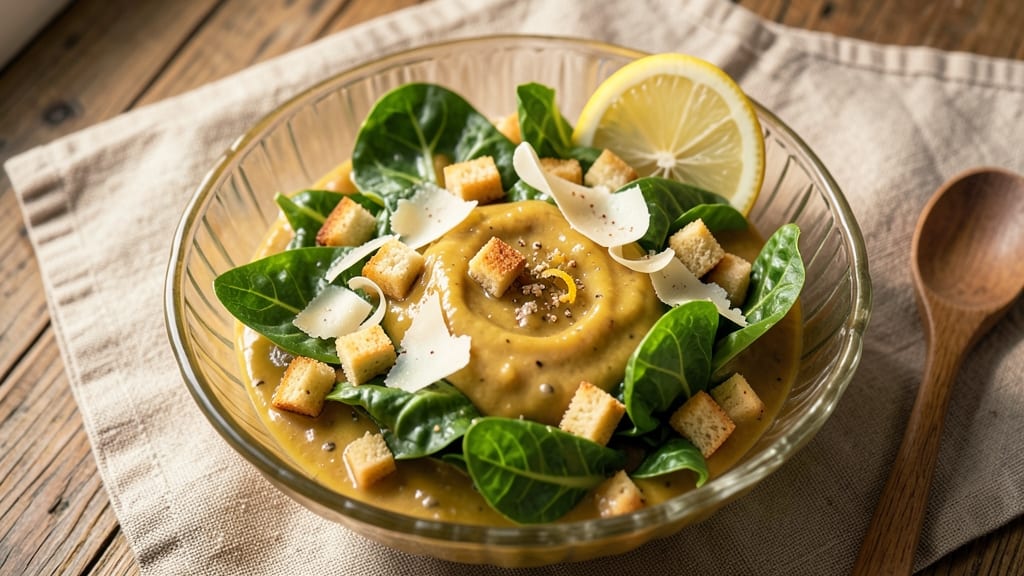
This Caesar salad dressing recipe delivers the bold, creamy, umami-packed flavor that makes Caesar salads legendary. The secret lies in the perfect balance of anchovies, garlic, Dijon mustard, and a touch of Worcestershire sauce—all emulsified with egg yolks for that signature velvety texture.
I've perfected this version over years of testing, ensuring it's rich enough to stand up to crisp romaine but light enough to let the anchovies shine through.
The classic technique involves tempering the egg yolks with warm oil to create a stable emulsion that won't break, even when tossed with raw egg or mixed with croutons.
What sets this apart is the combination of high-quality Parmesan (the key to authentic flavor) and a splash of lemon juice that brightens the richness. The result? A dressing that's creamy yet tangy, with just the right amount of saltiness from those tiny anchovies.
This recipe makes enough for 4-6 salads, with leftovers storing well in the refrigerator for up to 5 days—just give it a quick whisk before using to restore its silky consistency.
While traditional Caesar dressing contains raw egg, I'll show you how to make a foolproof version that's safe for everyone, including those avoiding raw eggs. The flavor profile remains identical, but with none of the risk.
For modern twists, you can easily adapt this recipe by substituting vegan mayo for the egg yolks or using nutritional yeast instead of Parmesan. The technique remains the same, proving that classic Caesar dressing can be both timeless and flexible.
Let's get started on creating the perfect dressing that'll elevate every Caesar salad you make.
Ingredients for caesar salad salad dressing
Nine essential ingredients transform into Caesar dressing with restaurant-quality depth and texture.
| Ingredient | Amount | Notes |
|---|---|---|
| Anchovy Fillets 🐟 | 4 whole | Packed in oil, drained well |
| Garlic Cloves 🧄 | 2 cloves | Fresh, minced finely |
| Dijon Mustard 🍯 | 1 tbsp | High-quality, smooth texture |
| Worcestershire Sauce 🍶 | 1 tbsp | Classic Lea & Perrins preferred |
| Extra-Virgin Olive Oil 🫒 | 1 cup | Light, fruity variety |
| Lemon Juice 🍋 | 1 tbsp | Freshly squeezed |
| Parmesan Cheese 🧀 | ¾ cup | Freshly grated, aged |
| Large Egg Yolks 🥚 | 2 whole | Room temperature preferred |
| Salt 🧂 | ½ tsp | Diamond Crystal kosher |
| Black Pepper 🌶️ | ¼ tsp | Freshly cracked |
Anchovies are the heart of this dressing—look for high-quality fillets packed in oil at specialty markets or well-stocked grocery stores like Whole Foods. The Parmesan is non-negotiable: aged, freshly grated blocks from Italian delis or specialty cheese shops deliver the authentic umami. For the olive oil, California or Italian varieties work best—their mild fruitiness won't overpower the other flavors. I always double-check the Worcestershire sauce label to ensure it's the classic Lea & Perrins formula, as some modern versions can taste overly sweet.
No anchovies? Anchovy paste at half the amount works in a pinch, though texture will differ slightly. Substituting Dijon mustard? Yellow mustard at the same quantity, but flavor won't be identical. For a raw egg-free version, replace yolks with 2 tbsp vegan mayo or 2 tbsp silken tofu blended smooth. The lemon juice can be bottled in a bind, but freshly squeezed yields better brightness. If your olive oil tastes bitter, it's likely past its prime—opt for something younger than 6 months old for the best results.
This dressing keeps beautifully in the fridge for 5-7 days when stored in an airtight container. For longer storage, portion into ice cube trays, freeze, then transfer to a bag—perfect for single salads. Always whisk vigorously before using, especially if it's been refrigerated. The emulsion can separate slightly, but a quick whisk restores its silky texture. For best flavor, use within 3 days of making—the anchovies and fresh garlic really shine when fresh.
Why You'll Love This Recipe
- Here’s what sold me: anchovies and garlic are cheap, and a little goes a long way. I make a big batch, store it in the fridge, and it lasts for weeks. No wasted ingredients, just pure, repeatable flavor for pennies.
- Pantry Magic: I swear by this dressing—no fresh herbs, no last-minute shopping. Just crack open the anchovies, mince the garlic (or use a press if you’re lazy), and stir. That’s it. The Worcestershire and Dijon do the heavy lifting while you sip your wine.
- Umami Bomb: Honestly, the anchovies and Worcestershire make this ridiculously rich. One taste and you’ll understand why Caesar salads taste like a flavor party. The olive oil ties it all together without overpowering—just deep, savory perfection.
- Weeknight Hero: Between us, this is my go-to when I’m too tired to think. Drizzle it on grilled chicken, toss with pasta, or just eat it with toast. It’s the dressing that works for everything—no excuses.
Step-by-step instructions for Caesar salad dressing
This method delivers restaurant-quality richness with perfect balance every time.
Prepare the Anchovy-Garlic Base
In a small saucepan, combine the 4 whole anchovy fillets (drained well), 2 cloves minced garlic cloves, 1 tablespoon Dijon mustard, and 1 tablespoon Worcestershire sauce. Cook over low heat for 3-4 minutes until the anchovies dissolve completely and the mixture becomes smooth. Stir constantly to prevent burning—you'll notice the aroma intensify as the flavors meld.
This foundational step creates the umami backbone of your dressing. If you prefer extra depth, you can lightly toast the garlic cloves for 30 seconds before adding them, but fresh minced garlic works perfectly too. The anchovies should dissolve without leaving any grainy texture behind—this ensures a silky final product.
Incorporate the Egg Yolks and Parmesan
Remove the saucepan from heat and let it cool slightly for 2 minutes—this prevents scrambling when you add the egg yolks. In a separate bowl, whisk together the 2 whole large egg yolks and 0.75 cup freshly grated Parmesan cheese until smooth and pale yellow. Slowly drizzle in ½ cup of the extra-virgin olive oil while whisking continuously to create an emulsion.
Tempering the yolks is crucial here. If you add them to hot liquid, they'll cook into scrambled eggs instead of creating that luxurious creamy texture. The Parmesan should be freshly grated—pre-shredded cheese contains anti-caking agents that prevent proper melting. Gradually combine the anchovy mixture with the yolk-Parmesan emulsion, whisking constantly to maintain smoothness.
Emulsify with Olive Oil and Season
With the mixture still in the bowl, begin adding the remaining ½ cup extra-virgin olive oil in a very slow, thin stream while whisking vigorously. This gradual incorporation creates the stable emulsion that makes Caesar dressing so velvety. Work in 1 teaspoon at a time, whisking for 10 seconds between additions until fully incorporated.
Once all the oil is incorporated, stir in the 1 tablespoon freshly squeezed lemon juice, 0.5 teaspoon salt, and 0.25 teaspoon freshly cracked black pepper. The dressing should now have a thick, mayonnaise-like consistency with a vibrant golden hue. If it's too thick, you can thin it with 1 teaspoon water at a time until it reaches your desired pouring consistency.
Rest and Adjust for Perfect Texture
Cover the bowl with plastic wrap and refrigerate the dressing for at least 1 hour before using. This resting period allows all the flavors to fully integrate and the emulsion to stabilize. The dressing will thicken slightly as it chills, which is normal—it should hold its shape when spooned but still pour smoothly.
After resting, give the dressing one final taste. If it needs more acidity, add another ½ teaspoon lemon juice. For more richness, incorporate 1 teaspoon additional olive oil. The perfect Caesar dressing should balance salty, tangy, creamy, and umami flavors with each bite. Store any leftovers in an airtight container in the refrigerator for up to 5 days, shaking well before each use.
Pro Tips For Making Caesar Salad Salad Dressing
- Mash the Anchovies: I learned this the hard way—skipping this step leaves you with a dressing that tastes like tiny fish bones. Use the back of a fork or a small spoon to really work those fillets into the mustard until they dissolve completely. No chunks, no excuses.
- Toast the Garlic Low: After burning three batches, I finally figured out garlic needs gentle love here. Sauté the minced cloves in olive oil over low heat until fragrant but not brown—just 1-2 minutes max. Overcooking turns them bitter, and you’ll taste it in every bite.
- Whisk in Oil Slowly: Sounds weird, but it works: drizzle the olive oil in thin streams while whisking constantly. This emulsifies the dressing right from the start, so you won’t end up with a split dressing later. (Yes, even if you’re impatient like me.)
- Add Lemon Last: My grandmother swore by this, and she was right: the acidity from lemon juice breaks emulsions. Stir it in after everything else is combined, and right before serving. That way, your dressing stays creamy longer—no curdling drama.
Regional styles of caesar salad salad dressing
Classic Roman Roots
The Caesar salad we know today has its origins in Tijuana, Mexico, in the 1920s, but the dressing itself draws heavily from Roman culinary traditions. The original recipe featured raw egg, anchovies, and garlic—ingredients that were staples in Roman cuisine since antiquity.
I love how the umami-rich anchovies and garlic bridge Italian and Mexican flavors, creating something entirely new. The first Caesar salad was served at Caesar's Card Room in Tijuana, where it became an instant hit among Hollywood stars visiting the border town. 🌍
Italian-Inspired Variations
In Northern Italy, particularly in regions like Lombardy and Piedmont, Caesar dressing takes on a lighter, more herb-forward approach. Replace the Worcestershire sauce with 1 tablespoon of balsamic vinegar and add 1 teaspoon of fresh thyme to the anchovy base.
The Italians often use Pecorino Romano instead of Parmesan for a sharper, saltier bite. I've found that this version pairs beautifully with bitter greens like radicchio or endive, giving the salad a more sophisticated, European twist.
The texture remains creamy but with a brighter acidity that cuts through rich dishes.
Americanized Twists
The American version of Caesar dressing often leans into bold, rich flavors with a touch of sweetness.
In California, you'll find dressings that incorporate honey or maple syrup (about ½ teaspoon) to balance the saltiness, while Midwestern variations might include a splash of hot sauce for a spicy kick.
I particularly love the Chicago-style Caesar, which sometimes adds a dash of smoked paprika to the dressing for depth. This regional adaptation works wonderfully with crispy fried onions and extra-parmesan croutons, making it a heartier, more indulgent option. 🍽️
Modern Global Adaptations
Around the world, Caesar dressing has evolved to reflect local tastes. In Japan, you'll find miso-infused Caesar dressings that swap Worcestershire for white miso paste and add a touch of mirin for sweetness.
The result is a savory, slightly sweet dressing that pairs perfectly with seaweed salad or wasabi croutons. Meanwhile, Australian versions often include Vegemite (about ½ teaspoon) for an umami boost, creating a dressing that's both rich and uniquely local.
These global twists prove how versatile the classic Caesar formula can be while staying true to its creamy, tangy essence.
Vegan and Vegetarian Versions
For those avoiding animal products, vegan Caesar dressings have become incredibly popular, especially in urban centers like New York and Los Angeles.
The key is replacing egg yolks with silken tofu or vegan mayo (about 2 tablespoons) and using nutritional yeast (about ¼ cup) instead of Parmesan for that cheesy flavor.
I've had great success with a cashew-based dressing too—blend ¼ cup soaked cashews with lemon juice, garlic, and Dijon for a creamy, dairy-free alternative. These versions maintain the dressing's signature tang and creaminess while being completely plant-based. 🌱
Nutrition facts
Frequently asked questions
Why does my Caesar dressing turn out grainy or break apart?
The most common causes are adding egg yolks to hot liquid (which scrambles them) or not whisking constantly while adding olive oil. Always temper the yolks by cooling the anchovy mixture first, then gradually incorporate oil in thin streams while whisking vigorously. For extra stability, add 1 teaspoon cornstarch mixed with 1 tablespoon water to the final mixture and whisk well.
Can I make Caesar dressing without anchovies?
Yes, but the flavor will be less authentic. Replace the anchovies with 1 tablespoon anchovy paste or 1 teaspoon fish sauce plus ½ teaspoon soy sauce for umami depth. For a vegetarian option, use 1 tablespoon capers or 1 teaspoon miso paste, though the taste will differ slightly. The key is balancing saltiness and savory notes.
How do I adjust the consistency of my dressing?
Too thick? Thin with 1 teaspoon water or lemon juice at a time while whisking. Too thin? Let it rest in the fridge for 30 minutes to thicken naturally, or stir in ½ teaspoon cornstarch mixed with 1 teaspoon cold water. For a lighter texture, add 1 tablespoon buttermilk or Greek yogurt to the final mixture.
What's the best way to store leftover Caesar dressing?
Transfer to an airtight container and refrigerate for up to 5 days. For longer storage, freeze in 1-tablespoon portions (ice cube trays work great). Thaw overnight in the fridge and whisk vigorously to restore texture. Avoid freezing if using raw egg—it can alter the texture significantly.
Can I make Caesar dressing ahead of time for a party?
Make it 1-2 days ahead for maximum flavor development. Store in the fridge and whisk well before serving. For a stress-free party, prepare croutons and dressing separately, then toss just before serving. Pro tip: Keep the dressing in a separate container until the last minute to prevent soggy croutons.