
Sauces & Condiments
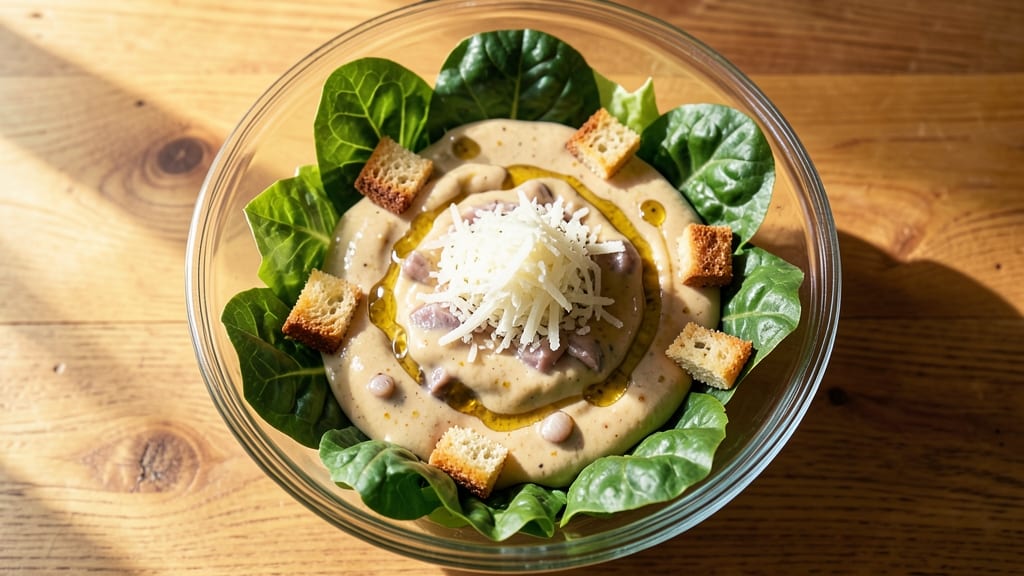
This Caesar salad vinaigrette delivers the bold, savory punch of classic dressing without relying on mayo—just anchovy-packed depth, tangy lemon, and a touch of Dijon for that signature creamy texture.
The secret lies in balancing sharp vinegar, rich parmesan, and a single raw egg yolk as the natural emulsifier, creating a dressing that clings to romaine like a restaurant-quality finish.
I perfected this version after years of testing, ensuring every spoonful delivers that perfect harmony of salty, umami, and bright acidity.
The base starts with a simple ratio of olive oil and red wine vinegar, but it's the umami bomb of anchovies and parmesan that transforms it into something extraordinary. A touch of Dijon mustard acts as both emulsifier and flavor enhancer, while garlic and Worcestershire add layers of complexity.
What sets this apart is the raw egg yolk—whisked in at the end—creating a velvety consistency that coats every leaf without making the dressing too heavy.
What you'll end up with is a dressing that's rich yet refreshing, with a perfect balance of tang and creaminess that elevates even the simplest salad. The anchovies dissolve completely, leaving behind their signature savory depth, while the parmesan adds a nutty, salty backbone.
This version stays fresh in the fridge for up to 5 days, with flavors deepening as it sits—ideal for batch prep when you're hosting.
Use it immediately on crisp romaine with shaved parmesan and croutons, or let it mellow overnight for even more complex flavors. The key is making it fresh, but the technique is so straightforward that you'll never go back to store-bought again. Here's how to create this restaurant-worthy dressing at home.
Ingredients for caesar salad vinaigrette
Nine ingredients blend into a restaurant-worthy Caesar dressing without mayo.
| Ingredient | Amount | Notes |
|---|---|---|
| Extra-Virgin Olive Oil 🫒 | ¾ cup | High-quality, fruity variety preferred |
| Red Wine Vinegar 🍷 | ¼ cup | Dry, aged variety for balance |
| Anchovy Fillets 🐟 | 4 whole | High-quality, packed in oil |
| Freshly Grated Parmesan Cheese 🧀 | ½ cup | From a block, not pre-grated |
| Dijon Mustard 🌶️ | 1 tbsp | Mild to medium strength preferred |
| Garlic Cloves 🧄 | 1 whole | Fresh, peeled, minced fine |
| Worcestershire Sauce 🍶 | 1 tbsp | Anchovy-free version if needed |
| Large Egg Yolk 🥚 | 1 whole | Fresh, room temperature |
| Fresh Lemon Juice 🍋 | 1 tbsp | From a ripe, juicy lemon |
| Diamond Crystal Kosher Salt 🧂 | ½ tsp | Fine grain for delicate seasoning |
| Freshly Ground Black Pepper 🌶️ | ¼ tsp | Freshly cracked for best flavor |
The anchovies are non-negotiable—they deliver that signature umami punch. Look for high-quality fillets packed in oil at specialty stores like Whole Foods or Trader Joe's, where they're freshest. The Parmesan should be real Parmigiano-Reggiano, freshly grated from a wedge—pre-grated cheese just won't cut it. For the olive oil, splurge on a fruity, extra-virgin variety like California Early Harvest or Italian Arbequina. The garlic matters too—use fresh cloves, not powder, and mince them finely for a smooth texture. I always grab my Worcestershire from Lea & Perrins—it's the gold standard for this dressing.
No anchovies? Substitute with 1 tbsp fish sauce, but reduce the Worcestershire to 0.5 tbsp to avoid overpowering. Short on Parmesan? Pecorino Romano works beautifully—it's sharper and adds a different depth. The Dijon mustard can be swapped for whole-grain mustard if that's what you have, though the texture will be slightly different. Fresh lemon juice is ideal, but if you're using bottled, make sure it's 100% pure lemon juice with no added water. The egg yolk is critical—it's what creates that velvety texture, so don't skip it. If you're concerned about raw eggs, pasteurized yolks work just as well.
This dressing keeps beautifully in an airtight jar in the fridge for up to 5 days, with flavors deepening as it sits. For longer storage, it freezes well for up to 3 months—just thaw in the fridge overnight before using. I always make a double batch because it disappears fast. The key to making it ahead is to whisk in the egg yolk just before serving—this keeps the texture perfect. Store the base mixture (everything except the egg yolk) separately and whisk the yolk in when ready to use.
Why You'll Love This Recipe
- Five-Ingredient Magic: I swear by this combo—just oil, vinegar, anchovies, Parmesan, and mustard. No fancy gadgets, no last-minute grocery runs. The anchovies might sound intimidating, but they dissolve into pure umami gold with a whisk.
- Umami Bomb: That first bite? Salty, tangy, and rich all at once. The anchovies and Parmesan team up like old friends, while the Dijon mustard cuts through the fat with just enough bite. Honestly, it’s the kind of dressing that makes you actually want to eat salad.
- Dresses Anything: Use it on grilled chicken, roasted veggies, or even a charcuterie board. I’ve drizzled it over pasta, tossed it with eggs, and even slathered it on toast. It’s my go-to for when I’m bored of store-bought dressings.
- Makes Leftovers Shine: A jar in the fridge lasts a week—no waste, no stress. Double the batch for meal prep, and it won’t separate or turn sad. My lunchbox never looks the same twice, thanks to this.
Step-by-step instructions for Caesar salad vinaigrette
This bold, anchovy-infused dressing delivers restaurant-quality zing without mayo—just pure flavor.
Prepare the Anchovy-Parmesan Base
In a small bowl, combine the 4 whole anchovy fillets with the 0.5 cup freshly grated Parmesan cheese. I like to use a fork to break down the anchovies into a fine paste—this ensures even distribution and prevents any fishy bits. Let the mixture sit for 2-3 minutes while you prep the remaining ingredients. The anchovies will start to dissolve slightly, creating a rich umami foundation.
The Parmesan should be freshly grated from a block, not pre-shredded—those little anti-caking agents make a difference in texture. If you're concerned about the anchovies being too strong, don't worry; the acidity from the vinegar and lemon will balance everything perfectly. This step is where the signature Caesar flavor begins to develop.
Whisk in Wet Ingredients
Add the 0.75 cup extra-virgin olive oil, 0.25 cup red wine vinegar, 1 tbsp Dijon mustard, 1 tbsp Worcestershire sauce, 1 tbsp fresh lemon juice, 0.5 tsp Diamond Crystal kosher salt, and 0.25 tsp freshly ground black pepper to the anchovy mixture. Using a whisk, combine everything until fully incorporated. I start with gentle strokes to avoid creating too many bubbles, then gradually increase the vigor to emulsify the ingredients.
Here's the thing—the olive oil and vinegar should blend smoothly, but you'll notice the mixture will look slightly separated at first. That's normal. The egg yolk will be our emulsifier, so we'll add it last to create that signature creamy texture without mayo. Taste the mixture now—it should be tangy, salty, and deeply savory, but still need that final richness.
Create the Emulsion with Egg Yolk
In a separate small bowl, whisk the 1 whole large egg yolk until it's completely smooth and pale yellow. This step is crucial—any lumps will create a grainy texture in your dressing. Slowly drizzle about ¼ cup of the oil-vinegar mixture into the egg yolk while whisking constantly. The mixture will start to thicken and turn a creamy color. This is the moment that matters: you're creating the base for your emulsion.
Once the egg yolk mixture is thickened, slowly pour it back into the remaining oil-vinegar mixture while whisking vigorously. Continue whisking for 2-3 minutes until the dressing becomes thick, glossy, and fully emulsified. You'll know it's ready when it coats the back of a spoon smoothly and holds its shape. If it's too thick, add 1 teaspoon of water at a time until it reaches your desired consistency—it should be pourable but still cling to greens.
Finish with Garlic and Final Adjustments
Add the 1 whole garlic clove, minced very fine, to the dressing and whisk for 30 seconds to distribute the flavor evenly. The garlic should dissolve completely—if you see any visible pieces, whisk a bit longer or grind it even finer. Taste the dressing now and make any final adjustments. You might need a touch more salt, a splash of lemon juice for brightness, or even a drizzle of olive oil if it's too thick. Remember, Caesar dressing should be bold but balanced.
Let the dressing rest for 10 minutes before using. This allows all the flavors to meld together and the emulsion to fully set. If you're making this ahead of time, store it in an airtight container in the refrigerator for up to 3 days. The flavors will actually improve as they sit—just give it a good whisk before using. This dressing is the heart of your Caesar salad, so take your time to get it just right.
Pro Tips For Making Caesar Salad Vinaigrette
- Crush the Anchovies First: I learned this the hard way—tossing whole anchovy fillets into the mix leaves you with fishy chunks instead of a smooth, savory base. Mash them with the back of a fork or a spoon until they’re a paste, then stir them in. That’s how the flavor actually blends, not just floats around.
- Use Cold Parmesan: Freshly grated Parmesan straight from the fridge melts into the dressing too quickly, making it greasy. Keep your cheese cold by grating it right before mixing and storing it in the fridge until use. The dressing will stay emulsified longer and taste sharper.
- Emulsify in Stages: Pouring all the olive oil at once? You’ll end up with a split dressing—thin, oily layers instead of a creamy blend. Start with 2 tablespoons of oil, whisk until smooth, then add the rest slowly while whisking like you’re trying to win an arm-wrestling match. Patience here makes all the difference.
- Salt the Mustard: Dijon mustard is already tangy, but unsalted versions won’t cut through the richness of the dressing. Mix a pinch of salt (about ¼ teaspoon) directly into the mustard before adding it to the other ingredients. It balances the acidity and rounds out the flavor—trust me, you’ll taste it.
Best sauces and condiments for this caesar salad vinaigrette
Classic Caesar Variations
Try a white wine Caesar by swapping red wine vinegar for 2 tbsp dry white wine vinegar and adding 1 tsp honey for balance. For a spicy kick, stir in ½ tsp cayenne pepper or a dash of hot sauce after emulsifying.
I love adding 1 tsp smoked paprika for a BBQ-inspired twist—it pairs perfectly with grilled chicken on salads. 🌶️
Vegan-Friendly Adaptations
Skip the egg yolk and use 1 tbsp aquafaba (chickpea brine) or 1 tsp xanthan gum dissolved in 1 tbsp warm water as a binder. Replace anchovies with 1 tbsp vegan Worcestershire sauce and 1 tsp nutritional yeast for umami.
For Parmesan, use 1 tbsp vegan parmesan or grated cashews blended with lemon juice. The texture will be lighter but still cling to greens beautifully.
Storage Hacks for Freshness
Store the dressing in an airtight glass jar in the fridge for up to 5 days. For longer storage, freeze the base (without egg yolk) for 3 months—thaw overnight in the fridge, then whisk in a fresh yolk.
To prevent separation, add 1 tsp water when reheating. I always keep a small jar in my fridge for quick salads—it’s the secret to consistent flavor every time. ❄️
Sauce Pairing Ideas
Use this dressing as a marinade for grilled chicken or shrimp—the anchovy and garlic flavors caramelize beautifully. Drizzle over roasted Brussels sprouts or crispy Brussels waffles for a savory-sweet contrast.
For a Caesar soup, thin the dressing with 1 cup chicken broth and fold into a creamy tomato base. The bold flavors work surprisingly well with charcuterie boards too—pair with cured meats and sharp cheeses.
Troubleshooting Tips
If your dressing separates, whisk in 1 tsp Dijon mustard or 1 tsp water to re-emulsify. Too thick? Thin with 1 tsp warm water or lemon juice. Too thin? Add 1 tsp olive oil and whisk vigorously.
For a smoother texture, strain through a fine-mesh sieve before serving. The key is patience—if it’s not perfect the first time, adjust gradually. Even pros tweak their ratios! 💡
Nutrition facts
Frequently asked questions
Can I make this Caesar vinaigrette without anchovies?
Replace the 4 anchovy fillets with 1 tbsp fish sauce or 1 tbsp vegan Worcestershire sauce plus 1 tsp nutritional yeast for umami depth. The flavor will be slightly different but still delicious. The key is balancing the saltiness—reduce the Worcestershire sauce by 0.5 tbsp if using fish sauce.
Why does my dressing separate when I add the egg yolk?
This usually happens if the egg yolk isn't fully emulsified or if the oil-vinegar mixture isn't properly combined first. First, whisk the egg yolk until completely smooth. Then, slowly drizzle in ¼ cup of the oil-vinegar mixture while whisking constantly. If it still separates, whisk in 1 tsp Dijon mustard or 1 tsp water to help re-emulsify.
How do I adjust the thickness of my dressing?
Too thick? Thin with 1 tsp warm water or lemon juice at a time. Too thin? Add 1 tsp olive oil and whisk vigorously. The ideal consistency should coat the back of a spoon but still be pourable. Remember, Caesar dressing should cling to greens without feeling heavy—adjust gradually until you reach that perfect balance.
Can I make this ahead of time?
Yes! Store the base mixture (everything except the egg yolk) in an airtight jar in the fridge for up to 5 days. When ready to use, whisk in a fresh egg yolk. For longer storage, freeze the base (without yolk) for 3 months. Thaw overnight in the fridge, then whisk in the yolk just before serving to maintain texture.
What’s the best way to use leftover dressing?
This versatile vinaigrette works beyond salads! Use it as a marinade for grilled chicken or shrimp, drizzle over roasted Brussels sprouts, or mix into a Caesar soup by thinning with 1 cup chicken broth. Even charcuterie boards get an upgrade—pair with cured meats and sharp cheeses for a bold flavor combo.