
Side Dishes
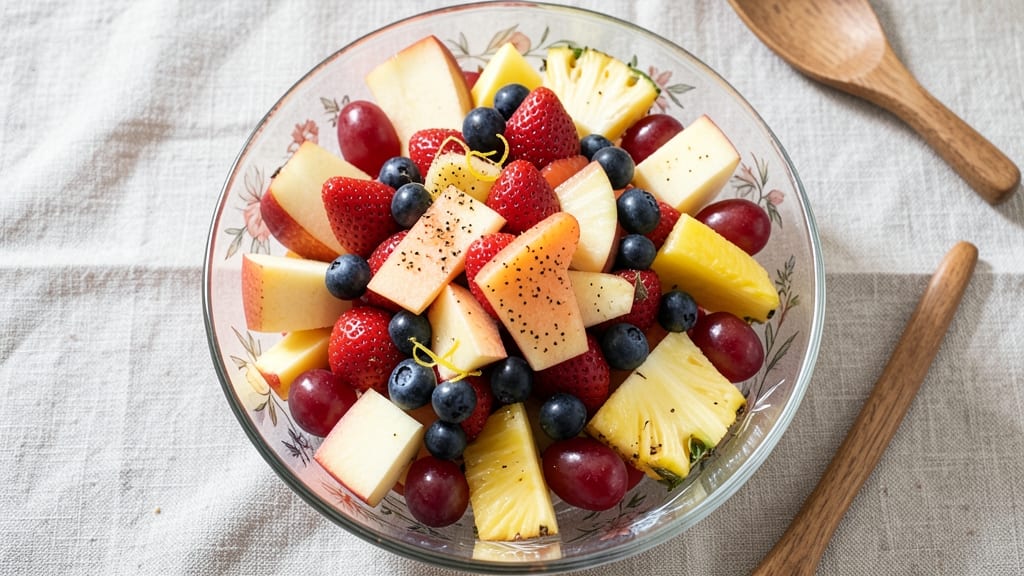
Ina Garten’s fruit salad transforms a simple side into a vibrant centerpiece with layers of fresh fruit and a bright citrus dressing. 🌈 This recipe balances sweet and tart flavors while showcasing seasonal produce in an elegant, restaurant-worthy presentation.
The secret lies in precise cutting and strategic layering for visual appeal and texture contrast.
What sets this fruit salad apart is the zesty citrus dressing—a perfect blend of honey, lemon juice, and fresh mint—that enhances each bite without overpowering the natural sweetness. Garten’s approach emphasizes quality ingredients, ensuring every slice of pineapple, berry, and melon shines.
The result is a dish that’s as beautiful as it is delicious, ideal for brunch, picnics, or holiday gatherings.
Preparation is straightforward: wash, cut, and layer fruits in a clear bowl to create a rainbow effect, then drizzle with the citrus dressing just before serving. Garnish with fresh mint or citrus zest for an extra touch of sophistication.
This salad proves that even the simplest dishes can feel special with the right technique and presentation.
Perfect as a light dessert, refreshing side, or even a standalone meal, this recipe delivers year-round versatility. The dressing can be adjusted for sweetness or tartness, and fruit combinations can be customized based on seasonal availability. Let’s create a fruit salad that’s as impressive as it is delicious.
Ingredients for fruit salad recipe ina garten
Six vibrant fruits and a citrus dressing elevate simple produce into a restaurant-worthy centerpiece.
| Ingredient | Amount | Notes |
|---|---|---|
| Honeycrisp Apples 🍎 | 2 whole | Peeled, cored, cut into 1/2-inch chunks |
| Strawberries 🍓 | 1 lb | Hull removed, quartered |
| Blueberries 🫐 | 1 pt | Fresh or frozen, thawed |
| Cantaloupe 🍈 | 1 small | Cubed, rind removed |
| Pineapple 🍍 | 1 cup | Fresh, diced, no core |
| Red Seedless Grapes 🍇 | 1 cup | Halved |
| Fresh Mint Leaves 🌿 | ¼ cup | Chopped, plus extra for garnish |
| Extra-Virgin Olive Oil 🫒 | ¼ cup | Light, fruity variety |
| Honey 🍯 | 2 tbsp | Wildflower preferred |
| Fresh Lemon Juice 🍋 | ¼ cup | Strained, no pulp |
| Granulated Sugar 🍚 | 1 tbsp | Adjust to taste |
| Diamond Crystal Kosher Salt 🧂 | ¼ tsp | Fine grain preferred |
| Lemon Zest 🍋 | 1 tsp | Freshly grated |
The fruit selection is where Garten’s expertise shines. Honeycrisp apples are non-negotiable—their crisp texture and sweet-tart balance are unmatched. Purchase them at Whole Foods or your local specialty market where they’re handled with care. Strawberries should be firm with vibrant green hulls (the redder the berry, the riper it is). For cantaloupe, seek out one with a golden yellow hue and a sweet fragrance near the stem—Trader Joe's often carries excellent quality. Pineapple? Always buy fresh—canned lacks the bright acidity needed to cut through the sweetness. The grapes should be plump and seedless for easy eating. Freshness matters most here: aim for produce that feels heavy for its size and smells sweetly fragrant.
No Honeycrisp apples? Fuji or Gala work as alternatives, though they lack the same snap. Substituting frozen berries? Thaw them first and drain excess liquid. Cantaloupe too seedy? Mango or peaches add similar juiciness. For the dressing, if you’re avoiding honey, agave nectar at a 1:1 ratio delivers comparable sweetness. The lemon juice must be fresh—bottled lacks the bright acidity. For extra zing, add a pinch of Tajín to the dressing. The olive oil should be light and fruity, not heavy or peppery—California Extra Virgin brands excel. And if you’re worried about the fruit bleeding colors, soak berries in cold water for 10 minutes before assembling.
This salad stays fresh for 3 days in the fridge if stored in an airtight container, but the dressing should be made fresh daily for optimal flavor. To maximize presentation, assemble just before serving—fruits oxidize quickly. For make-ahead prep, store each fruit component separately in sealed containers. The dressing can be made up to 2 days ahead if refrigerated. Garnish with extra mint leaves or lemon zest just before serving to maintain that restaurant-quality finish. Serve chilled in a clear glass bowl for the full rainbow effect—pyrex or Libbey Crystal bowls elevate the presentation beautifully.
Why You'll Love This Recipe
- No-Cook Magic: I swear by this one—just chop and toss. The Honeycrisp apples stay crisp, the pineapple adds instant sweetness, and the blueberries pop like little bursts of summer. Zero oven, zero stress, just pure fruit salad satisfaction.
- Sweet-Savory Balance: That first bite? Crunchy apple meets juicy cantaloupe, then the tangy strawberries cut through the sweetness. Honestly, the pineapple’s acidity makes the whole thing feel brighter, like a refreshing bite of sunshine in every mouthful.
- Picnic to Party: Pack it for a lunchbox or serve it at a BBQ—it’s that adaptable. My kids grab it for school, and I’ve even used it as a topping for yogurt bowls when I’m lazy. (Yes, even on a Tuesday night.)
- Zero Waste, Double Use: The leftovers? Perfect for smoothies or overnight oats the next day. And if you buy seasonal fruit, this salad stretches your dollar without sacrificing flavor. I’ll be real: it’s my go-to when I want something healthy but don’t want to waste a thing.
Step-by-step instructions for rainbow fruit salad with citrus dressing
Layer vibrant fruits and a bright citrus dressing for a refreshing, restaurant-worthy salad.
🍳 Step 1: Prepare the Citrus Dressing
In a small bowl, whisk together the 0.25 cup extra-virgin olive oil, 2 tablespoons honey, 0.25 cup fresh lemon juice, 1 tablespoon granulated sugar, 0.25 teaspoon kosher salt, and 1 teaspoon lemon zest until the sugar dissolves completely. The dressing should be smooth and glossy with a bright yellow hue.
Taste and adjust the balance of sweetness and acidity—add a pinch more salt if needed or a splash of extra lemon juice if it's too sweet. This dressing is the secret to tying all the flavors together beautifully. Set aside while you prepare the fruit.
👨🍳 Step 2: Prep the Fruits in Colorful Layers
Start with the 2 whole Honeycrisp apples—peel, core, and cut into ½-inch chunks. Immediately toss them with 1 tablespoon lemon juice to prevent browning. This keeps them crisp and vibrant.
Next, prepare the remaining fruits: hull and quarter the 1 lb strawberries, cube the 1 small cantaloupe (removing all rind), dice the 1 cup pineapple (removing core), halve the 1 cup red seedless grapes, and thaw the 1 pint blueberries if frozen. Chop 0.25 cup fresh mint leaves for garnish and save a few extra sprigs for presentation.
🥘 Step 3: Assemble the Rainbow Layers
In a large glass bowl or serving dish, begin with a layer of blueberries spread evenly across the bottom. This creates a stunning visual base. Add the strawberries in a contrasting layer on top, followed by the cantaloupe cubes and pineapple for a mix of textures and colors.
Gently fold in the Honeycrisp apple chunks and red seedless grapes, distributing them evenly. The goal is to create a vibrant rainbow effect—each layer should peek through the next. Avoid overmixing to preserve the individual fruit shapes and textures.
🍽️ Step 4: Dress and Garnish Perfectly
Drizzle the citrus dressing evenly over the fruit salad, tossing gently to coat each piece lightly. The dressing should glisten on the fruit without making it soggy. For an elegant touch, arrange a few mint leaves on top and sprinkle with additional lemon zest for a pop of color and aroma.
Let the salad sit for 10-15 minutes before serving to allow the flavors to meld. This resting time ensures the dressing is fully absorbed and the fruits release their natural juices, creating a harmonious balance of sweet, tart, and herbal notes.
Pro Tips For Making Fruit Salad Recipe Ina Garten
- CUT APPLES LAST: Honeycrisp apples turn brown fast—no matter how much lemon juice you add. I used to chop everything first, then toss with acid, but the apples still looked sad by serving time. Save them for the final step, right before mixing with the rest.
- TOSS STRAWBERRIES DRY: Strawberries release juice like a faucet when cut, turning your salad into soup. Pat them very dry with paper towels before adding them—especially if they’re plump and juicy. This keeps the texture bright and the cantaloupe from getting soggy.
- USE COLD FRUIT ONLY: Warm pineapple and cantaloupe taste dull and cloying in this mix. Pop them in the fridge for at least 30 minutes before cutting, and keep the Honeycrisp apples in cold water while you prep. The contrast makes the flavors pop—trust me, your taste buds will notice.
- SKIP THE MELON RIND: I used to leave the cantaloupe rind on for "texture," but it’s bitter and gummy. Scrape it off with a spoon before cubing—it’s tedious, but the salad stays cohesive and actually tastes good. (Yes, even if you’re impatient like me.)
Troubleshooting perfect results
Fruit Browning Fix
Apples and pears turn brown when exposed to air due to oxidation. To prevent this, toss cut Honeycrisp apples immediately with 1 tablespoon lemon juice—the acidity slows browning. For extra protection, store prepped fruit in cold water until ready to assemble.
If browning occurs, sprinkle with a pinch of granulated sugar or lemon juice to refresh the fruit. 🍎
Dressing Too Sweet?
If the citrus dressing tastes overly sweet, balance it with 1-2 extra tablespoons of fresh lemon juice—this brightens the flavor and cuts through the honey. For a tartier profile, add a pinch of Diamond Crystal kosher salt or a few drops of vanilla extract (½ teaspoon) to deepen complexity.
Always taste as you go!
Mushy Cantaloupe
Overripe cantaloupe becomes mushy and watery. Choose firm fruit with a golden-yellow hue and a sweet aroma near the stem. If your cantaloupe is too soft, reduce the size of the cubes to ½-inch and pat them dry with a paper towel before adding to the salad.
Avoid overcrowding layers to prevent sogginess. 🍈
Grapes Bleeding Color
Red grapes may bleed color into the dressing, turning it pink. To minimize this, soak red seedless grapes in cold water for 10 minutes before assembling. Drain and pat dry before layering. Alternatively, use green grapes for a neutral base that won’t alter the dressing’s color.
Dressing Too Thin
The dressing may separate if the olive oil and lemon juice aren’t fully emulsified. Whisk vigorously for 30 seconds or use a hand mixer on low speed to blend smoothly.
For a thicker dressing, reduce the olive oil by 1 tablespoon or add 1 teaspoon of honey to bind the mixture. 🫒
Fruits Too Watery
Excess moisture from melons or berries can dilute the dressing. Drain pineapple and cantaloupe for 10 minutes before adding to the salad. For berries, gently pat them dry with a paper towel.
If the salad still looks watery, add 1 extra tablespoon of honey to the dressing to absorb excess liquid.
Nutrition facts
Frequently asked questions
Can I use frozen fruit in this recipe?
Yes, but with care! Thaw frozen berries first and drain excess liquid to avoid a soggy salad. For other fruits like pineapple or cantaloupe, stick to fresh—frozen versions lose their ideal texture. If you must use frozen, pat everything dry before assembling.
How do I adjust the dressing for a vegan diet?
Replace the honey with agave nectar (same amount) and use maple syrup if needed for sweetness. The olive oil, lemon juice, and salt remain unchanged. The dressing will still be bright and tangy—just skip the honey entirely for a fully plant-based version.
What’s the best way to store leftovers?
Keep the salad in an airtight container for up to 3 days, but make the dressing fresh daily for best flavor. Store fruits separately if prepping ahead—mix just before serving to maintain crispness. The dressing alone keeps for 2 days refrigerated.
Can I make this salad ahead of time?
Prep all fruits 2 days ahead and store in separate containers. Keep the dressing in a jar until ready to use. Assemble right before serving for the best texture and presentation. This method works perfectly for brunch or holiday prep!
What fruits can I substitute for seasonal changes?
Swap summer fruits like cantaloupe for peaches or nectarines in fall, or use kiwi or pomegranate in winter. For spring, try strawberries and rhubarb. The key is balancing textures—keep one soft fruit (like berries) and one crisp (like apples) for contrast.