
Side Dishes
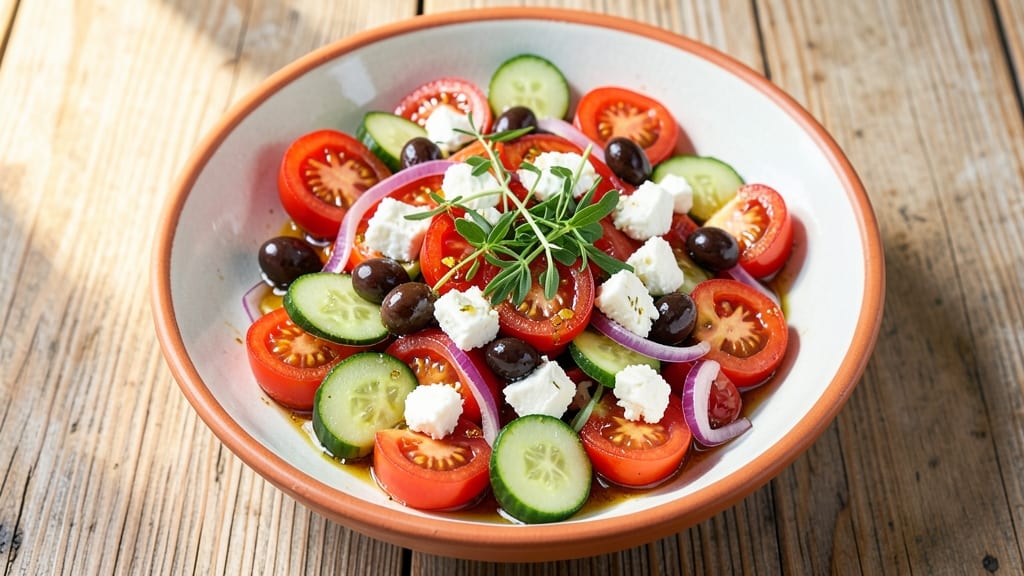
This Greek salad recipe with red wine vinegar delivers the bright, crisp freshness that makes it a staple on Mediterranean tables. The tangy dressing transforms simple vegetables into a vibrant, flavor-packed dish that's perfect alongside grilled meats or as a standalone meal.
I've perfected the balance of textures—crunchy cucumbers, juicy tomatoes, and briny olives—all tied together with that signature vinegar-kissed dressing.
The secret lies in the dressing: red wine vinegar cuts through the richness of feta while enhancing the natural sweetness of tomatoes and cucumbers. Traditional ingredients like ripe tomatoes, crisp cucumbers, red onion, Kalamata olives, and crumbled feta come together in a symphony of flavors.
Fresh oregano and a sprinkle of black pepper add aromatic depth that elevates this salad from simple to extraordinary.
What you'll achieve is a dish that's as visually stunning as it is delicious—golden feta glistening against deep green olives, vibrant red tomatoes, and crisp white cucumbers all bathed in that bright, tangy dressing.
The contrast of textures and flavors creates a satisfying bite that's both refreshing and hearty. This is the kind of salad that makes every meal feel special.
Serve it immediately for the crispiest texture, or assemble ahead and let the flavors meld in the refrigerator for even greater depth. The possibilities for variations are endless—add grilled chicken for extra protein, or swap in capers for a briny twist. Here's how to create this classic dish at home.
Ingredients for greek salad recipe red wine vinegar
Bright, crisp ingredients that sing when kissed with red wine vinegar's tang.
| Ingredient | Amount | Notes |
|---|---|---|
| Ripe Tomatoes 🍅 | 2 cups | Heirloom or vine-ripened preferred |
| English Cucumbers 🥒 | 2 whole | Seedless, peeled if preferred |
| Red Onion 🧅 | 1 whole | Thinly sliced, white part only |
| Kalamata Olives 🫒 | ½ cup | Pitted, preferably fresh |
| Feta Cheese 🧀 | 6 oz | Crumbled, aged 6+ months |
| Fresh Oregano 🌿 | ¼ cup | Chopped, stems removed |
| Extra-Virgin Olive Oil 🫒 | ⅓ cup | High-quality, fruity variety |
| Red Wine Vinegar 🍷 | ⅓ cup | Dry, aged 2+ years |
| Honey 🍯 | 1 tbsp | Wildflower preferred |
| Ground Black Pepper 🌶️ | ½ tsp | Freshly cracked |
| Diamond Crystal Kosher Salt 🧂 | 1 tsp | For seasoning |
| Garlic Cloves 🧄 | 2 cloves | Minced, optional for depth |
The tomatoes and cucumbers are non-negotiable—heirloom varieties have more flavor, but any ripe, firm produce works. Trader Joe's and local farmers markets are my go-tos for both. For olives, Kalamata is essential—their briny depth balances the salad perfectly. Skip the pre-pitted ones if you can; pitting fresh olives makes them plump and juicy. Red onions add a sharp bite, but if you prefer milder flavor, swap in yellow onions (just increase to 1.5 whole). The feta? Age matters—6-month minimum for that perfect crumble and tang.
No fresh oregano? Dried oregano at one-third the amount works in a pinch, but fresh is ideal. Running low on honey? Maple syrup or agave nectar works 1:1. The olive oil and vinegar are the backbone—use what you'd drizzle on bread. For extra depth, add a pinch of red pepper flakes. Want it lighter? Halve the honey and add 1 tbsp lemon juice instead. The garlic is optional but adds a subtle punch—skip if you're sensitive to its flavor. For the dressing, whisk together the olive oil, vinegar, honey, salt, and pepper until fully emulsified.
This salad shines when made fresh, but the dressing can be prepped 2 days ahead—store it separately in the fridge. The veggies? Assemble within 30 minutes of serving to keep that satisfying crunch. Feta keeps for 2 weeks in its original packaging, but once crumbled, use it within 5 days. Oregano stays fresh for 1 week wrapped in damp paper towels. The dressing keeps for 1 month in the fridge—perfect for drizzling on grilled meats or roasted veggies later in the week.
Why You'll Love This Recipe
- No Chopping Struggle: I swear, the only knife work here is slicing those thick cucumbers—no dice, no fuss. The tomatoes and onion can stay chunky; this salad thrives on rustic texture.
- Salty-Sweet Magic: That red wine vinegar? It’s the MVP. The tang cuts through the creamy feta and briny olives while the ripe tomatoes melt into sweet bursts—like a party in your mouth.
- Weeknight to Picnic: Pack it in a jar for lunch or toss it on the table for guests. Honestly, I’ve served this as a side, a light main, and even a breakfast fix—no rules, just flexibility.
- Leftovers That Don’t Suffer: Unlike wilted lettuce salads, this stays crisp for days. I’ve had it for breakfast the next morning, and the feta just gets more satisfying the second time around. Budget win.
Step-by-step instructions for Greek salad with red wine vinegar
This vibrant Greek salad comes together in minutes—crisp, bright, and perfectly balanced with that tangy red wine vinegar kick.
👨🍳 Step 1: Prep and Chop All Ingredients
Start by cutting the 2 whole English cucumbers into ½-inch thick half-moons. Peel them first if you prefer—those seeds can get soggy. Next, slice the 2 cups ripe tomatoes into ¼-inch thick wedges, leaving the skins on for texture. For the 1 whole red onion, use a sharp knife to slice just the white part into paper-thin rings—this prevents bitterness from the outer layers.
Pit the 0.5 cup Kalamata olives if they aren't already, then roughly chop them in half. Crumble the 6 oz feta cheese into ¼-inch chunks—don’t worry if some pieces are uneven, it adds rustic charm. Finally, mince the 2 cloves garlic (if using) and chop the 0.25 cup fresh oregano into small pieces, removing any tough stems. Work quickly so the oregano doesn’t lose its bright flavor.
🥘 Step 2: Assemble the Salad Base
In a large mixing bowl, combine the cucumbers, tomatoes, red onion, and olives. Toss them gently with your hands or a wooden spoon—just enough to distribute everything evenly. The goal is to keep the vegetables crisp, not mushy. If you’re using the minced garlic, sprinkle it over the top now and toss lightly to infuse the flavors without overpowering.
Here’s the thing—Greek salad is all about texture contrast. The cucumbers should stay firm, the tomatoes juicy but not pulpy, and the onion crisp. If you’re worried about wilting, add the feta and oregano in the next step so the acid in the dressing doesn’t soften the veggies prematurely.
🍳 Step 3: Whisk the Vinegar-Kissed Dressing
In a small bowl, whisk together the 0.33 cup extra-virgin olive oil, 0.33 cup red wine vinegar, 1 tbsp honey, 1 tsp Diamond Crystal kosher salt, and 0.5 tsp ground black pepper. Start with a slow whisk to emulsify the oil and vinegar, then increase speed until the dressing is smooth and glossy. Taste it—it should be bright, tangy, and just slightly sweet. If it needs more acidity, add a splash more vinegar; if it’s too sharp, a tiny extra pinch of honey will balance it.
This dressing is the soul of the salad. The red wine vinegar cuts through the richness of the feta and olive oil, while the honey rounds out the sharpness. Don’t skip the pepper—it adds a subtle heat that wakes up every bite. If you’re feeling bold, add a pinch of red pepper flakes here for a Mediterranean kick.
🥘 Step 4: Combine and Rest for Maximum Flavor
Pour the dressing over the salad and toss gently to coat everything evenly. Sprinkle the crumbled feta cheese and chopped oregano over the top, then give it one final toss with your hands. The feta should be scattered throughout, not clumped in one spot. Let the salad sit for 10-15 minutes at room temperature—this allows the flavors to meld and the dressing to penetrate the vegetables without making them soggy.
Real talk: Don’t skip the resting time. It might seem counterintuitive, but letting the salad sit ensures the dressing clings to each ingredient instead of pooling at the bottom. If you’re serving it immediately, give it at least 5 minutes—the difference in texture and flavor is noticeable.
🍽️ Step 5: Serve with Confidence
Transfer the salad to a platter and arrange it so the colors pop—bright red tomatoes, green cucumbers, purple olives, and white feta. Drizzle any remaining dressing over the top for extra shine. Serve it immediately while the vegetables are still crisp. For the best experience, pair it with warm pita bread or grilled meats like lamb chops or chicken skewers—the contrast of temperatures and textures makes it unforgettable.
This salad is meant to be shared, so don’t be shy about heaping it onto plates. The red wine vinegar dressing keeps it fresh-tasting even if it sits for a bit, but I promise, it’ll disappear faster than you can say "kalamata olives." Enjoy it as a light lunch, a side dish, or even a refreshing appetizer—it’s that versatile.
Pro Tips For Making Greek Salad Recipe Red Wine Vinegar
- DICE THE ONION THIN: A sharp knife and steady hand make all the difference here—slice the red onion paper-thin so it softens just enough to eat without turning mushy. I used to chop it like a regular salad, and it always ended up sitting like a crunchy afterthought. Thin slices melt into the salad after 10 minutes in the fridge.
- SALT THE CUCUMBERS: Toss the sliced English cucumbers with a pinch of salt and let them sit for 5 minutes before draining. This pulls out the bitterness and adds subtle crunch—my grandmother swore by this, and she was right. Skip it, and you’ll taste that weird cucumber aftertaste no matter how much vinegar you add.
- DRIZZLE VINEGAR LAST: Toss everything together first, then add the red wine vinegar and olive oil just before serving. The acid cuts through the feta and olives better when it’s fresh, and the flavors don’t get soggy sitting in it. I learned this the hard way—pre-mixed salads turn into a sad, watery mess by lunchtime.
- USE ROOM-TEMP FETA: Take the feta out of the fridge 20 minutes before assembling the salad. Cold cheese makes the whole dish taste dull, and it doesn’t crumble as nicely. Room temp also lets the saltiness mingle with the vinegar like it’s supposed to. Yes, even if you’re impatient like me.
Troubleshooting this recipe
Soggy Vegetables
If your Greek salad vegetables turn mushy, it’s usually from over-tossing or adding dressing too early. The acid in red wine vinegar breaks down cell walls quickly, so assemble the base ingredients first, then add the dressing just before serving.
For extra crunch, pat cucumbers and tomatoes dry with a paper towel before tossing. If you must prep ahead, store dressing and veggies separately—combine only 10-15 minutes before eating. 🥒
Dressing Too Strong
The red wine vinegar can overpower if the balance is off. Adjust the dressing by adding 1 extra tbsp olive oil or ½ tsp honey to mellow the acidity. For a smoother texture, whisk in 1 tsp Dijon mustard—it helps emulsify while softening the sharpness.
Always taste as you go! If it’s still too tangy, dilute with 1 tbsp water and re-whisk. 🍯
Feta Too Salty
Store-bought feta can be shockingly salty, especially if it’s been aged. To balance it, rinse crumbled feta under cold water for 10 seconds, then drain well on a paper towel.
For extra control, use 4 oz feta instead of 6 oz and add ½ tsp lemon juice to the dressing. Freshly made feta (from a Greek market) is less salty and more flavorful. 🧀
Onion Too Bitter
Red onions can taste bitter if you use the outer layers. Stick to the white and pale pink rings only—these are milder. For an even sweeter flavor, soak sliced onions in ice water for 10 minutes before draining and adding to the salad.
If bitterness persists, swap for yellow onion (use 1.5 whole onions instead of 1). 🧅
Dressing Separates
If your dressing breaks into oil and vinegar, you likely didn’t emulsify it properly. Whisk vigorously for 30 seconds or use a blender for a silky texture. For extra stability, add ½ tsp Dijon mustard or 1 tsp honey—these act as natural emulsifiers.
If it still separates, stir before pouring over the salad. 🥄
Oregano Loses Flavor
Fresh oregano wilts quickly when chopped. Store it in the fridge wrapped in a damp paper towel, or freeze it in an airtight container for up to 3 months. If it’s already wilted, revive it by soaking in ice water for 5 minutes before chopping.
For dried oregano, use ⅓ the amount (e.g., ⅛ cup instead of ¼ cup) and add it at the very end to preserve aroma. 🌿
Nutrition facts
Frequently asked questions
Can I substitute red wine vinegar with another vinegar?
Yes, but the flavor will differ. For a similar tang, use balsamic vinegar (reduce by 1 tbsp and add 1 tsp lemon juice for brightness). White wine vinegar works too, but lacks depth. Avoid apple cider vinegar—it’s too sweet and overpowers the salad’s balance.
How do I keep the cucumbers crisp?
Pat them very dry with paper towels before adding to the salad, and avoid over-tossing. The acid in red wine vinegar breaks down texture quickly, so add dressing just before serving. For extra crunch, chill the salad for 30 minutes before eating.
What’s the best way to store leftover dressing?
Store it in an airtight container in the fridge for up to 1 month. The flavors deepen over time! To use, give it a good stir or whisk before drizzling. If it separates, whisk vigorously or add 1 tsp Dijon mustard to re-emulsify.
Can I make this salad ahead of time?
Assemble the vegetables 1 hour ahead and store them separately from the dressing. Combine everything just before serving to maintain crispness. The dressing can be made 2 days ahead—keep it refrigerated and whisk before using.
Why does my feta taste too salty?
Store-bought feta often contains excess salt. Rinse crumbled feta under cold water for 10 seconds, then drain well. For extra control, reduce to 4 oz feta and add ½ tsp lemon juice to the dressing. Freshly made feta (from Greek markets) is less salty and more flavorful.