
Side Dishes
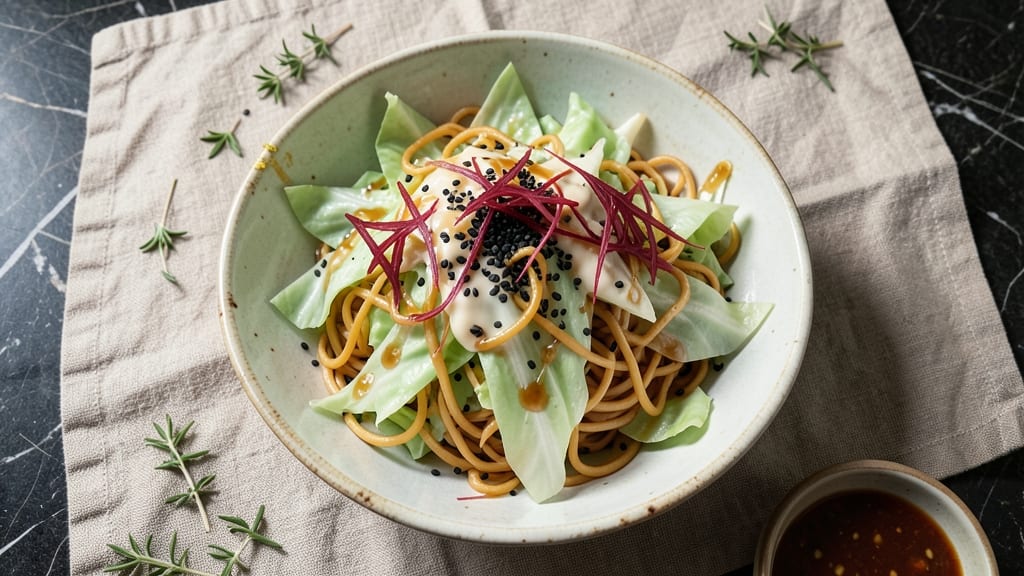
This Japanese cabbage salad with ramen noodles transforms simple ingredients into a bold, umami-packed dish that balances crisp textures and savory depth. The secret lies in blanching the noodles just enough to soften them while preserving their chewy bite, then tossing them with shredded cabbage that stays delightfully crunchy.
A quick sesame-soy dressing ties everything together with a perfect harmony of tangy, nutty, and slightly sweet flavors—restaurant-quality in just 15 minutes.
The beauty of this recipe is its versatility—it works as a light main dish or a satisfying side, especially when paired with grilled proteins or sushi. The cabbage absorbs the dressing beautifully, while the noodles add a comforting chew that makes this salad far more substantial than traditional versions.
For extra texture, I recommend toasting sesame seeds and sprinkling them over the top along with thinly sliced green onions and a pinch of chili flakes.
What makes this salad truly special is how the flavors develop as it sits. The cabbage softens slightly while the noodles cool, creating a perfectly balanced bite—crisp, chewy, and coated in that addictive umami dressing.
The dish is naturally vegetarian but feels hearty enough to stand alone, making it ideal for meal prep or last-minute gatherings.
Ready in under 15 minutes, this salad proves you don’t need complicated techniques to create something extraordinary. The key is in the timing—blanching the noodles correctly and letting the dressing marinate the cabbage for just a few minutes.
Trust me, once you try this version, store-bought ramen salads will never compare.
Ingredients for japanese cabbage salad recipe with ramen noodles
Six crisp ingredients and a bold dressing transform ordinary ramen into restaurant-worthy salad perfection.
| Ingredient | Amount | Notes |
|---|---|---|
| Japanese Cabbage 🥬 | 6 cups | Shredded, outer leaves removed |
| Ramen Noodles 🍜 | 2 packages | Fresh or dried, 3 oz each |
| Sesame Oil 🫒 | 1 tbsp | Toasted, for nutty aroma |
| Soy Sauce 🍶 | 3 tbsp | Low-sodium preferred |
| Rice Vinegar 🍶 | 2 tbsp | Seasoned for extra flavor |
| Sesame Seeds 🌰 | 1 tbsp | Toasted for crunch |
| Green Onions 🧅 | 3 whole | Thinly sliced, white parts removed |
| Sesame Seeds 🌰 | 1 tbsp | Extra for garnish |
| Red Chili Flakes 🌶️ | ½ tsp | Adjust for heat preference |
| Granulated Sugar 🍚 | 1 tsp | Balances tangy flavors |
| Toasted Sesame Oil 🫒 | 1 tsp | For finishing drizzle |
The Japanese cabbage is the star here—look for heads with vibrant, crisp leaves and no yellowing. Trader Joe's and Whole Foods carry the freshest varieties, but any grocery store's produce section will work. If you can't find pre-shredded, grab a mandoline or sharp knife to slice it thinly and evenly. The ramen noodles? Fresh ramen from the Asian market gives the best texture, but instant ramen without seasoning packets works in a pinch. Just remember to rinse them well after cooking to remove excess starch. For extra umami depth, I like adding a splash of miso paste to the dressing—just 1/2 teaspoon makes a difference.
No sesame oil? Toasted peanut oil or neutral oil works, though the flavor won't be identical. Running low on rice vinegar? Apple cider vinegar or mirin both work well—mirin adds a subtle sweetness that pairs perfectly. The sesame seeds should be toasted until golden and fragrant—3-4 minutes in a dry pan over medium heat does the trick. If you're feeling adventurous, swap the green onions for shredded scallions or chives for a different texture. The chili flakes are optional but recommended—they add just enough heat to balance the dish's richness without overpowering it.
This salad keeps beautifully in the fridge for 3-4 days, though the cabbage gets slightly softer over time. Store the dressing separately if you're prepping ahead—toss it with the noodles and cabbage just before serving. The flavors actually improve as it sits, so making it a day ahead is ideal. For extra crunch, add the toasted sesame seeds and green onions right before serving. If you're meal prepping, portion the dressing into small containers to control how much you use—some people like it drenched, others prefer it lightly coated.
Why You'll Love This Recipe
- No-Cook Base Ready: I swear by this trick—shred the cabbage ahead and store it in the fridge. When I’m starving after work, I just toss in cold noodles, a splash of sesame oil, and a quick drizzle of soy vinegar mix. Boom. Dinner’s ready before the microwave pings.
- Umami Bomb Combo: The ramen noodles bring that salty, savory punch, while the cabbage stays crisp. A single teaspoon of sesame oil? That’s where the magic happens—nutty, toasty, and instantly addictive. Honestly, I’ll eat this plain if I’m in a rush.
- Lunchbox Hero: Between us, this is my go-to for packed lunches. The noodles hold up for days (yes, really), and the dressing keeps it fresh. Add a fried egg on top when you eat it, and suddenly it’s a full meal—no reheating required.
- Pantry Staple Power: I make this when I’m broke or lazy (no judgment). Japanese cabbage lasts forever, ramen’s cheap, and the dressing costs pennies. Plus, leftovers taste just as good cold the next day—perfect for when you forget to eat lunch.
Step-by-step instructions for Japanese cabbage salad with ramen noodles
This vibrant salad comes together faster than you can say "umami" - here's how to balance crunch, heat, and savory depth.
Prepare the Japanese Cabbage
Remove the tough outer leaves from the 6 cups Japanese cabbage and rinse thoroughly under cold water. I like to separate the leaves and stack them, then roll tightly before slicing into thin strips with a sharp chef's knife. This creates those perfect, crisp ribbons that hold up beautifully in the salad.
Transfer the sliced cabbage to a large mixing bowl. You'll want to work quickly here - the fresher the cabbage, the crisper it stays. Give it a quick massage with your hands to soften slightly and help the dressing cling to every strand. This step is crucial for that perfect wok-friendly texture that makes this salad so addictive.
Cook the Ramen Noodles
Bring a pot of salted water to a rolling boil and cook the 2 packages ramen noodles according to package instructions, but reduce cooking time by about 30 seconds - we want them al dente. Drain immediately and rinse under cold water to stop the cooking process and remove excess starch.
While still damp, cut the noodles into 1-inch pieces using kitchen shears or a sharp knife. The slight chewiness from the noodles contrasts perfectly with the crisp cabbage. Set aside - we'll add them last to maintain their texture. This is where the magic happens - the noodles soak up the dressing beautifully while keeping their bite.
Whisk the Dressing Components
In a small bowl, whisk together the 3 tablespoons soy sauce, 2 tablespoons rice vinegar, 1 teaspoon granulated sugar, and 0.5 teaspoon red chili flakes until completely dissolved. The sugar helps balance the acidity from the vinegar while the chili flakes add just the right amount of heat. This dressing is the soul of the salad - don't skip the whisking or you'll miss out on that perfect balance of flavors.
With the motor running on low, slowly drizzle in the 1 tablespoon sesame oil. This creates an emulsified dressing that clings beautifully to the cabbage. Taste and adjust seasoning - I usually add a pinch more sugar if I want to mellow the heat slightly. The dressing should be tangy, savory, and just a touch spicy - this is what makes this salad so irresistible.
Assemble and Finish
Pour the dressing over the prepared cabbage and toss gently but thoroughly to coat every strand. Let it marinate for 5 minutes - this allows the flavors to meld together. Add the cut green onions and toss again, then fold in the cooked noodle pieces just before serving. The noodles should be distributed evenly throughout the salad for that perfect bite in every forkful.
For the final touch, sprinkle with the 1 tablespoon toasted sesame seeds and drizzle with the 1 teaspoon toasted sesame oil. The nutty aroma from the toasted sesame seeds and oil adds another layer of complexity that ties everything together. Serve immediately while the cabbage is still crisp and the noodles retain their texture - this salad tastes best when enjoyed fresh.
Pro Tips For Making Japanese Cabbage Salad Recipe With Ramen Noodles
- Shock the Cabbage First: Toss raw Japanese cabbage in ice water for 10 minutes before shredding—it softens the core and keeps it crisp longer. I used to skip this and ended up with a salad that wilted into sad, limp piles by the second bite.
- Cook Noodles Al Dente: Pull ramen noodles out one minute early—they’ll finish cooking in the dressing and hold their shape better. Overcooked noodles turn mushy, and nobody wants a sad, gluey salad.
- Balance the Dressing: Mix 1 tablespoon sesame oil, 2 tablespoons soy sauce, and 3 tablespoons rice vinegar—then taste. The oil can overpower if you go heavy, and vinegar alone makes it too sharp. Adjust in ½-teaspoon increments.
- Toss Noodles Last: Dress the cabbage first, then fold in noodles right before serving—otherwise, they’ll soak up all the dressing and turn limp. Keep them separate until the very end for the best texture.
Storing and reheating this dish
Fridge Storage Tips
Store your Japanese cabbage salad in an airtight container with the dressing and noodles separated to maintain crispness. The cabbage stays fresh for 3-4 days when refrigerated at 40°F or below, but I recommend eating it within 2 days for optimal crunch.
If the cabbage starts to wilt, give it a quick massage with a splash of cold water to revive it before tossing with the dressing again. 🥬
Freezer-Friendly Prep
This salad doesn’t freeze well due to the cabbage’s texture, but you can prep components ahead. Freeze the dressing separately in an ice cube tray for easy portioning—just thaw and toss when ready.
For the noodles, cook and chop them as directed, then store in a freezer-safe bag with a sprinkle of toasted sesame seeds to prevent sticking. Thaw overnight in the fridge before assembling. ❄️
Reheating for Best Texture
If you must reheat, focus on the noodles only. Microwave them for 30-45 seconds with a splash of water to restore chewiness, then toss with fresh cabbage and dressing. For stovetop reheating, simmer the noodles in 1 cup water for 2-3 minutes until warmed through.
Always add the cabbage and dressing fresh—this keeps the salad vibrant and avoids sogginess. 🔥
Make-Ahead Dressing
Prep the dressing 2 days ahead and store it in a sealed jar in the fridge. The flavors deepen over time, making it even more complex. When ready to serve, simply toss the dressing with freshly prepped cabbage and noodles.
This shortcut saves time while keeping the salad restaurant-quality. The key is balancing the soy sauce, vinegar, and sesame oil—taste as you go! 💛
Reviving Wilted Cabbage
If your cabbage loses crispness, don’t toss it! Soak the wilted leaves in ice water for 5 minutes, then drain and pat dry. The cold shock tightens the fibers, restoring crunch.
Toss with fresh dressing and a pinch of granulated sugar to brighten the flavor. This trick works wonders for leftovers! ✨
Portion Control Tips
Divide the salad into single-serving containers for easy grab-and-go meals. Store the dressing separately and add it just before eating to prevent sogginess. For meal prep, I like using glass containers with snap lids—they keep the salad fresh longer and are microwave-safe for quick reheats.
Label with dates to track freshness! 📅
Nutrition facts
Frequently asked questions
Can I use regular cabbage instead of Japanese cabbage?
You can try, but Japanese cabbage has a sweeter, more delicate flavor and stays crisp longer. Regular cabbage will work in a pinch, but it tends to get soggy faster and has a stronger, slightly bitter taste. If using regular cabbage, add 1 extra teaspoon of sugar to the dressing to balance the flavors.
How do I prevent the noodles from getting mushy?
Never overcook the noodles! Cook them for 30 seconds less than package instructions, then rinse immediately in cold water to stop the cooking process. Cutting them into 1-inch pieces and adding them last also helps maintain texture. For extra chewiness, try toasting the noodles in a dry pan for 1-2 minutes before adding them to the salad.
What are some great toppings to add?
Try these flavor boosters: Crumbled soft tofu for protein, thinly sliced cucumber for freshness, or crispy fried shallots for crunch. For a creamy twist, drizzle with a little sesame tahini dressing (mix tahini with water and lemon juice). The key is to add toppings just before serving to keep everything fresh.
Can I make this salad spicier?
Double the red chili flakes to 1 teaspoon or add 1/2 teaspoon of sriracha to the dressing. For heat lovers, toss in thinly sliced jalapeños or a dash of gochujang (Korean chili paste) for depth. Always taste first—spice builds as it sits!
Is this salad gluten-free?
Only if you use gluten-free ramen noodles. Traditional ramen contains wheat, so check the package for certification. For a fully gluten-free version, swap in rice noodles or gluten-free soba noodles. The dressing remains safe as long as you avoid cross-contamination with soy sauce (some brands are gluten-free). Always verify labels!