
Salads
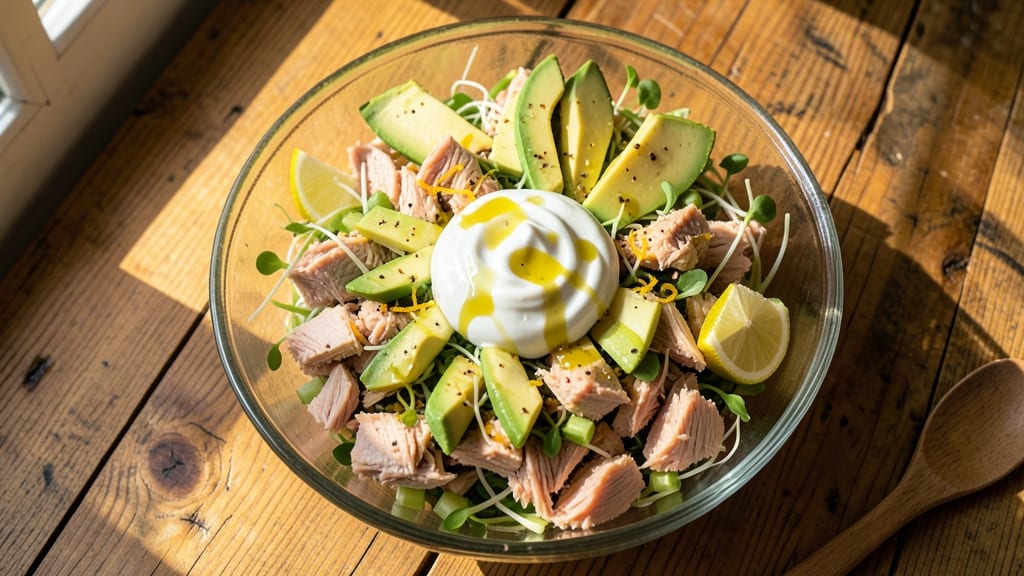
This anti-inflammatory tuna salad recipe transforms simple ingredients into a powerhouse meal packed with omega-3s, fresh crunch, and bold flavors. The secret lies in balancing protein-rich tuna with anti-inflammatory stars like celery, avocado, and lemon—each ingredient carefully chosen for its healing properties.
What sets this apart is the celery crown technique that adds texture while boosting natural anti-inflammatory compounds.
Unlike traditional tuna salads loaded with mayo, this version uses olive oil and Greek yogurt for healthy fats that reduce inflammation while keeping the salad creamy. The combination of turmeric, ginger, and fresh herbs creates a zesty base that wakes up every bite.
You'll notice how the ingredients work together—not just as flavors, but as a complete nutritional profile designed to support your body.
What you'll end up with is a vibrant salad that's as good for you as it is delicious—bright, fresh, and packed with omega-3s from the tuna, antioxidants from the greens, and healthy fats from the avocado.
The celery crowns add a satisfying crunch that holds up perfectly, making this salad hearty enough for a main dish or light enough for a side. It's the kind of meal that makes healthy eating feel indulgent.
Perfect for meal prep or a quick lunch, this recipe keeps well for 3 days in the fridge while maintaining its freshness and nutritional benefits. The versatility lets you adjust ingredients based on what's seasonal or what you have on hand—always keeping the anti-inflammatory focus intact.
Ready to transform your tuna salad routine?
Ingredients for anti inflammatory tuna salad
Omega-3 powerhouse ingredients that pack flavor and healing properties in every bite.
| Ingredient | Amount | Notes |
|---|---|---|
| Wild-Caught Albacore Tuna 🐟 | 1 ½ lbs | High-quality, in-water packed |
| Extra-Virgin Olive Oil 🫒 | ½ cup | Cold-pressed, fruity variety |
| Plain Greek Yogurt 🧀 | ½ cup | Non-fat, full-fat for creaminess |
| Fresh Celery Stems 🧅 | 3 whole | Organic, crisp variety |
| Ripe Avocados 🥑 | 2 whole | Hass variety, firm but yielding |
| Fresh Lemon Juice 🍋 | 2 tbsp | Freshly squeezed, organic |
| Fresh Ginger Root 🌿 | 1 tbsp | Grated, organic preferred |
| Turmeric Powder 🌶️ | ½ tsp | Organic, high-quality |
| Fresh Cilantro Leaves 🌿 | ¼ cup | Chopped, organic preferred |
| Fresh Parsley Leaves 🌿 | ¼ cup | Chopped, organic preferred |
| Diamond Crystal Kosher Salt 🧂 | ½ tsp | Fine grain preferred |
| Freshly Ground Black Pepper 🌶️ | ¼ tsp | Freshly cracked |
| Baby Spinach Leaves 🌱 | 2 cups | Organic, fresh |
| Mixed Greens 🥗 | 2 cups | Baby kale or arugula |
The tuna is non-negotiable here—wild-caught albacore delivers the highest omega-3 content, and the in-water packing preserves freshness. Trader Joe's or Whole Foods carry excellent options, but any reputable seafood counter will have quality choices. Avocados should be ripe but firm—press gently, they should yield slightly but not be mushy. For the celery, look for bright green, crisp stems—avoid any that feel rubbery or wilted. Fresh herbs like cilantro and parsley are best sourced from your local farmers market or organic section, where they're most vibrant. The Greek yogurt should be plain and full-fat for that creamy texture without masking the other flavors.
No fresh ginger? Ground ginger at half the amount works in a pinch, though fresh has more punch. Swap avocado for mashed ripe banana if you're avoiding fats, but you'll lose that rich creaminess. The olive oil can be avocado oil if you prefer a milder flavor. For the greens, arugula or baby kale add peppery contrast, while spinach keeps it mild. If you can't find albacore, wild-caught salmon works beautifully—just adjust the seasoning slightly to complement its natural flavor. The celery crowns are key for texture, but if you're short on time, thinly sliced celery ribbons still add that satisfying crunch.
This salad keeps beautifully for 3 days in the fridge, though the avocado may darken—just sprinkle with lemon juice to preserve freshness. For meal prep, store the dressing and tuna mixture separately from the greens and avocado until ready to serve. The celery crowns can be prepped ahead and stored in a sealed container for up to 5 days. To revive wilted greens, give them a quick soak in ice water for 10 minutes before serving. The dressing holds well for 5 days in the fridge or 3 months frozen—just thaw overnight in the fridge before using.
Why You'll Love This Recipe
- No Chopping Chaos: I swear by this recipe because the celery just needs a rough chop—no fancy dicing, no tears. The avocado’s creamy texture does half the work for you, and the tuna flakes apart with a fork in seconds.
- Creamy Without Mayo: Honestly, the Greek yogurt makes this salad ridiculously good—tangy, thick, and packed with protein. No greasy mayo here; just rich, cool, and satisfying in every bite, especially when drizzled with that extra-virgin olive oil.
- Lunchbox Hero: Between us, this is my go-to for work lunches or school lunches—holds up for hours, no soggy lettuce in sight. The avocado keeps it fresh, and the celery adds that satisfying crunch even after a few hours.
- Budget-Friendly Protein: Wild-caught albacore might sound fancy, but it’s cheaper than you’d think, especially when you stretch it with yogurt and avocado. Plus, leftovers taste just as good cold the next day—no waste, all flavor.
Step-by-step instructions for omega-rich tuna salad
Here's how to craft this vibrant, nutrient-packed salad with perfect texture and flavor balance.
Prepare the Tuna and Celery Base
Drain the 1.5 lbs wild-caught albacore tuna thoroughly and break it into small chunks using your hands or a fork. The tuna should be flaky but not overly broken down - you want to maintain some texture. In a separate bowl, finely dice the 3 whole fresh celery stems into small, even pieces. I like to use a sharp chef's knife for this to get consistent sizing that won't overpower the other ingredients.
Place both the tuna and celery in a large mixing bowl. The celery will add a satisfying crunch while providing natural anti-inflammatory compounds. Add the 0.5 cup extra-virgin olive oil and 0.5 cup plain Greek yogurt to the bowl. The olive oil provides healthy fats while the yogurt adds creaminess without the heaviness of mayo. Mix gently with a silicone spatula, being careful not to mash the tuna too much - you want to preserve some of its natural structure.
Incorporate the Avocado and Citrus Elements
Halve the 2 whole ripe avocados and remove the flesh, then mash it with a fork until smooth. The avocados should be ripe but not overly soft - they should yield slightly to gentle pressure. Add the mashed avocado to the tuna mixture along with the 2 tbsp fresh lemon juice and 1 tbsp freshly grated ginger root. The lemon juice brightens the flavors while the ginger adds a subtle warmth that complements the tuna beautifully.
At this point, you'll want to taste the mixture. It should be creamy but still have some body from the tuna and celery. If it's too thick, you can add a splash of water or more Greek yogurt to reach your desired consistency. The avocado will help bind everything together while adding healthy fats that support the anti-inflammatory properties of this dish.
Add the Herb Blend and Spices
In a small bowl, combine the 0.25 cup chopped fresh cilantro leaves, 0.25 cup chopped fresh parsley leaves, 0.5 tsp turmeric powder, 0.5 tsp diamond crystal kosher salt, and 0.25 tsp freshly ground black pepper. The turmeric adds both color and potent anti-inflammatory benefits, while the herbs provide freshness and complexity. Stir these ingredients together before adding them to your tuna mixture.
Gently fold the herb blend into the tuna salad using your spatula. Be careful not to overmix - you want to maintain some texture from the celery and tuna pieces. The herbs should be evenly distributed throughout the mixture. At this stage, you'll want to taste again and adjust the seasoning if needed. The salt should be balanced but not overpowering, and the black pepper should add just a hint of heat.
Assemble the Salad
In a large serving bowl, combine the 2 cups baby spinach leaves and 2 cups mixed greens. These greens provide the perfect bed for your tuna salad and add essential nutrients. Gently toss them with any remaining dressing or lemon juice if desired, but keep them mostly dry to prevent sogginess.
Spoon the tuna salad mixture over the greens, dividing it evenly among the 4 servings. The greens should be just enough to support the tuna salad without overwhelming it. For presentation, you can create a small well in the center of each serving and place a few extra celery pieces or avocado slices on top. This not only looks beautiful but also adds a satisfying textural contrast when you eat it.
Serve Immediately for Best Results
This salad is best served immediately to maintain the crispness of the celery and avocado. The anti-inflammatory properties are preserved when the ingredients are fresh and combined just before serving. If you need to prepare it ahead of time, store the components separately in the refrigerator and assemble just before eating.
When ready to serve, give the salad one final gentle toss to combine all the elements. The colors should be vibrant - deep greens from the spinach and mixed greens, creamy white from the avocado, and bright green from the celery and herbs. Each bite should offer a perfect balance of flavors and textures, with the omega-rich tuna providing protein and healthy fats, the avocado adding creaminess, and the greens contributing freshness and crunch.
Pro Tips For Making Anti Inflammatory Tuna Salad
- Flake the Tuna Properly: Use a fork to break the tuna into rough, uneven chunks—not a food processor. The texture stays intact longer, and you avoid that mushy mess that happens when you overwork it. I learned this the hard way after making salad that looked like tuna paste.
- Chill the Yogurt First: Take the Greek yogurt out of the fridge 10 minutes before mixing—just long enough to soften slightly. Cold yogurt makes the dressing too thick and can turn the avocado into a sad, watery pulp. Trust me, your salad will thank you.
- Salt the Celery: Toss the chopped celery in a pinch of salt and let it sit for 5 minutes before adding it to the salad. This draws out moisture, keeping your salad crisp and preventing that soggy middle. Yes, it sounds weird, but it works.
- Add Avocado Last: Mash the avocado separately and fold it into the salad right before serving. If you mix it in early, the acids in the yogurt and tuna will turn it brown and mealy. Save the creamy goodness for the final touch.
Creative variations of anti inflammatory tuna salad
Mediterranean Twist
Swap the Greek yogurt for ¼ cup tahini and add 1 tbsp lemon zest for a nutty, citrusy flavor profile inspired by Levantine cuisine. Include ¼ cup chopped kalamata olives and 2 tbsp chopped red onion for a briny, tangy contrast.
Top with crumbled feta cheese and a drizzle of extra-virgin olive oil before serving. The tahini adds healthy fats while the olives and onion bring Mediterranean flair. 🌿
Spicy Thai-Inspired
Infuse the dressing with 1 tbsp fish sauce, 1 tbsp lime juice, and 1 tsp red curry paste for a bold Thai-inspired kick. Add ½ cup shredded red cabbage and 2 tbsp chopped Thai basil for freshness.
Garnish with crushed peanuts and a sprinkle of chili flakes for texture and heat. The fish sauce and lime brighten the tuna while the curry paste adds depth. 🌶️
Mexican-Inspired Crunch
Mix in ½ cup diced mango, ¼ cup chopped cilantro, and 2 tbsp lime juice for a tropical twist. Add ¼ cup black beans (rinsed and drained) and 2 tbsp chopped red bell pepper for fiber and crunch.
Top with crumbled cotija cheese and avocado slices. The mango adds natural sweetness while the black beans provide plant-based protein. 🌮
Japanese-Inspired Sesame
Replace the Greek yogurt with ¼ cup white miso paste and add 1 tbsp toasted sesame oil, 1 tsp grated ginger, and 1 tsp rice vinegar. Incorporate ¼ cup shredded carrots and 2 tbsp chopped scallions for freshness.
Garnish with toasted sesame seeds and thinly sliced cucumber. The miso adds umami depth while the sesame oil enhances the nutty flavor. 🥢
Avocado-Free Version
For those avoiding avocado, replace it with ½ cup mashed ripe banana and 2 tbsp hummus for creaminess. Add ¼ cup diced apple for natural sweetness and crunch. The banana adds natural sugars that balance the tuna’s richness, while the hummus provides a creamy texture without dairy.
This version works well for those with avocado allergies or preferences. 🍌
Extra Protein Boost
Add ½ cup cooked quinoa or ½ cup cooked lentils to the salad base for an extra protein punch. The quinoa adds a nutty flavor and complete protein, while the lentils provide fiber and iron.
Both options work beautifully with the tuna and complement the anti-inflammatory profile. Serve with a side of whole-grain crackers or toasted sourdough for a heartier meal. 💪
Nutrition facts
Frequently asked questions
Why does this tuna salad use Greek yogurt instead of mayo?
Greek yogurt provides healthy fats and probiotics that support gut health, while mayo is often made with inflammatory oils. The yogurt also adds protein and creaminess without the heaviness, making this salad more nutrient-dense and better for reducing inflammation. Plus, it keeps the dish lighter and more digestible!
Can I use canned tuna instead of fresh?
Yes, but choose wild-caught albacore packed in water for the highest omega-3 content. Drain it thoroughly and pat dry to remove excess moisture, which keeps the salad from becoming soggy. The texture will be slightly different but still delicious—just avoid light tuna as it's lower in healthy fats.
How do I prevent the avocado from turning brown?
Mash the avocado last and mix it in gently just before serving. For extra protection, toss the salad with an additional 1 tbsp lemon juice and keep the avocado portion separate until ready to eat. If browning occurs, simply sprinkle with a pinch of salt and more lemon juice—it won't affect the flavor!
What makes this salad anti-inflammatory?
The key ingredients work together to fight inflammation: omega-3s from tuna reduce joint pain, turmeric is a natural anti-inflammatory, ginger soothes digestion, and leafy greens provide antioxidants. The olive oil and avocado add heart-healthy fats that balance blood sugar and reduce oxidative stress.
Can I make this gluten-free?
Serve the salad over a bed of quinoa or mixed greens instead of bread. For extra protein, add ½ cup cooked lentils or roasted chickpeas. Always check labels on Greek yogurt and other packaged ingredients to ensure they're certified gluten-free.