
Salads
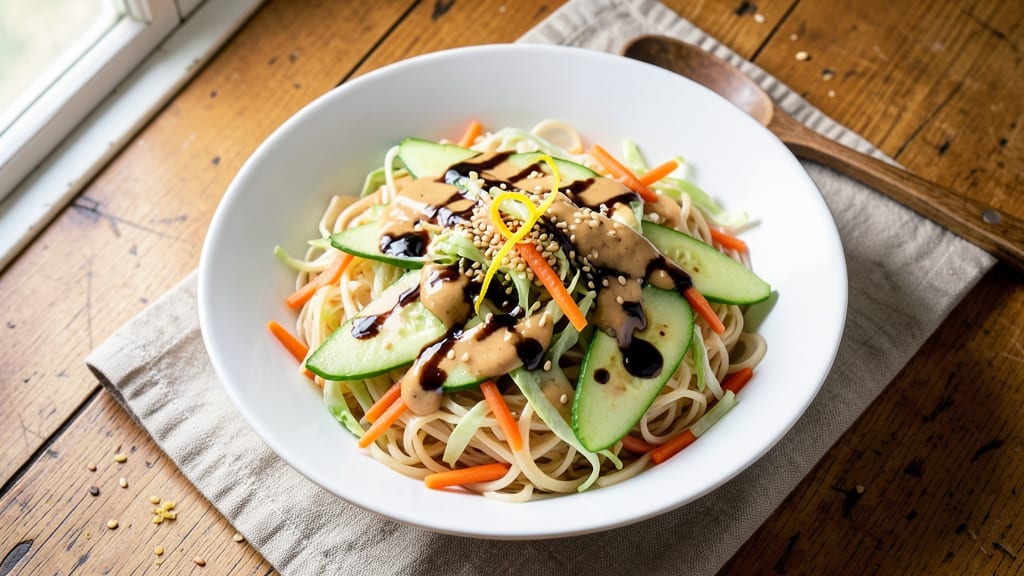
This Asian cabbage noodle salad delivers crisp-tender rice noodles and a tangy peanut dressing that balances sweet, spicy, and umami flavors in every bite. The secret lies in quick-cooking the noodles just until al dente, then chilling them to achieve that perfect texture—neither mushy nor overcooked.
I developed this recipe after craving a refreshing yet satisfying dish that could be prepped ahead and served at room temperature, making it ideal for picnics, lunches, or light dinners.
The salad’s foundation is a simple yet flavorful dressing made with creamy peanut butter, soy sauce, lime juice, and a touch of chili—just enough to add heat without overpowering. Shredded cabbage provides the crunch, while thinly sliced carrots and cucumber add freshness.
The key to success is tossing everything together while the noodles are still slightly warm, allowing the dressing to cling perfectly. This method ensures every forkful is packed with texture and flavor, not soggy or separated.
What makes this dish truly special is its versatility—you can customize it with optional proteins like grilled chicken, tofu, or even a soft-boiled egg for extra richness. The salad holds up beautifully in the fridge for up to 2 days, making it perfect for meal prep.
Serve it chilled or at room temperature, garnished with crushed peanuts and fresh cilantro for a pop of color and aroma that will have everyone asking for seconds.
Whether you're looking for a quick weeknight meal or a showstopping dish for a gathering, this Asian cabbage noodle salad is foolproof and delivers restaurant-quality results at home.
The combination of textures—crisp cabbage, tender noodles, and creamy dressing—creates a harmonious balance that’s both comforting and exciting. Let’s get started on this refreshing, flavorful dish!
Ingredients for asian cabbage noodle salad
Crisp cabbage, tender noodles, and a tangy peanut dressing come together for this refreshing salad.
| Ingredient | Amount | Notes |
|---|---|---|
| Rice Noodles 🍜 | 8 oz | Thin width, uncooked |
| Green Cabbage 🥬 | 4 cups | Shredded, outer leaves removed |
| Carrots 🥕 | 1 medium | Julienned or thinly sliced |
| Cucumber 🥒 | 1 medium | Seedless, thinly sliced |
| Creamy Peanut Butter 🥜 | ½ cup | Natural, unsweetened |
| Soy Sauce 🍶 | ¼ cup | Low-sodium preferred |
| Lime Juice 🍋 | ¼ cup | Freshly squeezed |
| Red Chili Flakes 🌶️ | 1 tsp | Adjust for heat preference |
| Sesame Oil 🫒 | 1 tbsp | Toasted, for aroma |
| Sesame Seeds 🌾 | 2 tsp | Toasted, for garnish |
| Fresh Cilantro 🌿 | ¼ cup | Chopped, stems removed |
| Crushed Peanuts 🥜 | ¼ cup | Toasted, for garnish |
| Granulated Sugar 🍚 | 1 tbsp | Or maple syrup for variation |
| Garlic Cloves 🧄 | 3 cloves | Minced, for dressing |
| Vegetable Oil 🫒 | 1 tbsp | For tossing noodles |
The rice noodles are the star here—look for thin-width varieties at Asian markets or the international aisle. Thai Kitchen or Three Ladies brands are my go-tos, but any rice noodles will work. The key is cooking them just until al dente (about 2-3 minutes), then chilling them immediately to lock in that perfect texture. Green cabbage should be crisp and fresh—avoid any with yellowing leaves. For the carrots and cucumber, julienne peeler attachments make quick work of the prep, but a sharp knife works too. If you're short on time, pre-shredded cabbage from the salad bar section is a decent shortcut.
No peanut butter? Almond butter or tahini works in a pinch, though the flavor will shift slightly. Low-sodium soy sauce is ideal, but regular works if you reduce the amount by half. For heat, red pepper flakes or fresh chili can stand in—just taste as you go. The dressing needs to balance sweet, salty, and spicy, so adjust the sugar to your preference. Fresh lime juice is non-negotiable here—bottled won't cut it. If you're adding protein, grilled tofu or chicken holds up best, while soft-boiled eggs add richness without overpowering.
This salad keeps beautifully in the fridge for 2 days, but the noodles soften over time, so plan to eat it within that window. For best texture, toss with a little sesame oil before storing. Garnishes like toasted sesame seeds and crushed peanuts add crunch and should be added fresh before serving. If prepping ahead, store the dressing and veggies separately until ready to assemble—this keeps everything crisp. Leftovers? Toss with extra peanut dressing and serve cold over greens for a quick noodle bowl.
Why You'll Love This Recipe
- No Boil, No Stress: I swear by the cold-soak method for rice noodles—just toss them in warm water for 10 minutes, drain, and they’re ready. No stove, no fuss, and they stay perfectly chewy. Honestly, it’s the lazy chef’s dream.
- Peanut Butter Magic: That creamy peanut butter dressing isn’t just a sauce—it’s the star. The richness cuts through the crunch of shredded cabbage and carrots while the lime and chili give it this bright, tangy kick. My kids fight over the last bite.
- Lunchbox Hero: This salad holds up for days in the fridge, making it my go-to for packed lunches or potlucks. The noodles soften just enough over time, and the dressing clings to everything like glue. Even my picky coworker asked for seconds.
- Pantry Staple Power: Green cabbage lasts forever, carrots are cheap, and peanut butter? Always on hand. I’ve made this with whatever veggies I had—even wilted spinach—and it still comes out solid. Budget-friendly doesn’t mean boring.
Step-by-step instructions for Asian cabbage noodle salad
Here's how to make crisp-tender rice noodles with that perfect tangy peanut dressing—every bite delivers.
Prepare the Vegetables for Maximum Crunch
Start by cutting the vegetables into uniform pieces for even cooking. Remove the outer leaves from the 4 cups green cabbage and shred it into thin ribbons using a sharp knife or mandoline. For the 1 medium carrots, use a julienne peeler or knife to create thin matchsticks—about ¼-inch wide. Finally, slice the 1 medium cucumber into ⅛-inch thick half-moons, removing the seeds if needed for a drier texture.
Place all prepared vegetables in a large mixing bowl and set aside. The key here is keeping them separate until the very end—this prevents premature wilting from the dressing. If you're short on time, you can briefly rinse the cabbage and cucumber in cold water to crisp them up, then drain thoroughly and pat dry with paper towels.
Cook the Rice Noodles to Perfect Al Dente
Bring a large pot of water to a rolling boil. Add the 8 oz rice noodles and cook for exactly 2 minutes and 30 seconds—this gives you that ideal crisp-tender texture. Stir gently once or twice to prevent sticking, but don't overmix or they'll turn mushy.
Drain the noodles immediately in a colander and rinse under cold water for 10 seconds to stop the cooking process. Drain again thoroughly and toss with 1 tablespoon vegetable oil while still warm. This oil coating prevents the noodles from drying out and adds a subtle richness that balances the tangy dressing. Let them cool slightly before combining with the vegetables.
Whisk Together the Tangy Peanut Dressing
In a medium bowl, combine the 0.5 cup creamy peanut butter, 0.25 cup soy sauce, 0.25 cup lime juice, 1 tablespoon granulated sugar, 1 teaspoon red chili flakes, 1 tablespoon sesame oil, and 3 cloves minced garlic. Whisk vigorously for 2-3 minutes until completely smooth and emulsified—you should hear a slight humming sound as the mixture thickens.
Taste and adjust the balance: need more tang? Add another tablespoon of lime juice. Want more heat? Sprinkle in extra chili flakes. The dressing should coat the back of a spoon but still flow easily—this ensures perfect cling to the noodles and vegetables. Here's the thing—don't rush this step. A well-emulsified dressing makes all the difference between a good salad and a great one.
Assemble and Toss for Perfect Texture
In a large bowl, combine the cooled rice noodles and all prepared vegetables. Pour the peanut dressing over the top and toss gently but thoroughly with tongs. Work quickly but carefully—you want everything evenly coated without crushing the vegetables. The noodles should be glossy with dressing but still maintain their individual shapes.
Let the salad sit for 5 minutes at room temperature. This resting period allows the flavors to meld together and the dressing to penetrate the noodles completely. If you're serving immediately, give it a final toss before plating. For best results, serve within 30 minutes of assembly to maintain that perfect crisp-tender texture.
Garnish and Serve with Confidence
Transfer the salad to serving plates and sprinkle generously with 2 teaspoons toasted sesame seeds and 0.25 cup crushed peanuts. Add a final garnish of 0.25 cup chopped fresh cilantro for brightness. The peanuts add satisfying crunch while the cilantro cuts through the richness of the peanut dressing.
Serve immediately while the noodles are still crisp-tender. Each bite should deliver a perfect balance of textures—crisp vegetables, tender noodles, and creamy peanut dressing with a kick of lime and chili. This salad keeps well in the refrigerator for up to 2 days, but I promise you'll want to eat it all before then.
Pro Tips For Making Asian Cabbage Noodle Salad
- SOAK NOODLES JUST RIGHT: I learned this the hard way—rice noodles need warm water, not boiling. Use a bowl of hot (not scalding) water, let them sit for 8-10 minutes until pliable but still slightly firm. Over-soaking turns them mushy, and no one wants sad noodles in a salad.
- SHRED CABBAGE THIN: Skip the thick slices—grated cabbage (like coleslaw) mixes better and soaks up dressing faster. Use a box grater or mandoline for even strips, and pat it dry with a towel to avoid a watery salad. Wet cabbage is the fast track to a soggy mess.
- SAVE TIME ON VEGGIES: Prep everything before tossing the dressing. While the noodles soak, julienne carrots and cucumber (no need to peel the cucumber—just scrub it). This keeps the salad crisp and lets flavors meld properly. Trust me, you’ll regret chopping mid-dressing.
- STIR PEANUT BUTTER LAST: Add the creamy peanut butter after everything else is mixed. Start with 2 tablespoons, then adjust—it thickens fast. If the salad looks too heavy, thin with a splash of lime juice or soy sauce. Stirring it in early can turn your dressing into a gluey disaster.
Dietary considerations for asian cabbage noodle salad
Gluten-Free Adaptation
This salad is naturally gluten-free as long as you use certified gluten-free rice noodles—brands like Rice Noodle House or Thai Kitchen make excellent options. Double-check labels to avoid cross-contamination, especially if you're sensitive.
The peanut dressing is also safe, but always verify your peanut butter brand for hidden gluten additives. 🌱
Nut-Free Variations
Skip the peanut butter and crushed peanuts for a nut-free version. Replace the dressing with a soy-lime dressing made from ¼ cup soy sauce, ¼ cup lime juice, 1 tbsp sesame oil, and 1 tbsp maple syrup.
For crunch, add toasted sunflower seeds or crushed wasabi peas instead of peanuts. This keeps the tangy flavor while accommodating nut allergies.
Low-Carb Options
To reduce carbs, swap the rice noodles for shredded cabbage or lettuce wraps (about 8 cups) and use zucchini noodles (spiralized and lightly sautéed). The salad will still deliver that satisfying crunch and texture while cutting carbs significantly.
The peanut dressing remains the same, but you can reduce the sugar to ½ tbsp for fewer carbs.
Dairy-Free & Vegan
This recipe is already vegan and dairy-free, but if you're using store-bought peanut butter, opt for brands without added honey or milk solids. For extra richness, stir 1 tbsp coconut cream into the dressing.
The salad’s natural flavors shine without dairy, making it perfect for plant-based diets. The crisp cabbage and tender noodles provide all the satisfaction you need. ✨
Protein Boosts
Add protein without compromising flavors by incorporating grilled tofu (press and marinate in 1 tbsp soy sauce + 1 tsp sesame oil), hard-boiled eggs (sliced), or shredded chicken (seasoned with ½ tsp garlic powder).
For a seafood twist, toss in cooked shrimp or smoked salmon. Just be sure to add proteins last to keep them warm and tender.
Nutrition facts
Frequently asked questions
Can I use regular pasta instead of rice noodles?
Regular pasta won't work for this dish—it's too dense and won't achieve that perfect crisp-tender texture. Rice noodles are designed to cook quickly and stay light, which is essential for this salad. If you must substitute, try vermicelli noodles or soba noodles, but they'll have slightly different flavors and textures.
How do I prevent the cabbage from getting soggy?
Keep the cabbage dry until the very last moment! Store it separately from the dressing and toss it with the noodles only after everything is combined. If needed, give the cabbage a quick rinse in cold water and pat it completely dry with paper towels before assembling. Also, serve the salad immediately after tossing for maximum crunch.
Can I make this salad ahead of time?
Yes, but with a few adjustments. Prepare the dressing and chop all vegetables in advance, storing them separately in airtight containers. Cook the noodles just before serving and toss with the dressing and veggies only when ready to eat. This keeps the cabbage crisp and prevents the noodles from becoming mushy.
What if I don't like peanut butter?
No problem! Swap the peanut dressing for a soy-lime dressing made with ¼ cup soy sauce, ¼ cup lime juice, 1 tbsp sesame oil, and 1 tbsp maple syrup. For extra richness, add a drizzle of toasted sesame oil. This keeps the tangy flavor while avoiding peanuts entirely.
How do I make this salad spicier?
Boost the heat by adding more red chili flakes or fresh chili like Thai bird's eye peppers. For a smoky kick, stir in ½ tsp smoked paprika or a dash of sriracha to the dressing. Start with small amounts and adjust to taste—you can always add more heat later!