
Salads
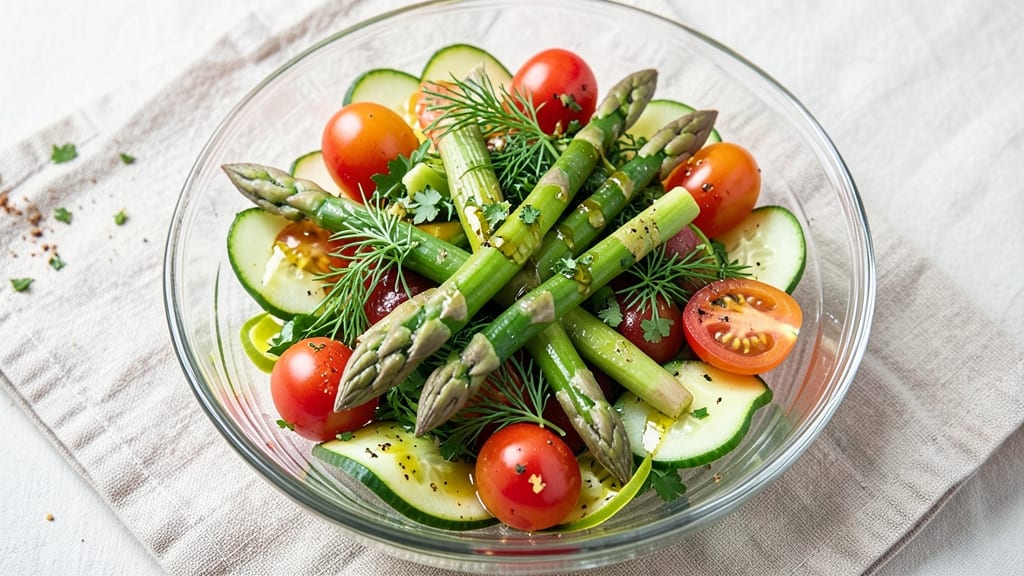
This asparagus tomato cucumber salad recipe transforms spring's freshest vegetables into a vibrant, crunchy dish that comes together in just 15 minutes. The secret lies in balancing crisp asparagus spears, juicy tomatoes, and cool cucumbers with a bright herb dressing that keeps everything fresh and flavorful.
I developed this recipe after realizing how often store-bought salads rely on soggy greens or bland dressings—this version fixes both problems with a foolproof technique.
The beauty of this salad is its versatility—it works as a light main dish for vegetarians or as a refreshing side for grilled meats. Fresh herbs like dill and parsley add layers of aroma, while a touch of lemon zest keeps the flavors bright.
What makes it special is how the textures play together: crisp asparagus, tender tomatoes, and cool cucumber slices create every satisfying bite. The dressing binds everything without overpowering the natural flavors of the vegetables.
This salad is perfect for spring and summer when asparagus and tomatoes are at their peak, but it also works year-round with seasonal substitutions. The 15-minute prep time makes it ideal for weeknight dinners or last-minute entertaining.
Whether you're serving it at a picnic, potluck, or family dinner, this dish delivers restaurant-quality freshness without the fuss. Let's get started!
For those who want to add protein, consider tossing in grilled halloumi for a non-vegan option or white beans for a plant-based boost. The salad also adapts easily to dietary needs—omit the oil for an oil-free version or swap the dressing ingredients for gluten-free alternatives.
The key is keeping everything cool, crisp, and vibrant until serving. Here's everything you need to make it perfect!
Ingredients for asparagus tomato cucumber salad
Spring's freshest vegetables meet vibrant herb dressing for a restaurant-quality salad in minutes.
| Ingredient | Amount | Notes |
|---|---|---|
| Asparagus Spears 🌱 | 1 lb | Medium thickness, trimmed ends |
| Cherry Tomatoes 🍅 | 1 lb | Heirloom or vine-ripened preferred |
| English Cucumbers 🥒 | 2 whole | Seedless, skin-on for texture |
| Fresh Dill 🌿 | ¼ cup | Chopped, stems removed |
| Fresh Parsley 🌿 | ¼ cup | Flat-leaf, finely chopped |
| Extra-Virgin Olive Oil 🫒 | ½ cup | Light, fruity variety |
| Lemon Juice 🍋 | 3 tbsp | Freshly squeezed, seeds strained |
| Lemon Zest 🍋 | 1 tsp | Fine, organic preferred |
| Diamond Crystal Kosher Salt 🧂 | 1 tsp | Fine grain for delicate seasoning |
| Freshly Ground Black Pepper 🌶️ | ½ tsp | Cracked peppercorns preferred |
| Raw Honey 🍯 | 1 tbsp | Local, unprocessed preferred |
| Red Wine Vinegar 🍷 | 1 tbsp | Dry, aged variety |
| White Sesame Seeds 🌾 | 1 tbsp | Toasted for aroma |
The asparagus should be bright green and firm—avoid woody spears that snap easily. Farmers markets often carry the freshest varieties, but grocery store asparagus works if the tips are tightly closed. For tomatoes, heirloom or vine-ripened varieties burst with flavor, though standard cherry tomatoes suffice. Cucumbers should have thin, unblemished skin—peeling removes texture. Fresh herbs are non-negotiable here; dried herbs lack the bright aroma needed to complement the vegetables. If using store-bought herbs, look for organic labels to ensure no chemical treatments that could dull the flavor. The olive oil should be light and fruity—avoid heavy, peppery varieties that overpower the delicate vegetables.
No fresh dill? Substitute with 1/4 cup chopped tarragon or 1/2 cup chopped cilantro for a different but complementary flavor profile. Running short on cucumbers? Zucchini or radishes work well when sliced thinly. For an oil-free dressing, replace the olive oil with 1/4 cup unsweetened almond milk and 1 tbsp apple cider vinegar, though the texture will be slightly less cohesive. The honey can be swapped for maple syrup for a vegan option, though it lacks the floral notes. If you prefer less acidity, reduce the lemon juice to 2 tbsp and add 1/2 tbsp more honey. For a gluten-free version, ensure all vinegars and dressings are certified gluten-free, though this recipe's ingredients are naturally gluten-free.
Prep the vegetables last minute to preserve crispness—asparagus and cucumbers soften quickly once cut. Store unused herbs in damp paper towels in a sealed container for up to 5 days. The dressing keeps for 4 days in the fridge, though the herbs may wilt—stir before using. For meal prep, portion the salad in airtight containers with dressing on the side to maintain texture. This salad holds for 24 hours in the fridge when stored properly, though it's best enjoyed within 6 hours of assembly for optimal crunch. Leftovers can be re-freshed with a splash of cold water and a sprinkle of salt before serving again.
Why You'll Love This Recipe
- No-Cook Magic: This salad takes zero cooking—just snap asparagus, halve tomatoes, and dice cucumbers. Honestly, the hardest part is waiting for the dill and parsley to brighten everything up.
- Crunchy-Creamy Balance: The asparagus adds a satisfying snap, while the cucumbers and tomatoes stay juicy. Toss in a splash of lemon and olive oil, and suddenly, you’ve got a dish that’s fresh but still hearty—no soggy bits in sight.
- Weeknight to Picnic: I make this for lazy dinners, potlucks, or even packed lunches. It’s light enough for summer but sturdy enough to hold up for days—just add a sprinkle of feta if you’re feeling fancy.
- Budget Brightener: Fresh dill and parsley stretch a little further here, and seasonal asparagus won’t break the bank. Between us, this is the kind of salad that makes cheap veggies feel like a gourmet choice.
Step-by-step instructions for herb-dressed asparagus tomato cucumber salad
This vibrant salad comes together in minutes with precise technique for maximum freshness and texture.
Prepare the Vegetables with Precision
Begin by trimming the tough ends from the 1 lb asparagus spears using a sharp knife—cut at a slight angle for presentation. Snap the stalks naturally if they break cleanly at the woody base. For the 1 lb cherry tomatoes, gently rinse and pat dry, leaving them whole for visual appeal and bite-sized enjoyment.
Peel the 2 whole English cucumbers lengthwise using a vegetable peeler, removing just the outer skin. Slice each cucumber into ¼-inch thick half-moons, discarding the seeds if present. Work quickly to preserve their crisp texture—cucumbers release water when cut, so pat each slice lightly with paper towels before assembling. This step ensures your salad stays fresh and crunchy rather than soggy.
Toast the Sesame Seeds for Depth of Flavor
In a small dry skillet over medium-low heat, toast the 1 tbsp white sesame seeds for 1-2 minutes until they turn a golden brown color and release their nutty aroma. Shake the pan frequently to prevent burning—you want them fragrant but not bitter. Immediately transfer to a small bowl and set aside to cool slightly.
This toasting step amplifies the sesame's flavor profile, transforming it from subtle to bold. The seeds will add both texture and aroma to the salad, creating a sophisticated contrast to the fresh vegetables. Keep them nearby as you'll add them just before serving to maintain their crispness.
Whisk Together the Herb Dressing
In a medium bowl, combine the 0.5 cup extra-virgin olive oil, 3 tbsp lemon juice, 1 tsp lemon zest, 1 tbsp raw honey, 1 tbsp red wine vinegar, 1 tsp diamond crystal kosher salt, and 0.5 tsp freshly ground black pepper. Whisk vigorously for 30 seconds until the honey dissolves completely and the mixture emulsifies into a smooth, glossy dressing.
Next, fold in the 0.25 cup chopped fresh dill and 0.25 cup chopped fresh parsley using a spatula. The herbs should be evenly distributed but still visible—this ensures their bright flavors shine through without overwhelming the delicate vegetables. Taste and adjust seasoning if needed, adding a pinch more salt or lemon juice as required. The dressing should balance sweet, tangy, and herby notes perfectly.
Assemble and Marinate for Optimal Texture
In a large serving bowl, gently combine the prepared asparagus, cherry tomatoes, and cucumber slices. Pour the herb dressing over the vegetables and toss lightly with your hands or a large spoon, being careful not to bruise the delicate tomatoes. Distribute the toasted sesame seeds evenly over the top just before serving to maintain their crispness.
Let the salad sit for 5-10 minutes at room temperature before serving. This brief marinating time allows the flavors to meld without softening the vegetables. The asparagus will develop a subtle brightness, the cucumbers will maintain their crisp snap, and the tomatoes will absorb just enough dressing to enhance their natural sweetness. Serve immediately while the ingredients are at their peak texture and temperature.
Pro Tips For Making Asparagus Tomato Cucumber Salad
- Blanch asparagus first: The raw bite of asparagus can overpower the salad. Drop spears in boiling water for exactly 30 seconds—no more—then shock in ice water. This keeps them crisp but tender enough to eat without chewing like you’re in a lumberjack contest.
- Slice cucumbers lengthwise: Thin, even slices (about 1/8-inch thick) look better and stay crunchier longer than chunky cubes. Use a sharp knife and work with the grain to avoid that sad, mushy texture by lunchtime.
- Dress just before serving: Tossing everything together too early turns cucumbers into a sad, watery mess. Wait until the last 10 minutes, then gently mix—no aggressive stirring. The tomatoes and herbs will release their juices just enough to coat everything without drowning it.
- Skip the peeling on tomatoes: Those tiny seeds and skins add texture and sweetness. Halve cherry tomatoes and leave them whole; quarter English cucumbers but keep the peel. It’s the difference between a fresh salad and one that tastes like it’s been sitting in a bowl since Monday.
Storing and reheating this recipe
Refrigerator Storage
Store your salad in an airtight glass container with a secure lid to maintain crispness. I recommend using Pyrex with snap-on lids—they create a tight seal that keeps vegetables fresh longer. Keep the dressing separate until ready to serve to prevent sogginess.
The salad stays fresh for up to 24 hours in the fridge, though the asparagus will soften slightly after 12 hours. For best results, assemble it no more than 6 hours before serving to preserve that satisfying crunch. ❄️
Freezer-Friendly Components
While the full salad doesn't freeze well, you can prep individual components ahead. Freeze the dressing separately in an ice cube tray—each cube makes one serving. The herbs lose their vibrant color but retain flavor.
For the vegetables, blanch the asparagus for 2 minutes in boiling water, then shock in ice water before freezing. The cucumbers and tomatoes won't freeze well, so prep those fresh day-of. Thaw the dressing overnight in the fridge before using. 🥶
Reheating for Maximum Freshness
If storing overnight, give your salad a refresh before serving. Drain any excess liquid that may have formed, then gently toss with a spritz of cold water and a pinch of Diamond Crystal kosher salt. Let sit for 5 minutes to revive crispness.
For the dressing, whisk in 1 tsp fresh lemon juice to brighten flavors. Avoid reheating the vegetables—this salad is designed to be served cold for optimal texture. The lemon and herbs will perk up instantly, making it taste almost fresh again. ✨
Portioning for Meal Prep
Divide the salad into individual glass containers with tight-sealing lids for easy grab-and-go meals. Store the dressing in a small separate container and add it just before eating. I use mason jars because they're sturdy and stack well in the fridge.
For a protein boost, add grilled halloumi or chickpeas to your portions—they hold up better than the delicate vegetables. Label containers with dates to track freshness. This method keeps everything organized and ready for quick lunches. 📅
Reviving Wilted Greens
If your salad looks limp after storage, don't toss it! Place the vegetables in a colander and run under cold water for 30 seconds. Pat dry thoroughly with paper towels, then toss with 1 tsp fresh lemon juice and a pinch of salt.
The acidity will help restore some of that crisp texture. For the dressing, whisk in ½ tsp honey to balance any loss of brightness. This trick works especially well for cucumbers and asparagus—tomatoes may still be soft but will taste just as flavorful. 💫
Nutrition facts
Frequently asked questions
Can I substitute other vegetables in this salad?
If asparagus isn't available, try sugar snap peas or green beans for a similar crunch. For cucumbers, radishes or zucchini work well when sliced thinly. Just keep portions balanced—aim for 1 cup total volume of substitute veggies to maintain texture contrast.
How do I keep the salad from getting soggy?
Prevent sogginess by keeping dressing separate until serving. If combining, toss gently and let sit for only 5 minutes before eating. For extra insurance, pat cucumbers dry with paper towels before adding. The key is minimal handling—over-tossing bruises tomatoes and releases excess moisture.
What's the best way to prep asparagus for maximum crispness?
Trim ends at a 45-degree angle for presentation, then snap stalks naturally where they bend. For extra crunch, blanch asparagus for 1 minute in boiling water, then shock in ice water before adding to salad. This preserves texture while keeping it tender. Avoid overcooking—it should remain bright green with a slight snap.
Can I make this salad ahead of time?
Prepare components separately up to 24 hours ahead: chop veggies (store in airtight containers), make dressing (keep refrigerated), and toast sesame seeds. Assemble just before serving to maintain crispness. For a 6-hour head start, store veggies and dressing separately in the fridge—combine only when ready to eat.
What if I don't have fresh dill?
Use 1/4 cup chopped tarragon or 1/2 cup cilantro as substitutes. For a more subtle flavor, try 1 tbsp chopped basil plus 1/4 tsp dried dill. The key is balancing herb volume—fresh herbs should make up 1/2 cup total in the recipe. Adjust seasoning after substituting.