
Side Dishes
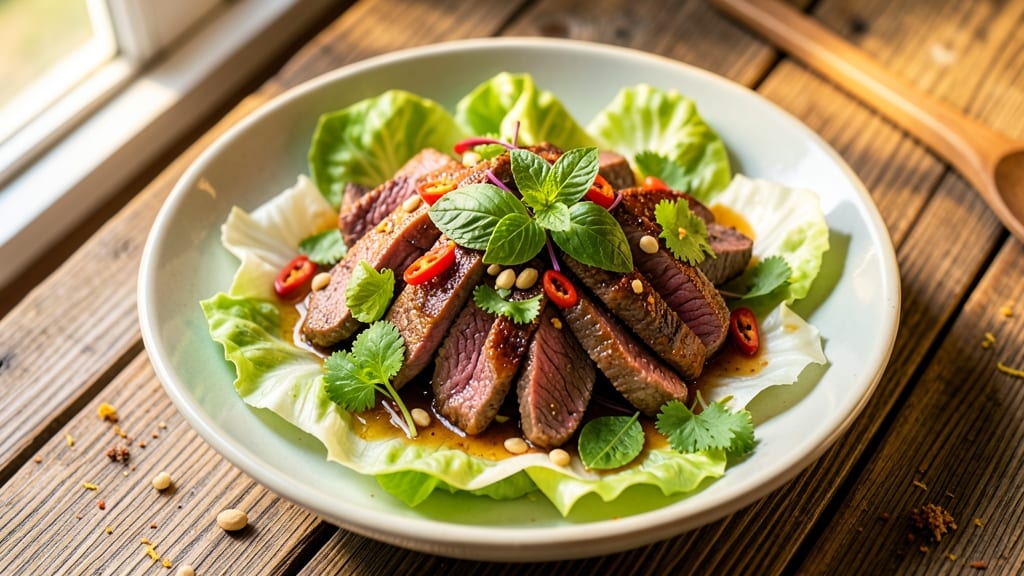
This authentic Vietnamese beef salad recipe brings the bold flavors of Hanoi street food to your table with tender seared beef, crisp herbs, and a tangy fish sauce dressing. ✨ The key lies in perfectly slicing rare beef against the grain for melt-in-your-mouth texture, then balancing it with bright lime, fresh cilantro, and a touch of chili heat.
I've recreated this dish exactly as I learned it in Vietnam—no shortcuts, just authentic technique.
The salad's magic comes from its fresh ingredients: crisp lettuce, fragrant herbs like Thai basil and mint, and a dressing that marries fish sauce, lime juice, and sugar into a perfect harmony.
Unlike many Western versions, this recipe skips heavy mayo and relies on traditional seasonings to deliver that signature Vietnamese tang. The beef is seared just until warm (not cooked through), ensuring each bite stays tender and flavorful.
What makes this dish truly special is the balance—sweet, salty, sour, and spicy all working together in one bite. The salad is traditionally served with steamed rice noodles, but it also works beautifully as a standalone dish.
Each component needs to be fresh, so I recommend prepping everything just before serving to preserve those vibrant flavors.
Once you try this authentic Vietnamese beef salad, you'll understand why it's a staple in Vietnamese cuisine. The combination of textures—crisp vegetables, tender beef, and fresh herbs—makes every bite exciting. Let's get started on recreating this classic dish at home.
Ingredients for authentic vietnamese beef salad
Fresh herbs, tender beef, and a tangy dressing—this is your Hanoi street food pantry list.
| Ingredient | Amount | Notes |
|---|---|---|
| Flank Steak 🥩 | 1 lb | Thinly sliced against grain |
| Butter Lettuce 🥬 | 4 cups | Outer leaves removed |
| Thai Basil Leaves 🌿 | 1 cup | Stems removed |
| Fresh Mint Leaves 🌿 | ½ cup | Chopped |
| Fresh Cilantro Leaves 🌿 | ½ cup | Stems removed |
| Red Chili Peppers 🌶️ | 2 whole | Thinly sliced, seeds removed |
| Carrots 🥕 | 2 whole | Julienned, peeled |
| Red Onion 🧅 | 1 whole | Thinly sliced |
| Fresh Lime Juice 🍋 | ⅓ cup | About 3 limes |
| Fish Sauce 🍶 | 2 tbsp | Red Boat preferred |
| Granulated Sugar 🍚 | 1 tbsp | Adjust to taste |
| Vegetable Oil 🫒 | 2 tbsp | For searing |
| Salt 🧂 | 1 tsp | Kosher preferred |
| Black Pepper 🌶️ | ½ tsp | Freshly ground |
| Rice Noodles 🍜 | 8 oz | Steamed, optional |
The beef is everything here. Flank steak is ideal—lean but tender when sliced against the grain. Look for well-marbled cuts at Whole Foods or your local Asian market. If you can't find flank, sirloin or ribeye work too, but slice thinner. The herbs need to be fresh—Thai basil and mint are non-negotiable for that authentic flavor. I always grab extra because half goes in the salad and half gets tossed on top. For the fish sauce, Red Boat is the gold standard—it's worth the splurge for this dish.
No Thai basil? Sweet basil or regular basil will work in a pinch, but the anise flavor is different. Running short on mint? Cilantro or parsley can stretch it out, but reduce by half. The dressing is where the magic happens—balance is key. Too much fish sauce? Add a splash of lime. Not enough tang? A pinch more sugar. The carrots and onions should be crisp—julienne them yourself for that restaurant-quality texture. Pre-cut veggies from the store won't cut it here. And if you're skipping the rice noodles, make sure the beef is sliced extra thin to compensate.
Prep everything just before serving—this salad loses its crunch fast. Store the herbs in damp paper towels in the fridge for up to 3 days, but use them within 2 days for peak freshness. The beef can be sliced and refrigerated for 1 day before serving, but don't marinate it—just keep it cold. The dressing keeps for 5 days in the fridge, but the lime juice will make it cloudy after a day or two. That's normal—just give it a quick shake before using. Leftovers? Toss them with extra herbs and serve over rice noodles for a quick noodle bowl.
Why You'll Love This Recipe
- No-Fuss Protein Power: I slice the flank steak thin myself—no butchering skills needed—then marinate it in fish sauce, lime, and garlic while I chop the herbs. The steak practically falls apart when cooked, so tender you’ll forget how little effort it took.
- Herb-Packed Punch: That bright mix of Thai basil, mint, and cilantro? It’s what makes this salad sing. The basil’s anise kick and the mint’s cool freshness cut through the rich steak like a citrusy wake-up call—no heavy dressing required.
- Lunchbox Hero: Between us, this keeps perfectly for days in the fridge. Pack it in jars with the dressing separate, and you’ve got a no-reheat, no-microwave meal that still tastes like you slaved over it. My kids actually eat their veggies now.
- Budget-Winning Balance: Flank steak stretches further than you’d think when sliced thin, and the herbs add volume without cost. Honestly, I make double batches—half for dinner, half to freeze for lazy days when takeout feels like work.
Step-by-step instructions for authentic Vietnamese beef salad
Here's how to create this vibrant, balanced dish with perfect seared beef and bright, tangy dressing.
🔥 Step 1: Sear the Flank Steak to Perfection
Pat the 1 lb flank steak completely dry with paper towels—this ensures maximum browning. Slice it thinly against the grain into ¼-inch thick strips. Heat 2 tbsp vegetable oil in a large skillet over high heat until shimmering.
Add the steak strips in a single layer and sear undisturbed for 1-2 minutes per side until deeply browned with a caramelized crust. The steak should be cooked to medium-rare (130-135°F internal temperature)—it'll finish cooking in the salad. Transfer to a plate and sprinkle with ½ tsp salt and ½ tsp black pepper while still hot. Let it rest for 5 minutes before slicing into ¼-inch wide strips against the grain for maximum tenderness.
🥘 Step 2: Prepare the Fresh Vegetable Base
In a large mixing bowl, combine the 4 cups butter lettuce (outer leaves removed), 2 whole carrots (julienned and peeled), and 1 whole red onion (thinly sliced). The lettuce should be crisp and vibrant—if it looks wilted, add 1-2 ice cubes to the bowl for 30 seconds to refresh it before mixing.
Add the 2 whole red chili peppers (thinly sliced and seeded) for subtle heat. Toss everything gently with your hands or a large spoon—you want to maintain the lettuce's delicate texture rather than bruising it. Set aside while you prepare the dressing and noodles.
🍳 Step 3: Make the Signature Dressing
In a small bowl, whisk together the 0.33 cup fresh lime juice (about 3 limes), 2 tbsp fish sauce, 1 tbsp granulated sugar, and 1 tbsp water. The sugar should dissolve completely, creating a glossy, syrupy dressing. Taste and adjust the balance—you want the fish sauce's umami to shine without overpowering the bright lime acidity.
Here's the thing—this dressing is the soul of the dish. I like to taste it as I go, adding a pinch more sugar if it's too sharp or a splash more fish sauce if it needs deeper flavor. The dressing should coat the back of a spoon with a silky, slightly sticky consistency. Set it aside while you prepare the remaining components.
👨🍳 Step 4: Assemble the Herbs and Noodles
In a separate large bowl, combine the 1 cup Thai basil leaves (stems removed), 0.5 cup fresh mint leaves (chopped), and 0.5 cup fresh cilantro leaves (stems removed). These herbs should be fresh—if they smell musty at all, they'll overpower the dish. Give them a quick toss to distribute their vibrant aromas.
If using, prepare the 8 oz rice noodles according to package instructions (usually soaking in hot water for 5-8 minutes until pliable). Drain and rinse under cold water to stop the cooking process, then drain again thoroughly. The noodles should be tender but still hold their shape—overcooked noodles turn mushy in salads.
🥘 Step 5: Combine Everything with Care
Gently fold the seared beef strips into the lettuce and vegetable base, distributing them evenly. Add the herb mixture and toss lightly—you're looking to combine without crushing the lettuce or herbs. If using noodles, add them now and toss everything together with clean hands or a large spoon.
Drizzle the dressing over the salad in a slow, even stream while tossing continuously. The dressing should coat everything without pooling at the bottom. Taste and adjust seasoning—you might need a touch more fish sauce for saltiness or lime juice for brightness. Serve immediately while the beef is still warm and the herbs are at their peak fragrance.
Pro Tips For Making Authentic Vietnamese Beef Salad
- Slice Thin, Slice Fast: Grab your sharpest knife and slice the flank steak against the grain into paper-thin strips—about 1/8-inch thick. I used to waste time with thick slices that stayed chewy; thin strips cook instantly in the wok and melt in your mouth.
- Toast the Herbs: Dry-toast the Thai basil, mint, and cilantro in a hot pan for 10 seconds per side—just until fragrant. This kills raw bitterness and deepens their flavor. (Yes, even if you’re impatient like me, hold off on adding oil until they’re done.)
- Balance the Fish Sauce: Mix your dressing with equal parts lime juice and fish sauce (start with 1:1), then adjust to taste. Too much fish sauce? The salad tastes salty. Too little? It’s bland. Taste as you go—this isn’t a guess.
- Chill the Steak Before Slicing: Let the cooked steak cool for 5 minutes before slicing—it’ll hold its shape better. I learned this the hard way when my first batch turned to mush from overhandling. A quick ice bath works too if you’re in a rush.
Regional styles of these flavors
Hanoi Street Style
This is the classic version you'll find at Hanoi street stalls, where the beef is sliced paper-thin and served over a crisp lettuce base. The key difference here is the extra-thin beef slices—I use a Japanese-style slicing technique with a sharp Deba knife to achieve those delicate strips.
Serve it in a banh mi bowl (a small, round ceramic dish) with a side of rice noodles for that authentic street-food experience. 🍜
Saigon Spicy Twist
Ho Chi Minh City (Saigon) adds a bolder kick with extra chili heat and sometimes includes pickled carrots or daikon radish for crunch. For this version, double the chili slices to 4 whole peppers and add 1 tbsp chili flakes to the dressing.
I like to include 1 tbsp rice vinegar for extra tang—it cuts through the heat beautifully. This version pairs perfectly with a cold Bia Saigon beer.
Northern Mountain Version
The mountainous regions of Northern Vietnam use coarser beef cuts like chuck roast instead of flank steak, which is more affordable and heartier. Slice the beef ⅛-inch thick and sear it until medium (145°F internal) to ensure tenderness.
The herbs often include wild mint and lemongrass stems for a more aromatic profile. Serve with steamed jasmine rice instead of noodles, as rice is more common in rural northern areas.
Southern Coastal Adaptation
In coastal regions like Da Nang, you'll find seafood versions, but beef salads still thrive with a lighter dressing that incorporates coconut aminos instead of fish sauce.
Use 1 tbsp coconut aminos plus 1 tbsp fish sauce in the dressing, and add ½ cup shredded coconut to the salad for texture. The beef remains the same, but the overall flavor profile becomes sweeter and more tropical.
This version is perfect for warm weather when you want something refreshing. 🌊
Modern Fusion Twist
For a contemporary take, I like to add avocado slices and toasted cashews for texture contrast. Swap half the beef for grilled shrimp and include 1 tbsp lime zest in the dressing. This version works beautifully as a lunch bowl with quinoa or farro instead of rice noodles.
It's a great way to introduce this dish to those who prefer heartier textures while keeping the authentic flavors intact.
Nutrition facts
Frequently asked questions
Can I use pre-sliced beef for this recipe?
Pre-sliced beef won't work here—authentic Vietnamese beef salad requires freshly sliced flank steak against the grain for maximum tenderness. The thin strips cook quickly in the salad, so they stay juicy. If you're short on time, ask your butcher to slice it thinly for you (about ¼-inch thick), or use a sharp knife and slice it yourself just before cooking.
What if I can't find Thai basil or mint?
Don't worry—you can substitute! Use sweet basil or regular basil (though the flavor will differ slightly) and extra cilantro or parsley to replace mint. For Thai basil specifically, try cilantro and a pinch of anise seeds to mimic its licorice-like note. The dish will still taste delicious, just with a different herbal profile.
How do I know when the beef is cooked to medium-rare?
Use a meat thermometer for precision—the beef should reach 130-135°F internal temperature for medium-rare. If you don't have one, cut into a small piece: it should feel slightly warm to the touch with a pink center. Overcooking will make the beef tough, so remove it from heat just before it reaches your desired doneness.
Can I make this salad ahead of time?
Freshness is key! Assemble the salad components separately and store them in the fridge for up to 1 day. Keep the beef, herbs, and dressing separate until ready to serve. The lettuce and carrots will stay crisp if stored in a sealed container with a paper towel to absorb moisture. Toss everything together just before eating for the best texture.
What's the best way to serve this dish?
Traditionally, it's served in a banh mi bowl with a side of steamed rice noodles for scooping. For a modern twist, pair it with warm baguette slices or crispy rice paper rolls. The salad works as a light lunch or a refreshing side—just be sure to serve it immediately after tossing for peak freshness.