
Sauces & Condiments
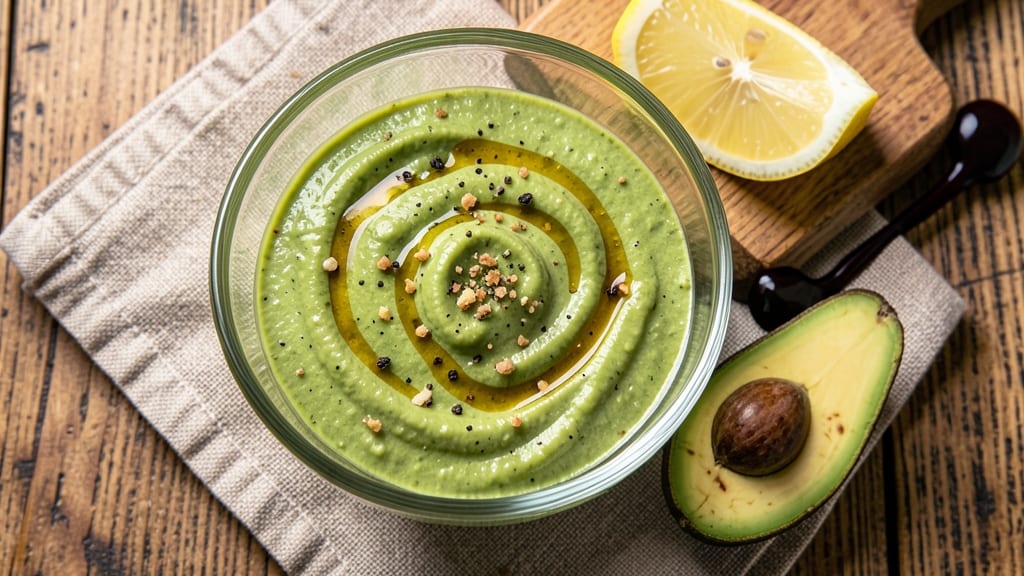
This avocado vinaigrette salad dressing recipe transforms simple ingredients into a velvety, mayo-free dressing that elevates every salad from ordinary to extraordinary.
The secret lies in blending ripe avocado with acid (lemon juice or vinegar) and a stable emulsifier like Dijon mustard, creating a rich, creamy texture without dairy or mayo.
I developed this recipe after craving a lighter alternative to traditional ranch or creamy dressings—one that’s packed with healthy fats, vibrant color, and a bright, tangy kick.
The beauty of this dressing is its versatility—it works as a base for grain bowls, a drizzle over roasted vegetables, or a dip for crispy fries.
The avocado provides natural creaminess while keeping the dressing vegan-friendly, and the acidity from lemon or vinegar ensures it stays fresh for up to a week in the fridge. Unlike store-bought versions, this recipe delivers a smooth, silky consistency that clings beautifully to greens without weighing them down.
What sets this avocado vinaigrette apart is the foolproof blending technique that prevents separation, even after sitting for hours. By combining avocado, acid, and emulsifier in precise ratios, you’ll achieve a dressing that’s both stable and lusciously creamy—no fancy equipment required.
The result? A dressing so good, you’ll reach for it instead of bottled options, whether you’re prepping meals for the week or dressing up a last-minute lunch.
Pair it with mixed greens, quinoa bowls, or even as a marinade for grilled chicken. The possibilities are endless, and the best part? Every batch tastes fresher than the last. Let’s make this dressing—your salads will never be the same.
Ingredients for avocado vinaigrette salad dressing
Eight ingredients blend into a velvety, vegan-friendly dressing that transforms salads effortlessly.
| Ingredient | Amount | Notes |
|---|---|---|
| Ripe Avocados 🥑 | 2 whole | Pitted, flesh scooped |
| Extra-Virgin Olive Oil 🫒 | ½ cup | High-quality, fruity |
| Lemon Juice 🍋 | ¼ cup | Freshly squeezed |
| Apple Cider Vinegar 🍶 | 1 tbsp | For tangy brightness |
| Dijon Mustard 🌶️ | 1 tbsp | For stable emulsion |
| Garlic Cloves 🧄 | 2 cloves | Minced or finely chopped |
| Sea Salt 🧂 | ½ tsp | Fine grain preferred |
| Black Pepper 🌶️ | ¼ tsp | Freshly ground |
| Fresh Cilantro 🌿 | ¼ cup | Stems removed, chopped |
| Water 💧 | 2 tbsp | Adjust for thickness |
Avocados are the heart of this dressing—choose ripe but firm ones that yield easily when pressed. Trader Joe's and Whole Foods carry consistently ripe avocados, but check your local market for the best quality. The extra-virgin olive oil should be fruity and peppery—California brands like Corto or Lucini are reliable choices. Fresh lemon juice is non-negotiable; bottled versions lack brightness. For maximum flavor, zest a strip of lemon peel into the dressing after blending. The Dijon mustard acts as the emulsifier, so Maille or whole-grain varieties work best for texture.
No ripe avocados? Substitute 1/4 cup mashed banana for creaminess, though flavor will differ slightly. Short on lemon juice? Apple cider vinegar works at double the amount, but the dressing will taste more tart. Fresh garlic can be swapped for 1/2 tsp garlic powder in a pinch, though texture will vary. The cilantro adds freshness—omit if you dislike it or use parsley instead. For a thicker dressing, reduce the water; for a thinner one, add more gradually. This recipe is naturally vegan, but always double-check labels on vinegar and mustard for hidden additives.
Store the dressing in an airtight container with a thin layer of olive oil on top to prevent browning. Keeps fresh for 5-7 days in the fridge, though flavor peaks within the first 3 days. For longer storage, freeze in ice cube trays—thaw and whisk to restore consistency. This dressing thickens when chilled, so whisk vigorously before each use. Portion into small containers for meal prep; it pairs perfectly with grain bowls, roasted vegetables, or as a dip for crispy fries.
Why You'll Love This Recipe
- Here’s what sold me: this dressing actually keeps for days. The avocado’s healthy fats slow oxidation, so it doesn’t turn brown or go rancid like other creamy dressings. I’ll make a big batch on Sunday, store it in a sealed jar, and still have flavorful leftovers by Friday. Plus, it’s cheaper than buying pre-made—just one avocado stretches it further than you’d think.
- No Blender Needed: I’ll admit, I was skeptical at first—how could mashed avocado replace a creamy dressing? Then I realized: you don’t even need a food processor. A fork, a bowl, and 60 seconds of mashing is all it takes. That rich, velvety texture comes from the avocado’s natural oils, and honestly? It’s foolproof.
- Tangy, Creamy Magic: Between us, this dressing is ridiculously good. The avocado gives it that luscious body, while the apple cider vinegar cuts through with a bright, almost sweet tang. Dijon mustard adds a little kick, so it’s never boring—just balanced. Drizzle it over greens, toss it with roasted veggies, and you’ll understand why I keep a jar in my fridge.
- Weeknight Workhorse: I make this at least twice a week because it does it all. Need a quick lunch? Toss it with store-bought greens and canned chickpeas—done. Hosting a dinner party? It elevates grilled shrimp or even a charcuterie board. And if I forget to eat it all? No problem.
Step-by-step instructions for avocado vinaigrette salad dressing
This creamy, vibrant dressing delivers rich texture without mayo—just fresh avocado and bright citrus.
Prepare the Avocado Base
Cut the 2 whole ripe avocados in half, remove the pits, and scoop the flesh into a food processor or high-powered blender. The avocados should be completely ripe with no brown spots—press gently where the stem was to check for softness. This ensures a silky, not grainy, texture in your dressing.
Add the 2 cloves minced garlic and 0.5 tsp sea salt to the avocado. Pulse briefly just to combine these ingredients—you don’t want to fully purée yet. The garlic should be finely minced but not pasty. This step builds flavor while preserving the avocado’s natural creaminess.
Blend the Wet Ingredients
With the food processor running on low speed, slowly drizzle in the 0.5 cup extra-virgin olive oil. This gradual addition prevents the oil from splattering and helps create a stable emulsion. After the oil is fully incorporated, add the 0.25 cup lemon juice and 1 tbsp apple cider vinegar.
Blend until completely smooth, scraping down the sides of the bowl as needed. The mixture should look like thick, vibrant green pudding. If it’s too thick, add 1 tbsp water at a time until it reaches a pourable consistency—you want it to coat the back of a spoon without being watery.
Incorporate the Mustard and Seasonings
Transfer the avocado mixture to a mixing bowl and stir in the 1 tbsp Dijon mustard. The mustard acts as an emulsifier, helping the dressing hold its creamy texture. Add the 0.25 tsp black pepper and 0.25 cup chopped fresh cilantro, mixing gently to combine. The cilantro adds freshness and a pop of color, but don’t overmix or it will turn the dressing muddy.
Taste and adjust the seasoning—you may need a pinch more salt or lemon juice to balance the flavors. The dressing should taste tangy, slightly garlicky, and rich, with a bright finish from the cilantro. If it’s too thick after chilling, thin it with the remaining 1 tbsp water as needed.
Chill and Serve
Cover the dressing and refrigerate for at least 30 minutes before serving. Chilling allows the flavors to meld and the texture to thicken slightly, making it perfect for drizzling. The dressing will keep in the fridge for up to 3 days, though I recommend using it within 2 days for the freshest taste.
When ready to use, give it a quick stir to redistribute any separated oil. Drizzle over mixed greens, grain bowls, or grilled proteins for a creamy, vibrant finish. The avocado’s richness pairs beautifully with the bright acidity, creating a dressing that’s both elegant and approachable.
Pro Tips For Making Avocado Vinaigrette Salad Dressing
- MASH THE AVOCADO FIRST: The second I tried blending avocado into the dressing instead of mashing it first, I realized how much smoother the texture becomes. Use a fork to crush the avocado into a paste—no chunks—before adding any liquids. This prevents that awkward, grainy texture that ruins the whole vibe.
- USE COLD AVOCADO: I learned this the hard way—warm avocado turns the dressing into a greasy mess. Keep your avocados refrigerated until right before using, then scoop out the flesh and let it sit in the fridge for 10 minutes while you prep everything else. Cold avocado emulsifies better and stays stable longer.
- SALT THE MUSTARD: Skip the salt in the recipe? Big mistake. Whisk the Dijon mustard with a pinch of salt (about ¼ teaspoon) before adding any liquids—it helps the mustard blend smoothly and cuts through the richness of the avocado. Trust me, the dressing will taste more balanced.
- EMULSIFY IN BATCHES: Pouring all the olive oil in at once and hoping for the best? That’s how you end up with a broken dressing. Instead, start with 2 tablespoons of oil, blend until smooth, then add another 2 tablespoons at a time while pulsing the blender. This keeps the avocado from separating and gives you that silky, cohesive texture.
Regional styles of this dish
Southern U.S. Twist
In the South, this dressing gets a smoky, spicy upgrade by adding ½ tsp smoked paprika and ¼ tsp cayenne pepper to the base blend. I like using Texas Pete hot sauce instead of apple cider vinegar for a deeper, tangier kick that reminds me of classic Southern BBQ flavors.
Serve it over collard greens or as a dip for fried okra—trust me, it’s a game-changer for summer potlucks. 🌶️
Mexican-Inspired Lime Version
Swap the lemon juice for ¼ cup fresh lime juice and fold in 2 tbsp chopped cilantro plus 1 tbsp chopped jalapeño (seeds removed for mild heat). This zesty variation works perfectly on tacos, burrito bowls, or grilled shrimp.
For extra authenticity, add ½ tsp ground cumin to the blending stage—it deepens the earthy notes beautifully. 🌮
California-Inspired Avocado Ranch
This West Coast take replaces Dijon mustard with 1 tbsp whole-grain mustard and adds 1 tbsp chopped dill plus ½ tsp onion powder. The result is a lighter, herbaceous dressing that pairs wonderfully with roasted asparagus or grain salads.
I often use avocado oil instead of olive oil for a more neutral flavor profile that lets the herbs shine. 🌿
Mediterranean Herb Blend
For a Mediterranean flair, blend in 1 tbsp chopped fresh oregano and 1 tbsp chopped parsley after the initial mix. Add 1 tsp dried oregano if fresh isn’t available, but fresh herbs always elevate the flavor.
Use this version with grilled vegetables, lentil salads, or as a marinade for lamb chops. The herby notes complement the creamy avocado perfectly. 🌿
Spicy Asian Fusion
Transform this dressing into an Asian-inspired version by replacing apple cider vinegar with 1 tbsp rice vinegar and adding 1 tsp grated fresh ginger and 1 tsp sesame oil. Finish with 1 tsp toasted sesame seeds for crunch.
This works amazingly on summer rolls, noodle salads, or as a dip for spring rolls. The ginger adds a bright, zesty kick that balances the creaminess. ✨
Classic French-Inspired Tarragon
For a French bistro touch, replace cilantro with 1 tbsp chopped fresh tarragon and add ½ tsp white wine vinegar instead of apple cider. This elegant version pairs beautifully with goat cheese salads or roasted chicken. The tarragon’s anise-like flavor adds sophistication without overpowering the avocado’s natural taste. 🍷
Nutrition facts
Frequently asked questions
Why does my avocado dressing separate after making it?
The most common cause is insufficient emulsifier. The Dijon mustard in this recipe is key—it binds the oil and avocado. If you skipped it or used too little, the dressing will split. For a quick fix, whisk vigorously to re-emulsify, or add 1 tsp mustard and blend again. Always add oil slowly while blending to prevent separation from the start.
Can I make this dressing without a food processor?
Use a high-powered blender or even a hand mixer for best results. If you're blending by hand, start with just the avocado, garlic, and salt, then mix in the oil 1 tablespoon at a time while constantly stirring. The mustard and lemon juice can be whisked in last. The texture may be slightly less silky but still delicious.
How do I prevent my avocado dressing from turning brown?
Avocado oxidizes quickly when exposed to air. After making the dressing, press a layer of olive oil on top to create a barrier. Store it in an airtight container and refrigerate immediately. For extra protection, add ½ teaspoon lemon juice to the oil layer—this helps preserve color. Use within 3 days for best results.
What can I substitute if I don't have fresh avocados?
For a similar creamy texture, try ¼ cup mashed banana or ¼ cup Greek yogurt (for non-vegan versions). If you need a neutral fat substitute, blend ¼ cup tahini with 1 tablespoon water first to mimic the avocado's richness. The flavor will differ slightly, but it works in a pinch. Always adjust acidity (lemon/vinegar) to balance.
Can I use this dressing on hot foods like tacos or grilled chicken?
Yes! This dressing holds up well to heat, but it may thin out slightly when drizzled over warm foods. For best results, store any leftovers in the fridge and let them cool before using. If the dressing gets too thin after heating, chill it for 10 minutes and stir vigorously to restore thickness. It works beautifully on tacos, grain bowls, and grilled proteins.