
Side Dishes
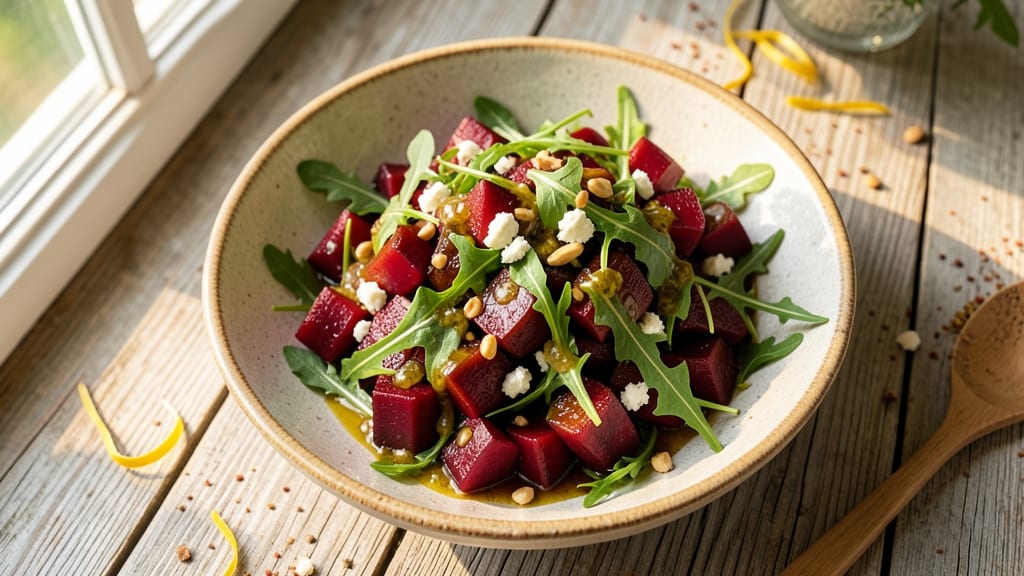
This beetroot salad recipe with vinegar transforms humble ingredients into a vibrant, tangy-sweet masterpiece that steals every meal. The secret lies in roasting beets until tender yet firm, then tossing them with a bright apple cider vinegar dressing that cuts through their natural earthiness.
I developed this recipe after realizing store-bought beet salads lacked that perfect balance of texture and flavor—crispy nuts, creamy avocado, and peppery greens create harmony in every bite.
The vinegar-based dressing is where the magic happens: a simple blend of apple cider vinegar, Dijon mustard, olive oil, and maple syrup creates a tangy-sweet contrast that elevates the beets. Roasting them first intensifies their natural sweetness while keeping them firm enough to hold their shape.
For added texture, toasted walnuts or pecans provide crunch, while fresh arugula or spinach adds peppery freshness that cuts through the richness.
What makes this salad truly special is its versatility—it works as a standalone vegan dish or pairs beautifully with grilled proteins, making it perfect for weeknight dinners or elegant gatherings. The dressing clings perfectly to the beets and greens, creating a cohesive bite with every forkful.
Plus, it comes together in just 20 minutes, making it ideal for busy weeknights when you still want something impressive.
For an extra touch of indulgence, consider adding avocado slices or a sprinkle of crumbled goat cheese (if not keeping it strictly vegan). The key is balancing all the elements—sweet, tangy, creamy, and crunchy—so each bite is perfectly satisfying.
Let's create this vibrant, flavor-packed salad that's as beautiful as it is delicious.
Ingredients for beetroot salad recipe with vinegar
Earthy beets meet tangy dressing—just 12 ingredients for vibrant flavor and satisfying crunch.
| Ingredient | Amount | Notes |
|---|---|---|
| Medium Beetroots 🍠 | 2 whole | Organic preferred, peeled and cubed |
| Extra-Virgin Olive Oil 🫒 | ¼ cup | For roasting and dressing |
| Apple Cider Vinegar 🍎 | ⅛ cup | Raw, unfiltered preferred |
| Dijon Mustard 🌶️ | 1 tbsp | High-quality, no additives |
| Pure Maple Syrup 🍁 | 2 tbsp | Grade A for best flavor |
| Fresh Arugula 🌿 | 4 cups | Baby leaves preferred |
| Walnuts 🥜 | ½ cup | Toasted, roughly chopped |
| Avocado 🥑 | 1 whole | Ripe, sliced for creaminess |
| Sea Salt 🧂 | 1 tsp | Diamond Crystal preferred |
| Freshly Ground Black Pepper 🌶️ | ½ tsp | For finishing |
| Lemon Juice 🍋 | 1 tbsp | Freshly squeezed |
| Nutritional Yeast 🍞 | 1 tbsp | For optional cheesy flavor |
The beets are the foundation, so organic is best—they're sweeter and more vibrant. Whole Foods or local farmers markets have the best selection. Look for firm, heavy beets with smooth skins. If you can't find organic, conventional works fine. The walnuts should be toasted—toss them in a dry pan for 3-4 minutes until fragrant. For the avocado, ripe but firm is key—it should yield slightly to gentle pressure. The arugula should be bright green, not wilted; Trader Joe's has great pre-washed baby leaves that work perfectly.
No apple cider vinegar? White wine vinegar or balsamic works in a pinch, but the flavor will differ slightly. Short on Dijon? Whole-grain mustard at half the amount gives similar texture. Maple syrup unavailable? Agave nectar is a 1:1 swap. The dressing can be made ahead—store it in a jar for up to 1 week. For extra crunch, swap walnuts for pecans or toasted sunflower seeds. If you want more protein, add chickpeas or edamame—just rinse them first to remove any bitterness.
Roasted beets keep 5 days in the fridge, wrapped tightly in foil. The dressing stays fresh for 1 week if stored separately. For best texture, assemble the salad just before serving—arugula wilts fast, and avocado oxidizes. If prepping ahead, store components separately and toss together when ready. The walnuts can be toasted and stored in an airtight container for 2 weeks. This salad reheats poorly, so enjoy it fresh or at room temperature.
Why You'll Love This Recipe
- No Roasting Required: I swear by this shortcut—just boil the beets until tender, then slice while still warm. The skins peel off like magic, and you skip the mess of charred edges or oven cleanup.
- Tangy-Sweet Magic: That apple cider vinegar and maple syrup combo? It’s the secret. The vinegar cuts through the earthiness while the syrup adds just enough depth—like a grown-up vinaigrette that actually makes you reach for seconds.
- Lunchbox Hero: Between us, this salad holds up better than store-bought. Pack it in jars for work or school—layers of beets, greens, and dressing stay crisp for days. My kids (and my husband) fight over who gets the last bite.
- Budget Brightness: Beets are dirt cheap, and this recipe uses pantry staples. A single bag of beets and a bottle of vinegar stretch for weeks. Honestly, it’s the kind of dish that makes grocery shopping feel like a win.
Step-by-step instructions for roasted beetroot salad with vinegar dressing
Transform humble beetroots into a vibrant salad with perfect caramelized edges and bright acidity.
Roast the Beetroots Until Tender and Caramelized
Preheat your oven to 400°F and line a baking sheet with parchment paper. Toss the 2 whole medium beetroots (peeled and cubed) with 2 tablespoons of the extra-virgin olive oil until evenly coated. Spread them in a single layer, leaving space between each cube for even cooking.
Roast for 30-35 minutes until the beetroots are fork-tender and develop a deep caramelized crust. You'll know they're done when they yield slightly to pressure and have those beautiful brown spots on the edges. The aroma will be sweet and earthy—this is your signal to remove them from the oven. Let them cool completely before handling, about 15 minutes, as they'll be very hot.
Toast the Walnuts for Nutty Depth
While the beetroots roast, place the ½ cup walnuts in a dry skillet over medium heat. Toast them for 3-4 minutes, stirring constantly, until they release their aroma and turn a rich golden brown. Watch carefully—they'll darken quickly, and you want them just toasted, not burned.
Remove the walnuts from the heat and immediately transfer them to a bowl. Sprinkle with ¼ teaspoon of the sea salt while still warm. Let them cool for 5 minutes before adding to the salad—this prevents them from releasing too much oil and becoming greasy.
Whisk Together the Vinegar Dressing
In a small bowl, combine the ¼ cup apple cider vinegar, 1 tablespoon Dijon mustard, 2 tablespoons pure maple syrup, 1 tablespoon lemon juice, 1 tablespoon nutritional yeast, ½ teaspoon freshly ground black pepper, and the remaining 2 tablespoons extra-virgin olive oil. Whisk vigorously until fully emulsified and smooth.
The dressing should have a glossy sheen and a balanced sweet-tangy flavor. Taste and adjust the seasoning—add more vinegar if it's too sweet, or more maple syrup if it's too sharp. This dressing is the heart of the salad, so don't rush this step. The acidity cuts through the richness of the roasted beetroots and avocado, creating perfect harmony.
Assemble the Salad with Fresh Components
In a large bowl, gently combine the 4 cups fresh arugula, cooled roasted beetroots, toasted walnuts, and sliced whole avocado. The arugula should be massaged lightly with your hands to wilt it slightly and help the dressing cling to each ingredient.
Drizzle the vinegar dressing over the salad and toss gently to coat everything evenly. The arugula will brighten the earthy beetroots, while the avocado adds creamy richness. The walnuts provide a satisfying crunch that contrasts beautifully with the tender beetroots. Taste and adjust the seasoning with additional sea salt or black pepper if needed.
Serve Immediately for Maximum Freshness
Divide the salad among 4 plates, garnishing each serving with a final sprinkle of sea salt and a few extra walnut pieces. The salad is best served immediately while the avocado is still firm and the dressing is vibrant. If making ahead, store the roasted beetroots and dressing separately, then assemble just before serving to maintain crispness.
Each bite should deliver a perfect balance of earthy sweetness from the beetroots, creamy avocado, peppery arugula, and the bright tang of the vinegar dressing. The walnuts add a satisfying crunch that elevates the dish from simple to extraordinary. This salad is a celebration of fresh, seasonal ingredients coming together in perfect harmony.
Pro Tips For Making Beetroot Salad Recipe With Vinegar
- Boil Beets Until Fork-Tender: I learned this the hard way—medium beets need a solid 45-50 minutes in boiling water, not just "until soft." Cut them into even 1-inch cubes first; smaller pieces cook faster, but test one—if it slides off the knife like butter, you’re good. (Yes, even if you’re impatient like me.)
- Peel While Warm: Skip the cold peeling struggle. Run the boiled beets under cold water for 2 minutes first, then peel—the skins slide off effortlessly. No need to scrub like you’re washing a potato; just scrape with a spoon. (Your hands will thank you.)
- Balance Vinegar and Sweetness: Start with 1 tablespoon apple cider vinegar and 1 teaspoon maple syrup, then taste. The dressing should taste bold enough to stand alone—if it’s weak, add another teaspoon of vinegar first, then adjust sweetness. (Dijon mustard’s tang sneaks up on you.)
- Chill Before Serving: This isn’t just about temperature—it’s about flavor. Let the salad sit uncovered in the fridge for at least 30 minutes. The beets absorb the dressing better, and the vinegar’s sharpness mellows into something rich. (I know, I know—you want it now, but trust the process.)
Essential equipment for perfect results
Roasting Pan Essentials
Your roasting pan is the MVP for this salad—opt for a rimmed baking sheet with parchment paper to prevent sticking. I love the OXO Good Grips line for its sturdy construction and even heat distribution.
For extra caramelization, use a half-sheet pan (18x13 inches) to give beet cubes space. Avoid dark pans—they can over-brown beets too quickly. 🔥
Dressing Whisk Attachment
A handheld electric mixer with a whisk attachment (like the KitchenAid KHM1216ER) saves time and effort when emulsifying the vinegar dressing. Whisk vigorously for 30-45 seconds until the dressing thickens slightly.
For a budget option, a Ball Mason jar with a tight lid works perfectly—just shake until smooth. The key is achieving that glossy sheen that clings beautifully to the greens. ✨
Nut Toasting Tools
Toast walnuts in a nonstick skillet (I use Calphalon) to prevent burning. A lightweight spatula helps stir constantly for even toasting. For hands-off toasting, try a toaster oven at 350°F for 4-5 minutes—set a timer to avoid overcooking.
Keep a small bowl nearby to transfer toasted nuts immediately to cool and prevent oil release. 🥜
Storage Containers
Use glass airtight containers (like Le Parfait) to store roasted beets and dressing separately. For assembly, a wide-mouth mason jar works well for layering ingredients. If prepping ahead, store avocado separately in a resealable bag with a paper towel to prevent browning.
The dressing keeps for 1 week in a small jar with a tight lid. ❄️
Salad Serving Essentials
Serve on wooden salad boards or ceramic plates to highlight the vibrant colors. A small salad spinner (like OXO Good Grips) ensures arugula stays crisp before tossing.
For garnishing, keep tweezers handy to place walnut pieces precisely. A drizzling spoon (like Saladmaster) helps distribute dressing evenly without over-saturating the greens. 🍽️
Nutrition facts
Frequently asked questions
Can I use pickled beets instead of roasted?
Pickled beets add a tangy brightness that pairs beautifully with the vinegar dressing. Use 1 cup chopped pickled beets (drained and patted dry) in place of roasted ones. The acidity will intensify the salad's zing, so you might reduce the vinegar in the dressing by 1 teaspoon to balance flavors.
How do I make this salad vegan?
This recipe is already vegan-friendly, but you can enhance it further by omitting the nutritional yeast or replacing it with 1 tablespoon tahini for extra creaminess. For added protein, toss in ½ cup cooked chickpeas or ¼ cup crumbled tofu—both work beautifully with the dressing.
What's the best way to store leftovers?
Store the roasted beets and dressing separately in airtight containers for up to 5 days. Keep avocado and walnuts separate until ready to serve to maintain texture. Reassemble the salad just before eating—dressing works best fresh, and avocado oxidizes quickly. For extra freshness, store arugula in a damp paper towel-lined container.
Can I substitute another vinegar?
Yes! While apple cider vinegar creates the best balance, you can use white wine vinegar (more delicate) or balsamic vinegar (richer, sweeter) in equal amounts. For a sharper kick, try rice vinegar—just reduce the maple syrup by 1 teaspoon to compensate for the increased acidity.
Why did my dressing separate?
Dressing separates when oil and vinegar aren't properly emulsified. Whisk more vigorously or use a blender for 10 seconds to combine. For extra stability, add ½ teaspoon Dijon mustard or 1 teaspoon honey to the dressing. Always shake before using—this helps redistribute the ingredients.