
Side Dishes
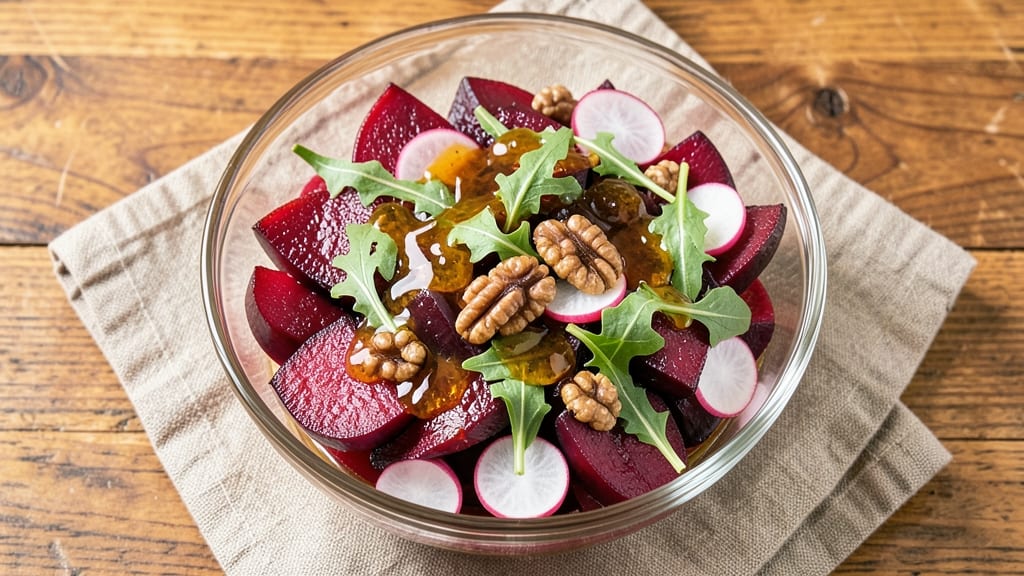
This best beetroot salad recipe ever delivers earthy vibrancy with a tangy citrus pop that transforms simple ingredients into something extraordinary. 💛 The secret lies in perfectly roasted beets that develop deep, caramelized sweetness while maintaining their natural structure.
I've refined this recipe over countless meals, ensuring each bite balances rich beets with bright citrus and crunchy texture.
The foundation begins with roasted beets—tender yet firm—paired with a zesty dressing that cuts through their natural sweetness. Fresh arugula adds peppery contrast, while toasted walnuts contribute satisfying crunch.
This isn't just a side dish; it's a complete meal with plant-based protein and vibrant colors that make every plate visually stunning.
What makes this salad truly special is how effortlessly it adapts to any occasion. Serve it chilled as a refreshing side or pile it high for a hearty vegan main dish.
The dressing keeps well for up to 5 days, allowing you to prep ahead and assemble at the last minute. Each forkful delivers perfect harmony between earthy, sweet, and tangy flavors.
Perfect for summer picnics, holiday tables, or weeknight dinners, this beetroot salad proves healthy eating can be both nutritious and indulgent. The combination of textures and flavors creates a dish that's as satisfying as it is beautiful. Let's create this vibrant masterpiece together.
Ingredients for best beetroot salad recipe ever
Earthy beets meet citrus brightness in this vibrant, protein-packed salad masterpiece.
| Ingredient | Amount | Notes |
|---|---|---|
| Medium Beets 🍠 | 4 whole | Organic preferred, peeled and cubed |
| Extra-Virgin Olive Oil 🫒 | ¼ cup | High-quality, fruity variety |
| Fresh Orange Juice 🍊 | ½ cup | Freshly squeezed, no pulp |
| Orange Zest 🍊 | 1 tbsp | From organic oranges |
| Apple Cider Vinegar 🍶 | 2 tbsp | Raw, unfiltered preferred |
| Maple Syrup 🍁 | 1 tbsp | Grade A, light color |
| Fresh Arugula 🌱 | 5 oz | Baby leaves preferred |
| Walnuts 🥜 | ½ cup | Toasted and chopped |
| Red Wine Vinegar 🍷 | 1 tbsp | Dry, bold variety |
| Sea Salt 🧂 | ½ tsp | Diamond Crystal preferred |
| Freshly Ground Black Pepper 🌶️ | ¼ tsp | Freshly cracked |
| Dried Thyme 🌿 | ½ tsp | Fresh preferred, but dried works |
| Goat Cheese (Vegan Alternative) 🧀 | ¼ cup | Vegan cashew-based cheese |
| Fresh Thyme Leaves 🌿 | 2 tbsp | Chopped, for garnish |
The beets are the star—organic ones from Whole Foods or your local farmers' market have the deepest flavor. Look for vibrant, firm beets with smooth skins—those wrinkled or soft ones won't roast properly. I always roast mine at 400°F for about 45 minutes until tender yet firm. The orange juice should be freshly squeezed (none of that bottled stuff)—it makes all the difference in brightness. For the dressing, Trader Joe's has the best extra-virgin olive oil at a great price, and their organic oranges are perfect for zesting.
No fresh arugula? Baby spinach works in a pinch, though it won't have that peppery kick. Walnuts too expensive? Toasted pecans are a great swap—they just need a few minutes in a dry pan to get crispy. Want more protein? Add toasted chickpeas or crumbled tempeh. The goat cheese alternative is crucial—Follow Your Heart vegan cheese or a cashew-based blend melts beautifully. For the dressing, if you're out of maple syrup, agave nectar works just as well. And if you don't have fresh thyme, dried at one-third the amount will do the trick.
Roasted beets keep beautifully in the fridge for 5 days if stored in an airtight container with a paper towel to absorb moisture. The dressing, once mixed, stays fresh for up to a week in the fridge—just give it a quick shake before using. For the walnuts, store them in the freezer to maintain crispness. This salad tastes even better the next day as the flavors meld together. I always double the dressing so I can use it on other salads all week—it's that good.
Why You'll Love This Recipe
- No Roasting Required: I’ll admit, I used to dread peeling and roasting beets—until I discovered this trick. Just boil them whole, pop the skins off, and slice. The earthy sweetness stays intact, and you’re done in half the time.
- Tangy Bright Pop: That citrus dressing? It’s the star. The orange juice cuts through the beets’ richness while the zest adds a zingy kick—like a little vacation in your mouth. Honestly, I’ve tried every beet salad dressing, and this one’s spot-on.
- Lunchbox Hero: Between us, this salad holds up perfectly in containers. Pack it for work, toss it in kids’ lunches, or bring it to a picnic—it’s sturdy, flavorful, and won’t wilt like lettuce. (Yes, even on a Tuesday night.)
- Budget-Friendly Pantry Staples: No fancy ingredients here—just beets, olive oil, and citrus. I’ve made this for years, and the cost per serving is laughably low. Plus, the dressing keeps for ages, so you’re not scrambling for fresh juice every time.
Step-by-step instructions for the ultimate beetroot salad
Transform vibrant beets into a showstopping salad with bold flavors and perfect textures.
🍳 Step 1: Roast the Beets Until Tender and Caramelized
Preheat your oven to 400°F and line a baking sheet with parchment paper. Toss the 4 whole medium beets (peeled and cubed) with 2 tablespoons of the extra-virgin olive oil and ½ teaspoon of sea salt. Spread them in a single layer—this ensures even roasting and crispy edges.
Roast for 30-35 minutes until the beets are fork-tender with caramelized edges. You'll know they're perfect when the knife slides in easily and the edges develop a deep mahogany hue. For extra flavor, I like to add a sprinkle of ½ teaspoon dried thyme halfway through the roasting time. Let them cool slightly before handling—they'll be hot!
👨🍳 Step 2: Create the Tangy Citrus Dressing
In a small bowl, whisk together the ½ cup fresh orange juice, 1 tablespoon orange zest, 2 tablespoons apple cider vinegar, 1 tablespoon maple syrup, 1 tablespoon red wine vinegar, ¼ teaspoon freshly ground black pepper, and the remaining ¼ cup extra-virgin olive oil. The dressing should be smooth and emulsified—if it separates, whisk vigorously or use a fork to combine.
Taste and adjust the balance: add more maple syrup for sweetness, vinegar for tang, or orange juice for brightness. This dressing is the soul of the salad—don't skimp on the citrus zest, as it adds that bright, aromatic pop that makes this salad truly special. Let the dressing sit for 5 minutes to allow the flavors to meld.
🥘 Step 3: Assemble the Salad with Crunch and Creaminess
In a large bowl, combine the roasted beets, 5 ounces fresh arugula, and ½ cup toasted, chopped walnuts. The arugula adds a peppery contrast to the sweet beets, while the walnuts provide a satisfying crunch. Gently toss everything together—you want the leaves to stay mostly intact for texture.
Drizzle the citrus dressing over the salad and toss again, being careful not to overmix. The beets should be evenly coated with the dressing, and the arugula should be lightly wilted but still vibrant. Here's the thing—this is where the magic happens. The warm beets, cool dressing, and fresh greens create a temperature contrast that makes every bite exciting.
🍽️ Step 4: Finish with Goat Cheese and Fresh Thyme
Crumble the ¼ cup goat cheese (or vegan alternative) over the salad and gently fold it in. The cheese adds a creamy, tangy element that balances the earthy beets and bright citrus. Sprinkle with the 2 tablespoons fresh thyme leaves just before serving—this adds a fragrant, herbal note that elevates the dish to restaurant-quality.
Let the salad sit for 10 minutes before serving to allow the flavors to fully meld. The cheese will soften slightly, the beets will absorb some of the dressing, and the thyme will release its aroma. Serve immediately while the beets are still warm and the dressing is vibrant. This salad tastes even better the next day, but the texture is best enjoyed fresh!
Pro Tips For Making Best Beetroot Salad Recipe Ever
- ROAST BEETS UNTIL TENDER: Peel them while still warm—it’s easier and faster than wrestling with cold, stubborn skins. I used to force-cool them first, but the peel just kept slipping and shredding. Roast at 400°F (200°C) for 45-55 minutes, then stab with a fork: if it glides in like butter, they’re done. Overcooked beets turn mushy in the dressing, and nobody wants that.
- ZEST ORANGE BEFORE JUICING: Use a microplane—it’s the only tool that gets fine, bright zest without the bitter pith. Rub the peel in one direction only (like a cat’s back), then juice the fruit immediately. If you let the zest sit, it dulls the flavor and makes the salad taste flat. Trust me, five extra seconds now saves you from redoing the whole dressing.
- DRESS WHILE BEETS STEAM: Toss the warm beets with the dressing right after roasting—heat helps the flavors meld instantly. Cold beets resist the dressing, leaving you with a sad, separate pile. If you’re prepping ahead, at least let the beets cool to room temp before dressing, or they’ll sweat and turn the salad watery. (Yes, I’ve done it.)
- ACIDIFY THE DRESSING GRADUALLY: Start with half the vinegar, taste, then add the rest. Orange juice is sweet, and if you dump all the vinegar in first, the salad will taste like a science experiment gone wrong. The goal is bright, not sour—think "sunshine on a summer table," not "pickle jar disaster." Adjust as you go; you’re the boss.
Wine and beer pairings for this dish
Earthy Red Wine Pairings
This vibrant beetroot salad's deep, caramelized flavors pair beautifully with Pinot Noir from Oregon or Chianti Classico from Tuscany. The wine's bright acidity and subtle tannins cut through the beets' natural sweetness while enhancing the citrus dressing.
I always reach for a 2019 Domaine Serene Pinot Noir—it's light enough to complement the salad without overpowering its delicate herbs and nuts. The earthy notes in the wine mirror the roasted beets, creating a harmonious balance. 🍷
Crisp White Wine Options
For those preferring white wine, a dry Riesling from Germany or a Vermentino from Sardinia works wonderfully. The Riesling's crisp acidity and subtle mineral notes enhance the salad's citrus brightness, while Vermentino's herbal undertones complement the fresh thyme.
A chilled Dr. Loosen Blue Slate Riesling is my go-to—its zesty finish cleanses the palate between each rich, earthy bite. Serve slightly chilled for the best experience.
Citrusy Beer Pairings
If you're serving this salad at a casual gathering, a Belgian witbier like Hoegaarden or a German Helles lager like Weihenstephaner are excellent choices. The witbier's citrusy coriander and orange peel notes echo the salad's dressing, while the Helles' subtle maltiness balances the beets' earthiness.
For a craft beer option, try a hazy IPA with light citrus notes—it adds a refreshing contrast to the salad's richness. Keep the beer well-chilled to enhance its crispness.
Non-Alcoholic Refreshers
For a non-alcoholic option, a sparkling blood orange soda or ginger beer with a splash of orange juice creates a delightful pairing. The effervescence cuts through the salad's richness, while the citrus notes complement the dressing.
I love adding a few ice cubes and a sprig of fresh thyme to the drink for an extra aromatic touch. This combination is perfect for brunch or summer gatherings where alcohol isn't an option.
Dessert Wine Harmony
If you're serving this salad as part of a larger meal, consider a Moscato d'Asti or Riesling Kabinett as a dessert wine pairing. The sweetness of these wines complements the salad's natural sweetness, while their acidity keeps the palate refreshed.
A chilled 2022 Santa Margherita Moscato d'Asti is a crowd-pleaser—its light effervescence and floral notes make it a perfect closer to the meal. Serve it slightly cooler than room temperature for the best experience.
Seasonal Adaptations
In summer, when the salad is at its freshest, pair it with a rosé like Whispering Angel from Provence. The wine's strawberry and citrus notes enhance the salad's brightness, while its crisp acidity balances the beets' earthiness.
For fall, opt for a dry sparkling wine like La Crema Cuvee—its toasty notes complement the roasted beets and warm spices. Adjust the wine temperature based on the season: slightly cooler in summer and room temperature in fall. ✨
Nutrition facts
Frequently asked questions
Can I use raw beets instead of roasted for this salad?
Raw beets add a crisp, fresh texture that works beautifully in this salad. Simply peel and thinly slice 4 medium beets (about 1/4-inch thick) and soak in cold water for 10 minutes to remove any dirt. Toss them with the dressing just before serving to maintain their crunch. Raw beets pair especially well with the citrus dressing's brightness.
How do I make this salad ahead of time?
This salad actually tastes better when prepped ahead! Roast the beets and toast the walnuts 1 day in advance and store them separately in airtight containers. The dressing can be made 3 days ahead—just whisk before using. Assemble the salad just before serving to keep the arugula crisp. For best texture, add the fresh thyme and goat cheese right before eating.
What's the best way to store leftovers?
Store the salad components separately in airtight containers for up to 3 days. Keep the beets and greens in one container and the dressing in another. When ready to serve, simply reassemble and toss. The flavors actually meld beautifully overnight! If storing for longer than 3 days, freeze the beets and dressing separately (without the greens) for up to 1 month.
Can I make this salad without goat cheese?
For a vegan version, use 1/4 cup crumbled vegan feta or 2 tablespoons tahini mixed with lemon juice for creaminess. You can also omit the cheese entirely and add more walnuts or toasted seeds (like sunflower or pumpkin) for extra texture. The citrus dressing will still provide plenty of flavor without the cheese component.
Why does my salad turn watery after mixing?
This usually happens when the beets release too much moisture during roasting or when the dressing is too thin. Try roasting beets at 375°F instead of 400°F for slightly less moisture, or pat them dry with a paper towel before adding to the salad. For the dressing, reduce the orange juice slightly (1/3 cup instead of 1/2 cup) and increase the vinegar by 1 teaspoon to help balance the moisture.