
Sauces & Condiments
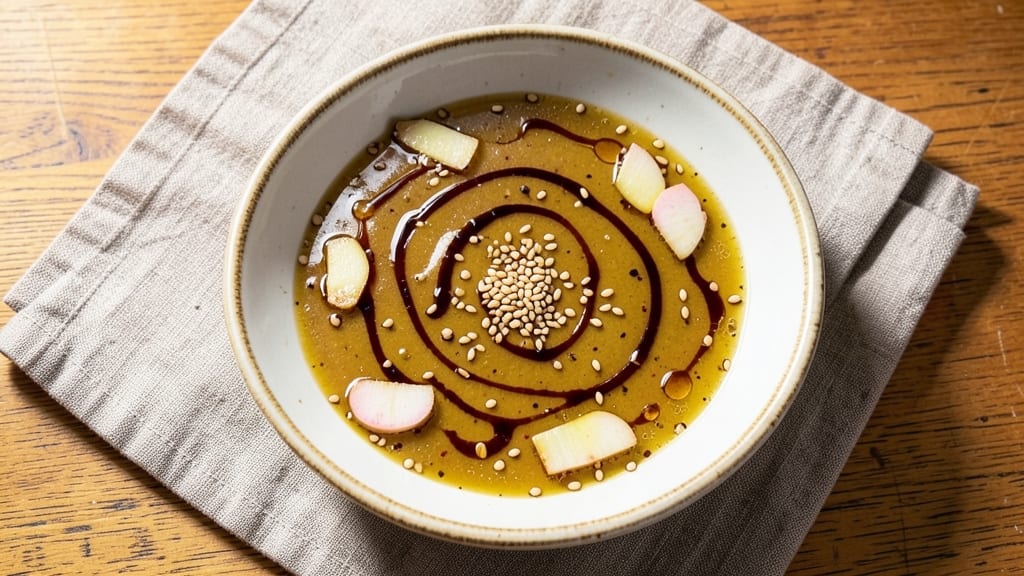
This sesame-ginger dressing transforms simple bok choy salads into vibrant, restaurant-quality dishes with just a few ingredients. The perfect balance of nutty sesame, bright ginger, and umami soy creates a dressing that clings beautifully to crisp greens while enhancing their natural sweetness.
I developed this recipe after realizing store-bought versions never quite captured the depth of flavor bok choy deserves.
The magic lies in the emulsification technique that keeps this dressing smooth and clingy, even after refrigeration. With 5 simple ingredients and 10 minutes of prep time, you'll have a versatile sauce that works equally well on raw bok choy, stir-fried greens, or even as a marinade.
The ginger adds a subtle kick while the sesame provides that satisfying nutty finish that makes every bite memorable.
What makes this dressing truly special is its ability to elevate even the simplest bok choy preparations. The dressing's tangy-sweet profile cuts through the greens' natural bitterness while complementing their delicate crunch.
It's also incredibly adaptable - use it as a dip for fresh vegetables, a marinade for tofu, or a finishing sauce for noodle dishes.
Store leftovers in an airtight container for up to 5 days in the refrigerator, though I find it's best used within 2-3 days when the flavors are at their peak. For an extra boost of freshness, add a splash of lime juice just before serving.
This dressing transforms ordinary bok choy into an extraordinary centerpiece that will have everyone asking for the recipe.
Ingredients for bok choy salad dressing
Five vibrant ingredients create this restaurant-worthy sesame-ginger dressing that transforms bok choy into a standout dish.
| Ingredient | Amount | Notes |
|---|---|---|
| Toasted Sesame Seeds 🥜 | ¼ cup | Lightly toasted for maximum aroma |
| Fresh Ginger Root 🌿 | 2 tbsp | Finely grated, organic preferred |
| Tamari or Soy Sauce 🥢 | 3 tbsp | Tamari for gluten-free option |
| Extra-Virgin Olive Oil 🫒 | ½ cup | High-quality, fruity variety |
| Rice Vinegar 🍶 | 2 tbsp | Seasoned preferred for depth |
| Honey or Maple Syrup 🍯 | 1 ½ tbsp | Maple for vegan option |
| Garlic Cloves 🧄 | 2 cloves | Minced for subtle flavor |
| Sesame Oil 🫒 | 1 tbsp | Toasted sesame oil for aroma |
| Lime Juice 🍋 | 1 tbsp | Freshly squeezed for brightness |
| Diamond Crystal Kosher Salt 🧂 | ½ tsp | Adjust to taste |
The sesame seeds are the flavor foundation—toast them lightly in a dry pan until fragrant (about 2 minutes) before grinding. Whole Foods or Trader Joe's carry premium toasted sesame seeds, but any brand works if labeled 'toasted.' For ginger, organic root is ideal—peel and grate just before using to preserve its bright flavor. The tamari or soy sauce provides the umami backbone, so don't skimp on quality. San-J Tamari is my go-to for its rich depth, though regular soy sauce works in a pinch. The olive oil should be extra-virgin with noticeable fruity notes—California Olive Ranch is a reliable choice.
No sesame seeds? Toasted peanuts or cashews at half the amount add a similar nutty dimension. Fresh ginger too pungent? Substitute 1 tbsp ginger paste or powder, but reduce to 1.5 tbsp to match the heat. The rice vinegar can be swapped for apple cider vinegar or lime juice, though seasoned rice vinegar adds subtle sweetness. For the sweetener, agave nectar works 1:1 with honey. Sesame oil is non-negotiable for aroma—Kadoya brand delivers the best toasted flavor. The lime juice adds brightness, but lemon juice works equally well if limes are out of season.
This dressing emulsifies beautifully and keeps for 5 days in an airtight container in the fridge. For long-term storage, transfer to a sterilized glass jar and freeze for up to 3 months. The texture may separate slightly after refrigeration—simply whisk vigorously before using. For extra cling, add 1 tsp xanthan gum when making a large batch. Always taste before serving, as the salt and sweetness ratios may need adjustment based on your preferred balance.
Why You'll Love This Recipe
- No-Fuss Blend: I swear by this dressing because it’s three ingredients plus a pulse—no straining, no fuss. Just toss the sesame seeds, ginger, and tamari into a jar with olive oil and vinegar, shake like you’re mad at it, and boom. Ready in under five minutes. (Yes, even on a Tuesday night.)
- Umami Bomb: That first bite of bok choy with this dressing? Chef’s kiss. The toasted sesame seeds add a nutty crunch, the fresh ginger cuts through the richness of the olive oil, and the tamari brings this deep, savory punch that sticks with you. It’s the kind of flavor that makes you pause mid-bite.
- Dresses Everything: Honestly, I’ve drizzled this on grilled fish, tossed it with cold soba noodles, and even used it as a marinade for tofu. It’s the quiet hero in my fridge—equally at home in a quick lunch bowl or as the star of a fancy dinner. No overthinking, just versatility.
- Budget Magic: Between us, this dressing costs me pennies per serving. A little olive oil, a knob of ginger, and a splash of vinegar stretch forever. Plus, the leftovers? They keep for weeks in the fridge, so I’m always covered—no last-minute store runs, no wasted ingredients. Smart, simple, and satisfying.
Step-by-step instructions for sesame-ginger dressing
This vibrant dressing delivers a perfect balance of umami, brightness, and aromatic depth to any bok choy salad.
Toast the Sesame Seeds
Heat a dry skillet over medium-low heat. Add the 0.25 cup toasted sesame seeds and toast for 2-3 minutes until they turn a rich golden brown and release their nutty aroma. You'll know they're ready when they begin to pop and smell deeply toasted—this aroma is the foundation of your dressing.
Transfer the toasted seeds immediately to a small bowl and set aside to cool. The residual heat will continue to develop their flavor, but cooling them slightly prevents the dressing from becoming too warm when you combine everything. If you don't toast them, the dressing will lack that essential nutty depth that complements the ginger and garlic so beautifully.
Grate and Mince Aromatics
Using a microplane or fine grater, grate the 2 tbsp fresh ginger root directly into a small mixing bowl. This method ensures you get maximum surface area for flavor extraction. Then, finely mince the 2 cloves garlic using a chef's knife—you want a paste-like consistency rather than visible chunks.
Add the grated ginger and minced garlic to the toasted sesame seeds. Let them sit together for 5 minutes while you prepare the remaining ingredients. This brief infusion allows the garlic's oils to soften slightly and the ginger's sharpness to mellow, creating a more harmonious flavor profile in the final dressing.
Whisk Together Wet Ingredients
In a separate bowl, combine the 0.5 cup extra-virgin olive oil, 3 tbsp tamari or soy sauce, 2 tbsp rice vinegar, 1.5 tbsp honey or maple syrup, 1 tbsp lime juice, and 0.5 tsp diamond crystal kosher salt. Whisk vigorously for 30 seconds until the honey or maple syrup is fully dissolved and the mixture appears homogeneous.
The olive oil should emulsify with the vinegar and tamari, creating a silky base. If you notice any separation, simply whisk more vigorously—this dressing relies on the balance between the acidic vinegar and the rich olive oil. The honey or maple syrup adds just the right amount of sweetness to complement the ginger's sharpness and the tamari's umami depth.
Combine and Emulsify
Add the sesame seed-ginger mixture to the wet ingredients. Pour in the 1 tbsp sesame oil last, then whisk continuously for 1-2 minutes until the dressing thickens slightly and becomes glossy. The sesame oil adds another layer of aroma and helps bind the dressing together, creating a cohesive texture that clings beautifully to bok choy leaves.
Taste and adjust the seasoning if needed. If the dressing tastes too sharp, add a touch more honey or maple syrup. If it needs more depth, a splash of rice vinegar or an extra pinch of salt can balance the flavors. The dressing should be tangy, slightly sweet, and deeply aromatic with notes of toasted sesame and fresh ginger.
Rest and Serve
Let the dressing rest for 10 minutes at room temperature before using. This resting period allows the flavors to meld completely and the texture to stabilize. The sesame seeds will continue to release their aroma, and the ginger's sharpness will soften slightly, creating a more refined taste experience.
Stir well before serving to redistribute any settled sesame seeds. This dressing works beautifully with raw or lightly wilted bok choy, adding a vibrant contrast to the salad's crisp texture. For extra flair, sprinkle additional toasted sesame seeds on top just before serving—this adds both visual appeal and a final burst of nutty flavor with every bite.
Pro Tips For Making Bok Choy Salad Dressing
- GRATE THE GINGER FINE: Fresh ginger loses its punch when it’s chunky—even after blending. Use the smallest holes on a box grater or pulse it in a food processor until it’s almost paste-like. This ensures every drop of zing dissolves into the dressing, not just sits at the bottom of your jar.
- TOAST SEEDS LOW AND SLOW: Sesame seeds burn faster than you’d think. Spread them on a dry pan over low heat, stirring every 30 seconds until they’re golden, not brown. High heat turns them bitter—this is the thing that matters most for that nutty aroma.
- WHISK IN STAGES: Pour in the olive oil first, then the vinegar, then the tamari. Whisking all ingredients at once can create a stubborn emulsion. Start with the oil and vinegar to break them down, then add the tamari and ginger last—this keeps the dressing smooth, not separated.
- USE COLD SESAME OIL: If you’re adding sesame oil (which you should, even if the recipe doesn’t say it), chill it first. Cold oil blends better and doesn’t turn the dressing greasy. Pop the bottle in the freezer for 10 minutes—your future self will notice the difference.
Serving suggestions for this recipe
Salad Base Ideas
Use this dressing with raw bok choy for a crisp, refreshing salad—toss with shredded carrots, edamame, and toasted almonds for texture. I love adding thinly sliced cucumber and radish for a light, refreshing bite that balances the dressing's richness.
For a heartier option, try steamed bok choy with crispy tofu or seared shrimp—the dressing clings beautifully to both. 🥗
Protein Pairings
This dressing elevates grilled chicken or pan-seared salmon perfectly when drizzled on top. I often serve it with teriyaki-glazed tofu for a vegetarian option—just toss the tofu with the dressing before baking.
For a quick lunch, try it with cold soba noodles or rice paper rolls filled with fresh herbs and veggies. The sesame-ginger notes complement all these proteins beautifully.
Garnish Game-Changers
Add crispy fried shallots for a sweet, crunchy contrast that takes the dish to the next level. A sprinkle of toasted sesame seeds right before serving adds visual appeal and extra nutty depth.
For a pop of color, try thinly sliced scallions or microgreens—they brighten the plate while keeping the focus on the dressing. 🌟
Global Adaptations
Transform this into a Vietnamese-style dressing by adding 1 tsp fish sauce and ½ tsp chili flakes—perfect for summer rolls or fresh herbs. For a Korean twist, swap the rice vinegar for 1 tbsp gochujang (Korean chili paste) and add ½ tsp toasted sesame oil.
Both versions keep the dressing's signature balance while introducing exciting new flavors.
Beyond Salads
Use this dressing as a marinade for shrimp skewers or chicken thighs—just coat and marinate for 30 minutes before grilling. It also works as a dipping sauce for spring rolls or vegetable sticks.
For a creative touch, drizzle it over congee or pho just before serving—it adds a bright, aromatic finish that cuts through the richness. 💡
Meal Prep Tips
Make a double batch and store it in a glass jar in the fridge for up to 5 days. The flavors actually improve overnight as the ginger and garlic mellow. When ready to use, shake or whisk vigorously to re-emulsify.
For freezer storage, transfer to a silicone mold—it thaws quickly and maintains its texture perfectly. Just add a splash of water if it thickens upon thawing. ❄️
Nutrition facts
Frequently asked questions
Can I make this dressing without sesame seeds?
For a nut-free version, replace the sesame seeds with 0.25 cup toasted peanuts or cashews (finely ground) or 1 tbsp tahini for a similar nutty depth. The dressing will still have great flavor, though the texture will be slightly thicker. For extra aroma, add ½ tsp toasted sesame oil instead of the seeds.
How do I fix a dressing that's too thick or separated?
If your dressing separates, whisk in 1-2 tsp warm water or ½ tsp rice vinegar to re-emulsify. For thickness, add 1 tsp honey or maple syrup to balance the flavors. Store-bought dressings often separate when refrigerated—this is normal! Just whisk vigorously before using to restore its silky texture.
Is this dressing vegan-friendly?
Yes! Simply swap the honey for maple syrup or agave nectar and ensure your tamari is gluten-free if needed. The original recipe is already plant-based, with no animal products. For extra richness, add 1 tbsp nutritional yeast—it adds a cheesy umami note that pairs beautifully with bok choy.
Can I use this dressing on other greens besides bok choy?
This dressing works wonderfully on baby spinach, arugula, or shredded cabbage—the sesame-ginger flavor complements delicate greens beautifully. For heartier greens like kale, add 1 tsp toasted sesame oil to enhance the nutty profile. It also pairs well with steamed broccoli or sautéed bok choy for extra flavor.
How long will this dressing keep in the fridge?
The dressing stays fresh for 5-7 days when stored in an airtight container. The flavors actually improve slightly after 24 hours as the ginger mellows. For longer storage, freeze in ice cube trays—thaw and whisk with a splash of water if it thickens. The sesame seeds may settle, so give it a good stir before using.