
Salads
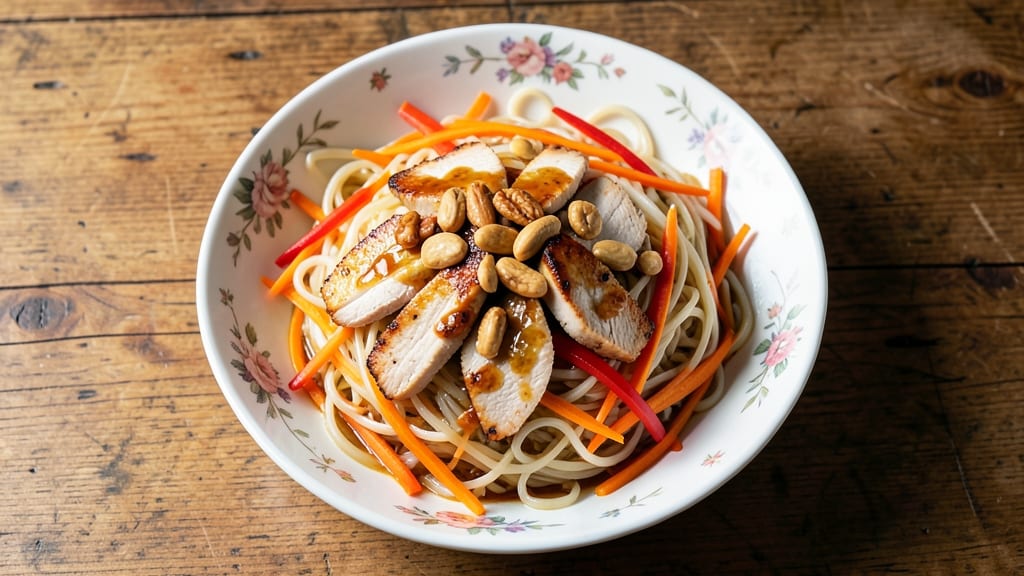
This Burmese noodle salad recipe delivers the perfect balance of tangy, spicy, and umami flavors in every bite—just like the vibrant street food of Myanmar. The secret lies in a bright tamarind dressing that cuts through the richness of stir-fried noodles and protein, while toasted peanuts add satisfying crunch.
I've perfected this dish after years of adapting traditional recipes to home kitchens, ensuring the flavors shine without requiring exotic ingredients.
The preparation is straightforward yet transformative: wide rice noodles are stir-fried until just tender, then tossed with protein (chicken, tofu, or shrimp work beautifully) and a medley of fresh vegetables. What makes this dish truly special is the tamarind dressing—sour, slightly sweet, and packed with garlic and chili for depth.
The peanuts are toasted until fragrant and crushed for maximum texture contrast.
When assembled, you'll have a salad that's vibrant, flavorful, and impossible to resist—crisp vegetables, tender noodles, and protein all coated in that addictive tamarind dressing. The balance of textures and flavors makes this more than just a salad; it's a complete meal that's hearty enough for lunch or dinner.
Serve it immediately for the best experience, when everything is still crisp and the flavors are at their peak.
This recipe is incredibly versatile—swap in your favorite protein or vegetables to customize it, and don't be afraid to adjust the dressing's sweetness or spice level to suit your taste. The key is achieving that perfect harmony of tangy, spicy, and umami notes, which transforms simple ingredients into something extraordinary.
Ingredients for burmese noodle salad
This vibrant Burmese salad transforms simple ingredients into a symphony of tangy, spicy, and umami flavors.
| Ingredient | Amount | Notes |
|---|---|---|
| Wide Rice Noodles 🍜 | 8 oz | Dried, uncooked, or pre-soaked |
| Boneless Chicken Breast 🍗 | 1 lb | Sliced thin for quick cooking |
| Peanuts 🥜 | ½ cup | Raw, unsalted, for toasting |
| Tamarind Paste 🍈 | ¼ cup | Unadulterated, thick consistency |
| Carrots 🥕 | 1 whole | Julienned into matchsticks |
| Red Bell Pepper 🌶️ | 1 whole | Thinly sliced, seeds removed |
| Garlic Cloves 🧄 | 6 cloves | Minced for dressing |
| Fresh Thai Chili 🌶️ | 3 whole | Stems removed, finely chopped |
| Fish Sauce 🐟 | 1 tbsp | Red Boat brand preferred |
| Lime Juice 🍋 | ¼ cup | Freshly squeezed |
| Coconut Oil 🥥 | 2 tbsp | For stir-frying noodles |
| Diamond Crystal Kosher Salt 🧂 | 1 tsp | For seasoning |
| Fresh Cilantro 🌿 | ¼ cup | Chopped, for garnish |
| Sesame Oil 🫒 | 1 tbsp | For finishing |
| Brown Sugar 🍚 | 1 tbsp | Light, for dressing balance |
The tamarind paste is the absolute star here—look for unadulterated blocks at Asian markets or well-stocked grocery stores. Trader Joe's carries a solid version, but if you can find it fresh, it's worth the splurge. The peanuts should be raw and unsalted—Costco or bulk bins offer the best value. For the chilies, fresh Thai bird's eye peppers pack the most heat, but dried red pepper flakes work in a pinch if you're sensitive to spice. The rice noodles? Vietnamese or Thai brands are ideal, but any wide rice noodles will do. Just soak them until pliable but still slightly firm—they'll finish cooking in the wok.
No tamarind paste? Lime juice plus a touch of date syrup gets you close, though it won't be identical. Swapping chicken for shrimp? Double the fish sauce to 2 tbsp—it'll sing with that umami punch. The carrots and bell pepper can be swapped for cucumber or bean sprouts if you prefer. For extra crunch, add crushed roasted peanuts instead of whole. The dressing ratio is key—start with the measurements, then adjust sweetness with brown sugar or heat with extra chili. The lime juice should be freshly squeezed; bottled won't cut it here.
This salad shines when served immediately, but the dressing keeps for 5 days in the fridge—strain out the garlic and chili first for cleaner storage. The noodles? Soak them in cold water if prepping ahead, but don't over-soak or they'll turn mushy. The peanuts toast best in a dry pan over medium heat—2-3 minutes until fragrant, then crush while still warm. Store components separately and assemble just before serving for maximum crunch and vibrancy. Leftovers? Toss with a splash of sesame oil and extra lime to revive.
Why You'll Love This Recipe
- Noodles in Minutes: I swear by the wide rice noodles here—they soften in 5 minutes, no boiling drama. Just a quick soak, a splash of hot water, and they’re ready. No standing over a pot, no sticky mess.
- Tamarind Magic: That tangy tamarind paste? It’s the star. One spoonful brightens everything—the chicken stays juicy, the peanuts get crunchy, and the carrots? They actually taste like something. Honestly, it’s the difference between "meh" and "I’d eat this every day."
- Lunchbox Hero: Between us, this is my go-to for packed lunches. The noodles hold up surprisingly well, the dressing keeps the chicken from drying out, and the peanuts add that satisfying crunch. My kid picks out the carrots but still finishes the whole thing. (Yes, even on a Tuesday.)
- Budget Win: Chicken breast, carrots, and peanuts stretch this salad into two meals for almost nothing. Leftovers? Toss them in a container, and it’s still fresh-tasting the next day. I’ll be real: it’s the kind of recipe that makes grocery night feel like a victory.
Step-by-step instructions for Burmese noodle salad
Here's how to create this vibrant, tangy dish with perfect texture and balance every time.
Prepare the Chicken and Toast the Peanuts
Slice the 1 lb boneless chicken breast into thin strips against the grain for maximum tenderness. Heat 2 tablespoons coconut oil in a skillet over medium-high heat until shimmering. Add the chicken and cook for 4-5 minutes until just cooked through and golden on the edges. Transfer to a plate and set aside.
In the same skillet, add the 0.5 cup peanuts and toast for 2-3 minutes until fragrant and lightly golden. Remove from heat immediately to prevent burning. The peanuts should have a nutty aroma and maintain their crunch—this is crucial for the salad's texture contrast.
Cook and Prepare the Wide Rice Noodles
Bring a large pot of water to a rolling boil and add 1 teaspoon diamond crystal kosher salt. Add the 8 oz wide rice noodles and cook for 3-4 minutes until tender but still slightly firm to the bite. Drain thoroughly and rinse under cold water to stop the cooking process and remove excess starch.
Toss the drained noodles with 1 tablespoon sesame oil while still warm to help them absorb the flavor. Spread them on a tray to cool slightly—this prevents them from becoming mushy when mixed with the dressing later. The noodles should be at room temperature before combining with other ingredients.
Create the Tangy Tamarind Dressing
In a small bowl, whisk together the 0.25 cup tamarind paste, 0.25 cup lime juice, 1 tablespoon fish sauce, 1 tablespoon brown sugar, 6 minced garlic cloves, and 3 finely chopped fresh Thai chili. The mixture should be thick and glossy with a vibrant red hue.
Taste and adjust the balance—add a touch more tamarind for tang, fish sauce for umami, or brown sugar to mellow the heat. This dressing is the heart of the dish, so don't rush this step. The perfect dressing should coat the back of a spoon and have a complex flavor profile with sweet, sour, spicy, and salty notes.
Assemble the Noodle Salad
In a large bowl, combine the cooled noodles, julienned 1 whole carrot, thinly sliced 1 whole red bell pepper, and the cooked chicken strips. Pour the tamarind dressing over everything and toss gently but thoroughly to coat each component evenly.
Add the toasted peanuts and 0.25 cup chopped fresh cilantro, reserving a few sprigs for garnish. The salad should look vibrant with bright orange carrots, red peppers, and glossy noodles. Taste again and adjust seasoning if needed—this is your final opportunity to balance the flavors before serving.
Serve Immediately for Best Texture
Transfer the noodle salad to serving bowls and garnish with the reserved cilantro sprigs. The dish should be served immediately while the noodles are still slightly warm and the peanuts maintain their perfect crunch. Each bite should deliver a perfect balance of textures—chewy noodles, tender chicken, crisp peanuts, and crunchy vegetables—all bound together by the tangy tamarind dressing.
This Burmese noodle salad is best enjoyed fresh, so don't wait to serve. The flavors will continue to meld and develop as it sits, but the ideal window is within the first 30 minutes after assembly when everything is at its peak texture and temperature.
Pro Tips For Making Burmese Noodle Salad
- SOAK NOODLES UNTIL SOFT, NOT MUSHY: I learned this the hard way—wide rice noodles for this salad need to be just tender, not falling apart. Soak them in warm water (not boiling) for 12-15 minutes, then drain and rinse with cold water immediately. This stops them from overcooking when tossed with the dressing later—trust me, soggy noodles ruin the texture.
- SLICE CHICKEN THIN AND REST IT: Thinly sliced chicken (¼-inch max) cooks faster and stays tender. After slicing, sprinkle with a pinch of salt and let it sit uncovered for 10 minutes—this relaxes the fibers so they don’t turn rubbery when stir-fried. Pro move: Pat it very dry before cooking; wet chicken steams instead of sears.
- GRATE CARROTS FINE, NOT COARSE: Skip the food processor for this one—use a box grater or mandoline for ultra-fine shreds. The salad’s tamarind dressing needs to cling to the carrots, not sit on top. If you’re lazy, julienne them into matchsticks, but they’ll lose that silky texture that balances the crunch of peanuts.
- TOAST PEANUTS LOW AND SLOW: Don’t blast them in a hot pan or they’ll burn before they’re crisp. Spread peanuts in a single layer on a dry skillet over medium-low heat, stirring constantly for 3-4 minutes until golden and fragrant. Overcooked peanuts taste bitter—your nose will know when they’re ready. Crush half before adding to the salad for that perfect bite.
Best sauces and condiments for this dish
Tamarind Dressing Mastery
The tamarind dressing is the soul of this dish—its tangy, slightly sweet profile cuts through the richness of the noodles and protein. Start with 0.25 cup tamarind paste (unadulterated blocks work best) mixed with 0.25 cup lime juice and 1 tbsp fish sauce.
The key is balancing the sweetness with 1 tbsp brown sugar and the heat with 3 chopped Thai chilies. Taste as you go, adjusting with more tamarind for sourness or sugar to mellow the heat. 🌶️
Peanut Toasting Secrets
Toast your 0.5 cup raw peanuts in a dry skillet over medium heat for just 2-3 minutes until fragrant and golden. Remove immediately to prevent burning—overcooked peanuts lose their crunch and develop bitterness.
Crush them while still warm for maximum texture contrast in the salad. I like to use a rolling pin for even crushing. 🥜
Sesame Oil Finish
Finish the salad with 1 tbsp sesame oil—this adds a nutty aroma and helps bind all the flavors together. Drizzle it over the assembled salad just before serving to preserve its fresh aroma.
For extra depth, add a pinch of Diamond Crystal kosher salt to enhance the umami notes. The oil should coat the noodles lightly without making them greasy. ✨
Fish Sauce Boost
Don't skimp on the 1 tbsp fish sauce—it's what gives this salad its authentic umami depth. Red Boat brand is my go-to for its clean, balanced flavor. If you're using shrimp instead of chicken, increase to 2 tbsp fish sauce to complement the seafood's natural sweetness.
The sauce should be fully incorporated into the dressing before tossing with the salad. 🐟
Lime Juice Freshness
Always use freshly squeezed lime juice—bottled versions lack the bright acidity needed to cut through the richness. The 0.25 cup lime juice should be added last to the dressing to preserve its freshness.
If your limes are particularly tart, reduce to 0.2 cup and adjust with a touch more tamarind paste. The dressing should glisten slightly from the lime's natural oils. 🍋
Garnish Like a Pro
Reserve a few sprigs of fresh cilantro for garnishing—this adds both visual appeal and a fresh herbal note. Sprinkle the toasted, crushed peanuts over the top just before serving to maintain their perfect crunch.
A final drizzle of sesame oil and a pinch of salt elevates the dish from good to restaurant-quality. The garnish should be light but noticeable. 🌿
Nutrition facts
Frequently asked questions
Can I use regular rice noodles instead of wide rice noodles?
Wide rice noodles are ideal because they hold up better to tossing and maintain their shape in the dressing. However, you can substitute with thin vermicelli noodles if that's all you have. Just be mindful they'll cook faster—test for doneness at 2 minutes instead of 3-4 minutes. The texture will be slightly different but still delicious!
How do I make this dish vegetarian?
Swap the chicken for extra-firm tofu pressed and pan-fried until crispy, or use grilled shrimp for a seafood option. For plant-based protein, marinate the tofu in 1 tbsp fish sauce + 1 tbsp soy sauce before cooking. The tamarind dressing will still shine with these alternatives—just adjust the fish sauce to 1.5 tbsp if using shrimp.
What if I can't find tamarind paste?
Mix 0.2 cup lime juice with 1 tbsp date syrup or agave to mimic the tangy-sweet balance. For extra depth, add 1 tsp vinegar (apple cider or rice vinegar work well). The dressing won't be identical, but it'll still deliver that bright, zesty kick. Pro tip: Simmer the lime juice with a pinch of salt for 2 minutes to intensify the flavor!
Can I prepare this salad ahead of time?
Prep the components separately to maintain freshness. Cook and cool the noodles, chicken, and vegetables, then store them in airtight containers. Make the dressing separately (without the garlic/chili) and keep it refrigerated. Assemble just before serving—toss with fresh dressing and toasted peanuts. The noodles will soften slightly but stay pleasant. For best texture, serve within 2 hours of assembly.
Why does my salad taste too sweet or spicy?
Adjust the balance by adding more tamarind for sourness or fish sauce for umami depth. To reduce sweetness, add a splash of lime juice; for less heat, strain out some chili seeds or add a pinch of salt. Taste as you go—start with small adjustments (½ tsp increments) and mix well. The dressing should harmonize all flavors, not dominate them.