
Salads
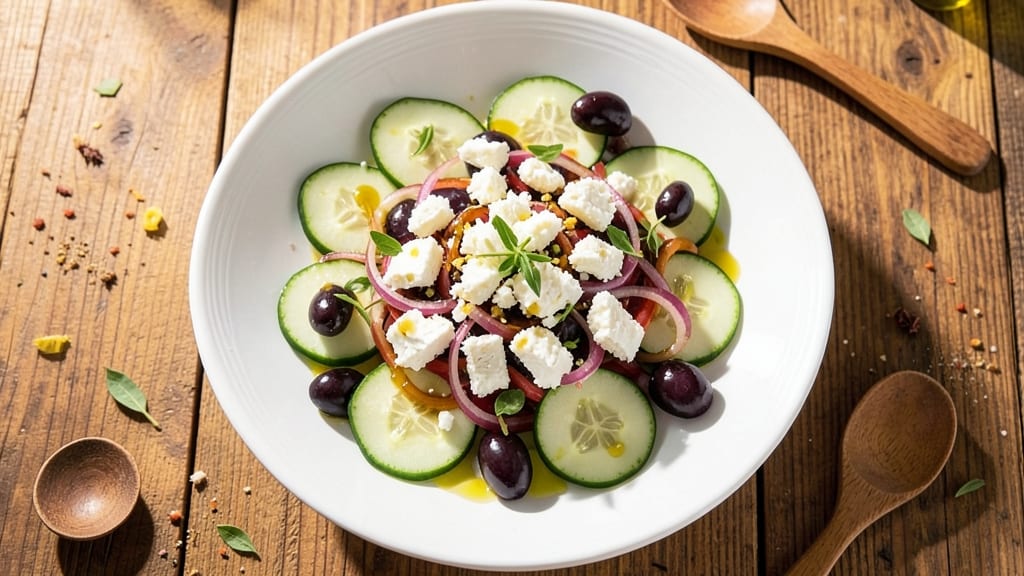
This Greek salad recipe without tomatoes delivers the crisp, bright flavors of traditional horiatiki while celebrating cucumber, feta, and fresh herbs. The secret lies in the perfect balance of textures—crunchy cucumbers, briny olives, and creamy feta—all tossed in a zesty olive oil and lemon dressing that brightens every bite.
I developed this version after realizing tomatoes often overpower the delicate flavors of the other ingredients, and it’s become my go-to summer dish.
The foundation is simple: thickly sliced cucumbers, crisp red onions, Kalamata olives, and fresh oregano, all arranged with precision to showcase their natural beauty. The feta, cut into large cubes, becomes the star, its salty tang cutting through the freshness of the vegetables.
What makes this salad special is how the ingredients work together—each component maintains its individual character while contributing to a harmonious whole.
When assembled, this salad offers a refreshing contrast of temperatures and textures: cool cucumbers, slightly sweet onions, briny olives, and the rich, creamy feta. The dressing—just olive oil, lemon juice, and a sprinkle of dried oregano—enhances rather than overpowers, allowing the fresh ingredients to shine.
It’s the kind of dish that feels light yet satisfying, perfect for hot days or as a side to grilled meats.
For those who miss tomatoes, consider adding a few thinly sliced radishes or a handful of fresh dill to keep the freshness intact. This salad is best enjoyed immediately, but you can prepare the components ahead of time and assemble just before serving.
Let’s get started on this bright, tomato-free Greek salad that’s as refreshing as it is delicious.
Ingredients for greek salad recipe no tomatoes
Crisp cucumbers, briny olives, and creamy feta shine in this tomato-free Greek salad masterpiece.
| Ingredient | Amount | Notes |
|---|---|---|
| Persian Cucumbers 🥒 | 2 whole | Thickly sliced, seeds removed |
| Red Onion 🧅 | 1 whole | Thinly sliced, white rings removed |
| Kalamata Olives 🫒 | ½ cup | Pitted, halved if large |
| Feta Cheese 🧀 | 8 oz | Block form, cut into cubes |
| Fresh Oregano Leaves 🌿 | ¼ cup | Loosely packed, stems removed |
| Extra-Virgin Olive Oil 🫒 | ½ cup | High quality, fruity variety |
| Fresh Lemon Juice 🍋 | 2 tbsp | Freshly squeezed, strained |
| Diamond Crystal Kosher Salt 🧂 | ½ tsp | Fine grain preferred |
| Freshly Ground Black Pepper 🌶️ | ¼ tsp | Freshly cracked |
| Red Wine Vinegar 🍷 | 1 tbsp | Dry, bold variety |
| Capers 🫐 | 1 tbsp | Rinsed if brined |
| Fresh Dill 🌿 | ⅛ cup | Optional garnish, chopped |
The cucumbers are non-negotiable—Persian cucumbers stay crisp longer than English varieties, and their tender skin holds up beautifully when sliced. Local farmers markets often have the freshest, or grab them from the produce section at Whole Foods if you want to splurge on organic. For the feta, block form is essential—pre-shredded gets mushy and loses that perfect crumble. Look for Greek feta with at least 50% milkfat for maximum creaminess. Kalamata olives should be plump and dark purple—Trader Joe's carries them year-round at great prices. The oregano? Fresh is ideal, but dried works in a pinch (use half the amount).
No red wine vinegar? Apple cider vinegar or white vinegar works, though the flavor will differ slightly. Capers too pricey? Skip them entirely—this salad still sings without them. Want more crunch? Swap half the cucumbers for radishes or jicama, both of which add a delightful snap. The dressing ratio is key: olive oil to lemon juice should be 4:1—any more oil and it gets heavy, too little and it's bland. For extra brightness, add a pinch of red pepper flakes if you like a little heat. The capers? Rinse them well if using brined—you don’t want a salty surprise.
This salad is best eaten the day it's made—textures matter—but you can prep components ahead. Store the cucumbers, onions, and olives in separate containers with paper towels to absorb moisture, and keep the feta wrapped in parchment. The dressing should be made fresh, but you can mix it up to 2 days ahead if stored in a sealed jar. For leftovers (if there are any), keep everything separate and toss with fresh dressing when serving. The feta will soften slightly but still delivers that signature tang. One batch never lasts—it disappears faster than you can say 'horiatiki'
Why You'll Love This Recipe
- No-Chop Fuss: I swear, the Persian cucumbers slice themselves if you angle the knife right—thin, crisp strips with zero struggle. Red onion in big chunks? Just rinse and tear. That’s it. Honestly, I’ve made this while scrolling through emails.
- Salty-Creamy Magic: The Kalamata olives pack a briny punch, but the feta? Oh, that’s where it gets good—soft cubes melting just enough to coat every bite. Toss in the oregano leaves right before serving, and suddenly it’s ridiculously good. No dressing needed.
- Weeknight to Potluck: This salad works as a side for grilled chicken, a light lunch, or even a picnic centerpiece. I’ve brought it to BBQs, and it’s the only thing people ask for seconds on. (Yes, even over the main dish.)
- Fridge Hero: Between us, this keeps perfectly for days—no wilt, no sog. I’ll make a big batch on Sunday, and it’s still crisp by Thursday. Plus, feta and olives stretch the budget without sacrificing flavor. Win.
Step-by-step instructions for crisp cucumber and feta brilliance
Here's how to assemble this vibrant, no-tomato Greek salad with perfect texture and balance.
Prepare the Vegetables for Maximum Crunch
Begin by slicing the 2 whole Persian cucumbers into ¼-inch thick rounds, carefully removing the seeds with a spoon to prevent bitterness. The slices should be uniform in thickness for even cooking and presentation. Pat them dry completely with paper towels—this ensures they stay crisp rather than soggy when mixed with the dressing.
Next, thinly slice the 1 whole red onion, removing the white root end first. You want paper-thin rings that will soften slightly but still hold their shape. Place both the cucumbers and onions in separate bowls to keep them from wilting prematurely. This prep work is crucial—it guarantees the salad maintains its signature crunch and freshness.
Assemble the Salad Base with Perfect Proportions
In a large mixing bowl, combine the sliced cucumbers and onions. Add the 0.5 cup Kalamata olives and 1 tbsp capers, giving everything a gentle toss with a wooden spoon. The olives should be evenly distributed, and the capers should be sprinkled throughout for their briny punch. This is where the classic Greek flavors start to come together.
Cut the 8 oz feta cheese into ½-inch cubes—this size ensures each bite has a satisfying piece of feta without overwhelming the salad. Scatter the feta cubes evenly over the cucumber mixture, then sprinkle with 0.25 cup fresh oregano leaves and 0.125 cup fresh dill. The herbs should be distributed lightly so they don't clump, allowing their bright flavors to infuse the entire salad.
Create the Signature Dressing with Balanced Flavors
In a small bowl, whisk together the 0.5 cup extra-virgin olive oil, 2 tbsp fresh lemon juice, 1 tbsp red wine vinegar, 0.5 tsp Diamond Crystal kosher salt, and 0.25 tsp freshly ground black pepper. The dressing should emulsify naturally—if it separates, whisk more vigorously to create a silky consistency. This dressing is the heart of the salad, balancing the saltiness of the feta and olives with bright acidity.
Taste the dressing before adding it to the salad. It should be tangy but not overpowering, with a subtle herbal note from the lemon. If it needs more brightness, add a pinch of salt or another splash of lemon juice. The key is to create a dressing that enhances the salad's natural flavors without dominating them.
Toss and Rest for Optimal Texture
Pour the dressing over the salad and gently toss everything together with your hands or a large spoon, being careful not to break the feta or cucumber slices. The salad should be evenly coated but still retain its individual components. Real talk: don't overmix, or you'll lose the salad's rustic charm.
Let the salad rest for 10 minutes before serving. This brief resting period allows the flavors to meld and the dressing to penetrate the vegetables and cheese. The cucumbers will maintain their crispness, the onions will soften just enough, and the feta will develop a slightly salty sheen. Serve immediately while the salad is at its peak—crisp, vibrant, and bursting with Mediterranean flavors.
Pro Tips For Making Greek Salad Recipe No Tomatoes
- CHILL THE CUCUMBERS FIRST: I learned this the hard way—slicing Persian cucumbers straight from the fridge makes them waterlogged and soggy. Toss them in ice water for 10 minutes before cutting, then pat thoroughly dry with paper towels. This keeps your salad crisp instead of a sad, wet mess.
- SOAK THE ONIONS: Red onion is bold enough to need a break. Thinly slice it and soak the pieces in cold water for 5 minutes before draining. This mellows the bite without losing texture—no one wants a mouthful of sharpness drowning out the feta and olives.
- DICE THE FETA LAST: Feta gets gummy when it sits too long in dressing. Hold off on cubing it until you’re ready to serve, or at least 10 minutes before eating. If you must prep ahead, store it dry in the fridge and add it just before tossing with the rest.
- UPGRADE THE OLIVE BRINE: Drain the olives but save that briny liquid—it’s liquid gold for dressing. Mix 2 tablespoons of the reserved brine with your olive oil and vinegar for a deeper, saltier flavor that actually complements the feta instead of competing with it. (Yes, even if you’re impatient like me.)
Pro cooking tips for perfect results
Cucumber Prep Secrets
Persian cucumbers are the star here, but their prep makes all the difference. Use a serrated knife to slice them into ¼-inch rounds, then scoop out the seeds with a spoon to prevent bitterness.
Pat slices dry with paper towels—this keeps them crisp instead of soggy. I swear by this step; it’s the secret to that perfect horiatiki texture. 🥒
Feta Cutting Technique
Never use pre-shredded feta—it turns mushy! Cut 8 oz block feta into ½-inch cubes for the ideal balance of creaminess and texture. For extra flair, sprinkle the cubes with a pinch of Diamond Crystal kosher salt before adding to the salad. This enhances their flavor without overpowering the other ingredients.
Dressing Ratio Matters
The magic happens in the dressing: use a 4:1 ratio of olive oil to lemon juice (½ cup oil to 2 tbsp lemon). Whisk in 1 tbsp red wine vinegar and ½ tsp salt for balance.
Taste before tossing—it should be tangy but not harsh. I often add 1 tsp honey if I want to mellow the acidity slightly. 🍋
Onion Slicing Hack
For perfect onion rings, slice the red onion paper-thin using a sharp knife. Remove the white root end first to prevent tearing. Soak slices in ice water for 5 minutes before adding to the salad—this mellows their sharpness while keeping them crisp. Trust me, this small step changes everything.
Resting Time Trick
After tossing, let the salad rest for 10 minutes before serving. This allows the dressing to penetrate the vegetables and feta, creating a cohesive flavor profile.
The cucumbers stay crisp, the onions soften just enough, and the feta develops that irresistible salty sheen. Don’t skip this—it’s what separates good from great. ⏰
Garnish Like a Pro
Finish with fresh oregano and dill, but don’t overdo it. Sprinkle lightly over the top so the herbs peek through the other ingredients. For extra flair, add a few crushed Kalamata olives or a drizzle of high-quality extra-virgin olive oil just before serving. Presentation matters as much as taste!
Nutrition facts
Frequently asked questions
Why remove tomatoes from Greek salad?
Traditional Greek salad often includes tomatoes, but they can sometimes overpower the delicate flavors of cucumbers, feta, and olives. This version highlights the crispness of Persian cucumbers and the briny tang of olives, letting the feta shine as the star. The lemon-olive oil dressing keeps everything bright and fresh without tomato's sweetness.
Can I substitute other vegetables for tomatoes?
For a similar texture, try radishes (thinly sliced) or jicama (julienned) to add crunch. If you want color, red bell peppers work beautifully—just remove seeds and slice into thin strips. The key is maintaining that fresh, crisp contrast that tomatoes normally provide.
How long will this salad keep its crispness?
This salad is best eaten immediately for maximum crunch, but you can prep components ahead. Store cucumbers, onions, and olives separately in airtight containers with paper towels to absorb moisture. Keep feta wrapped in parchment. Assemble just before serving—this ensures the cucumbers stay crisp and the dressing doesn't make everything soggy.
What's the best way to store leftovers?
If you have leftovers (unlikely, but possible!), store all components separately in airtight containers. Keep the dressing separate too. When ready to serve, toss everything together with fresh dressing. The feta may soften slightly, but the flavors will still be delicious. For best texture, enjoy within 2 days of making the salad.
Can I make this salad ahead for a party?
Yes, but with a few adjustments. Prep all ingredients except the dressing and store them separately in the fridge. When ready to serve, assemble the salad and toss with fresh dressing just before serving. This keeps the cucumbers crisp and prevents the feta from getting too soft. For a crowd, double the recipe—this salad disappears quickly!